


Insight | 01.17.25
Insight | 05.04.21
Natural Language Processing and text analysis are AI techniques for isolating, selecting and measuring the effective nature of unstructured information. With these techniques, sentiment analysis is applied for understanding customer feedback (reviews, surveys), analyzing social media traffic, creating website content and shaping marketing campaign messaging.
A scored word list is a supervised learning technique for completing sentiment analysis. The scored list or lexicon contains words with scores from most negative to most positive. Numbers assigned depend on the lexicon being used, for example AFINN scores range from -4 to +4. Text is decomposed into its individual words. The individual words are matched against the lexicon, summed and divided by the number of words to get an average score. Lexicons can be developed using surveys and adjusted to address specific domains. This approach can be enhanced with a rules base to address other language features, such as context, multipolarity and negation resulting in a compound calculated score for a piece of text. The power of this approach is in understanding the effect of each word and then being able to adjust the rules.
Using clustering, unsupervised learning can also be used for sentiment analysis. Like any unsupervised technique data is fed into the model, in this case, text – and in real time the model returns the overall results of positive, neutral or negative. To build the module, representative embeddings must be isolated and scored. Clustering is then completed on the data. The relative location of words in a cluster determines their positive or negative value. Then each word is considered for how unique it is in each sentence. This along with the sentiment scores are used to complete sentence scoring.
Some applications of sentiment analysis tools include:
Content Creation – confirming intended sentiment for social media and website content
Customer Feedback – analyzing market sentiment towards products and/or services
Product Review – capturing the most valued product features
Brand Image – monitoring social media by segment for sentiments on brand
Stock Market – real time assessment of investor sentiment on stocks, influencing long/short positions
Regulatory Compliance – identify, extract and understand regulatory, legal and medical documents that traditional data analytics techniques can’t handle
Competitor Intelligence – comparing sentiment on social media against competitors

Sentimental Analysis Tools Value
Sentiment analysis confirms the intent of communications: emails, website content and social media postings. This contributes to the reach, impressions and engagement of these communications. With studies indicating positive emotions increase the speed and reach of social messages, sentiment analysis has significant value. In addition to social media applications, sentiment analysis tools also provide value in tracking customer service feedback and product reviews.
Learn about Yalo’s own Sentiment Analysis services for our clients. Contact us please for any general inquiries, here.
Insight | 04.27.21
Many historical perspectives identify the genesis of Natural Language Processing with Alan Turing’s efforts during World War II cracking the Nazi’s Enigma code machine. By any measure, his Ultra intelligence and Turing machine saved millions of lives and shortened the war by multiple years.

NLP Evolution
After World War II, Turing’s direction involved establishing the foundation of NLP in his article, “Computing Machinery and Intelligence.” This ground-breaking article is viewed as the first treatise on artificial intelligence. He proposed the “Turing test,” (see below) for addressing the question,” can machines think?” He supported his position by rebutting nine arguments against intelligent machines. The nutshell result -thinking machines do not just isolate the words; they identify what the words mean in context.
“A computer would deserve to be called intelligent if it could deceive a human into believing that it was human.” – Alan Turing
NLP Components
Building on this foundation, language translation, language theory, probabilistic and data driven models have yielded what we know of as NLP today. Using NLP, computers dissect, absorb and draw meaning from language in context by:
NLP Applications
It is surprising how many everyday situations benefit from the application of NLP. Some of them include:
NLP and Sentiment Analysis
Natural Language Processing as part of the artificial intelligence discipline is the foundation for sentiment analysis. Both supervised and unsupervised learning techniques can be applied to complete sentiment analysis. The approach being used relies on the input word, sentiment values definition, and the level of control desired in understanding, modifying and acting on the results.
NLP Strengths
Natural Language Processing’s power is derived by its ability to understand and manipulate the human language. This ability delivers exact answers to questions without extraneous information. In addition, NLP can provide structure and sequence to ambiguous information. Yalo utilizes these functions as part of our new Sentiment Analysis services for expanded social media success for our clients.
Insight | 04.12.21

Unsupervised Learning Defined
In unsupervised learning the model works independently discovering patterns and information that were not previously defined. This learning technique works predominantly with unlabeled data (no defined relationship between inputs and outputs). Using this technique affords the opportunity to address more complex processing tasks vs. supervised learning.
Unsupervised Learning Techniques
An important unsupervised learning technique is clustering. Cluster algorithms find groups within the input data. Clustering allows the user to define the number of clusters that should be identified. The number of clusters determines the specificity of each cluster (e.g. the more clusters the more specific the data within a cluster). Unsupervised learning cluster types include:
Clustering techniques include:
Another unsupervised learning technique is association. In this technique, rules are used to establish associations among objects in large data bases. An application of this technique experienced every day is shopping groups based on eCommerce searches and purchases.

Unsupervised Learning Applications
Customer Segmentation – understanding customer groups for building business strategies and marketing campaigns
Genetics – grouping DNA patterns to study evolutionary biology.
Predictive Maintenance – detecting defective mechanical parts
Dimensionality Reduction – problem simplification by reducing random variables resulting in better data visualization
Ecology – comparison of audio recording of regions for comparison of species population for biodiversity
Delivery Routes – optimize delivery efficiency by determining the optimal number of regional locations and efficient truck routes.
Crime Zones – crime data by specific location including area and category for defining crime concentration locations within a city.
System Alert Management – operations alert messages from IT system components prioritized based on mean time to repair, downstream impact and failure predictions.
Unsupervised Learning Advantages & Disadvantages
Plus
Minus
One Application Plus that Yalo is investing in for our clients is our new sentiment analysis service – capable of several insightful deliverables that can boost your marketing & branding campaign successes. Contact us today to learn how our new tools powered by AI can be a boon for your 21st century business.
Insight | 03.24.21

AI has two approaches in programming intelligent machines: supervised learning and unsupervised learning. Supervised learning requires data with defined input/output relationships (labeled data). The comparison being taught by a supervisor or teacher. The resulting supervised learning algorithm uses the learning to predict outcomes from new input data. Over time the model must be maintained to ensure that the labeled data is both current and complete.
Unsupervised machine learning requires no supervision. Using this approach, the model works on its own to infer information from unlabeled data. There is no information on the outputs, the model identifies patterns from the data. This approach supports more complex processing tasks when compared to supervised learning. Unsupervised learning can be more unpredictable when compared to other learning methods.

Supervised Learning Advantages
Supervised learning takes advantage of collecting/developing data from existing experiences. This provides an approach for optimizing a model’s performance. Supervised learning is valuable in addressing computational problems.
Unsupervised Learning Advantages
Unsupervised learning is adept at discovering unknown patterns in data. The identification of the patterns occurs in real-time and labeling is completed in the presence of the learners. Using unlabeled data, unsupervised learning does not require the data labeling effort.
Supervised Learning in Action
Supervised learning trains the machine to complete a task. Suppose you wanted to predict how many games a pitcher will win in an upcoming season using prior year performance. The process requires the collection of a data set of pitching performance by pitcher. Example data could be:

These inputs for a particular pitcher would be collected and the model determine the output, number of games won.
The labeled data defines a training data set used as an input for training the model. The model may conclude that more strikes and less walks are desirable. Similarly, more ground balls and fewer flyballs. The learning process takes this training data, isolates attributes and develops an algorithm(s) which become the model.
Unsupervised Learning in Action
Unsupervised learning uses data with no labels. An example for unsupervised learning would be if you went to a baseball game and had no idea how the game is played, you would watch and make observations to develop an understanding of how the game is played. You would notice
You would be learning baseball without any assistance. The learning would have occurred by identifying patterns that were not previously known.
Summary – Supervised vs. Unsupervised Learning
The learning methods differ on how data is used. Input data is labeled for supervised learning and unlabeled for unsupervised learning. Supervised learning uses the output data to learn and outputs to new inputs. Unsupervised learning does not use output data. Supervised learning is a simpler method with learning performed offline versus unsupervised learning being computationally more complex and occurring in real time.
The major unsupervised learning drawback is that without labels, complete information on data grouping and output data is not available. Supervised learning requires the classification of the data. Supervised learning is considered a trusted process with accurate results, whereas, unsupervised learning in more unpredictable.
Both of these processes and more contribute to the fascinating power of artificial intelligence. In the workplace, Yalo is using our new sentiment analysis services to leverage AI for social media monitoring and actionable insights for our clients. Request a demo in order to understand how these amazing tools can help to build and boost your brand.
Insight | 03.18.21

What is Intelligence
First, some agreement on what constitutes intelligence is necessary. Depending on the discipline different attributes are valued and therefore constitute intelligence.
A person’s intelligence within a discipline would be recognized by their mastery of the discipline’s attributes. An argument can be made that a machine can be intelligent by mastering one set or multiple sets of attributes.
Elements of Intelligence
When evaluating something as intangible as intelligence, what elements should be considered? It starts with reasoning processes that support extending observable facts/events to general beliefs and/or take general beliefs consider alternatives in coming to specific conclusions. For a baseball player it is baseball IQ; the musician it is a sense of timing or beat; physicist the thought experiment in visualizing the abstract. It includes learning by training, observing and experience which expands the understanding of the discipline.
Depending on the discipline, listening, recalling experiences, duplicating physical activities and drawing conclusions by relating environmental cues are all techniques for expanding knowledge. These techniques make a decision or choose a process which resolves an issue. They must also consider their surroundings, sensing valid inputs and providing structure. Generating value and knowledge, machines must also have communications skills to understand inputs and document results.

Humans rely on recognizing patterns in applying their intelligence. Each pattern, learned or experienced, has its information and heuristics for a situation. Familiar or stressful situations are facilitated by quick thinking in applying the most familiar pattern. New or complex situations require more thoughtful thinking in perceiving differences, altering existing or developing new patterns.
Machine intelligence is programmed with attributes focused on a specific discipline. This intelligence relies on taking general beliefs, considering alternatives and arriving at conclusions. This can include understanding that a mistake has been made and avoiding it in the future.

Intelligent machines evaluate inputs as data by applying sets of rules. While humans search for patterns, machines learning relies on rules/algorithms. Two different techniques are used to develop learning in machines. Supervised learning uses sample data with matched outputs (labelled data) to teach machines to approximate outcomes for new inputs. Unsupervised learning does not rely on labeled outputs – the learning occurs by inferring the natural structure of a set of data points. A differentiator between machine intelligence and human intelligence is in situations with incomplete or distorted inputs – humans can still determine outcomes where intelligent machines can have inconsistent results.
Yalo is embracing machine intelligence/AI with the arrival of our new sentiment analysis services that can recognize language patterns in order to determine social media feedback and popularity for a brand, amongst several other tasks. We are bringing AI to bear on the Web 2.0 world in our relentless pursuit of excellence for our customers. AI rocks!
Insight | 03.03.21

Sonic branding (also sometimes called audio branding, or sound branding) is the strategic use of sounds and music to reinforce brand identities, just as you would with certain colors or words.
In an age of information overload, consumers are demanding a break from screens. A recent report into Gen Z and millennials by Spotify found that 56% believe that audio can serve as a welcome break from too much visual stimulation. We can see this in the explosion of podcasting, audiobooks and voice assistants. You can simply look at the meteoric rise of Clubhouse to see how audio is making an impact.
Adding sound or music to your brand brings another dimension to your brand experience as it produces additional layers of emotional response that images cannot reproduce. It breaks through the rational part of your brain and resonates on a more emotional level.

Startups and small businesses with limited resources are often overshadowed by competition from big companies with larger financial resources. These businesses are now incorporating affordable yet effective sound marketing solutions such as jingles, tones, music on hold, background music, podcasts, and announcements to promote brand awareness, communications, and customer satisfaction.
Just like any other form of marketing, sound branding needs to be unique. As audio becomes a more crucial part of marketing, a personalized brand voice is incredibly valuable to your business. Before anything, think about the kind of sound that best represents your company because, beyond your visual logo, a consistent tone of voice is what helps to drive familiarity with your customers.
Hear them here: Top 10 Most Recognizable Brand Audio Logos.
Developing an audio logo may be the next logical step for companies looking to take their brand to the next level. Doesn’t this sound like a great idea? According to DesignRush, Yalo is one of the Top Atlanta Digital Marketing Agencies. So, let Yalo turn up the volume on your brand.
So, let Yalo turn up the volume on your brand. Make some noise in our direction and we’ll get right back to you.
Insight | 06.10.20
Enabling a new way to engage with an ordinary household item. This augmented reality app created for Kimberly-Clark, allows users to explore design patterns and boxes allowing sales reps and consumers to take the guess work out of their purchase.
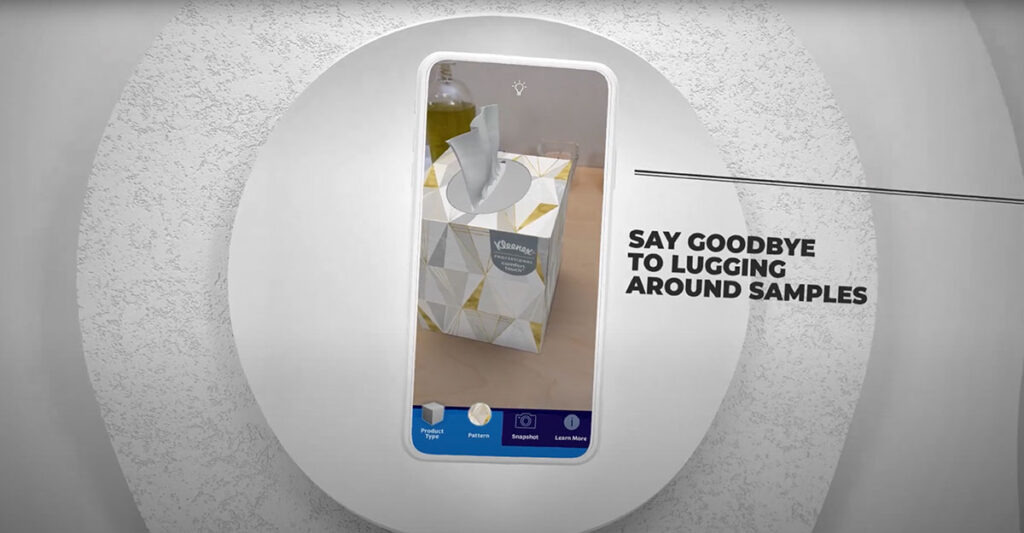


Yalo created the Augmented Product Visualizer for Kimberly-Clark as a custom tool for their special needs, and we can do the same for your business. We also partner with InVision – creators of the fabulous InVision DSM design system manager – and implement and support this remarkably cohesive branding system tool when a totally custom app isn’t what’s needed next on your drawing board. Give us a shout today to learn more about InVision DSM. Discuss InVision DSM directly with resident expert Eric Cantini at 216-533-0712.
Insight | 08.09.19

On July 18, 2019, Dan LeBatard delivered a three-minute rant on his national radio show in response to the chants made the night before at a President Trump rally. A casual observer might think that an employee of ESPN, who is owned by Disney would follow the fate of others who had decided to voice hard opinions throughout the network’s channels and airwaves – they would no longer be employed.
That did not happen. One day later, LeBatard and cast were back doing their “thing.” Let’s take a step back for a minute. What is their “thing” exactly? Their thing is a four-hour long sports talk radio show broadcast 1,400 miles from EPSN Headquarters in the Clevelander Hotel on South Beach. This is already off the beaten path for ESPN. One other point: the show talks as little about sports as possible. Often times their only serious topics wade into the sensitive waters of race and sexism. They are the ZIG to the company’s ZAG.
Does this disruption work? Short answer is yes. The radio show has over 2.5MM listeners in over 50% of the largest U.S. markets and the podcasts have been downloaded over 50MM times and counting.
Their thing is disrupting their audience constantly with unexpected, unplanned and often crazy content.
As marketers, disruption when done right can be a powerful thing. Chick-Fil-A probably comes to mind immediately. Their mascot is a cow and they are the #1 restaurant in the country for chicken sales – ahead of KFC. Another great example is 2 hospitals in suburban Chicago were merging. They wanted the new brand to be “provocative, but welcoming.” Edward-Elmhurst Healthcare rolled out the “Healthy Driven” campaign using Danica Patrick as their spokesperson. The colors, visuals and messages were out of this world compared to what one would think for hospitals and healthcare. It only resulted in a 75% increase in brand awareness and 12,000 new patients into their business.
Want to do something different? Want to make a splash? Try something disruptive in your marketing. Throw out the rulebooks and be unorthodox. You have to be willing to think extreme. Otherwise, you will not get the show!
Insight | 05.01.19
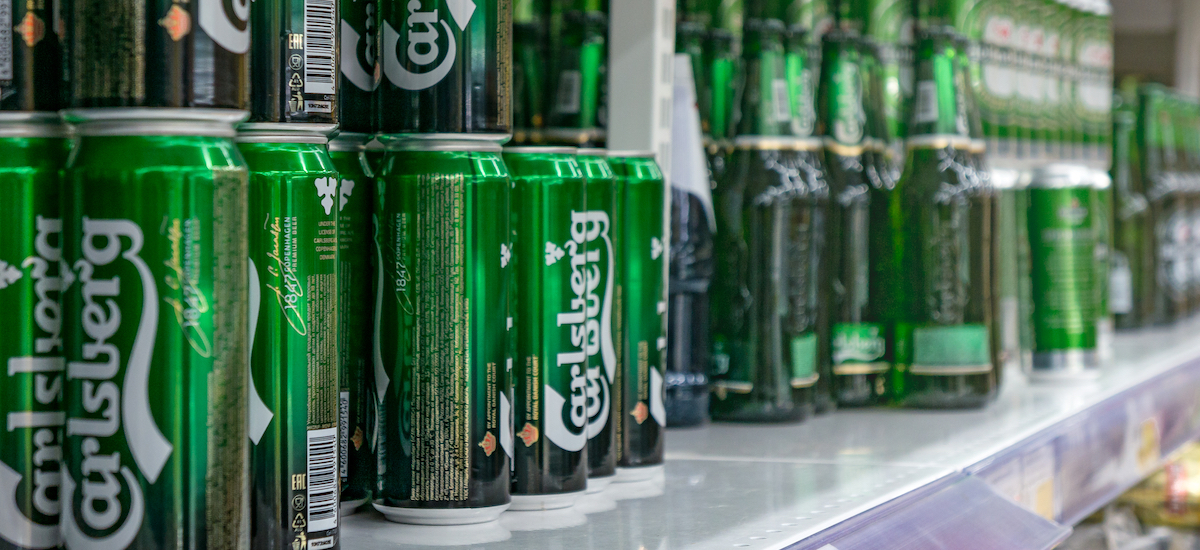
How do you save the planet, boost your brand caché, win category buzz for the week and come out looking like a straight-up innovator? Look at Carlsberg for the answers.
Last week, the global brewer headquartered in Denmark announced they would be abandoning plastic rings for their beer cans. Alternatively, they’ll attach cans together by applying a glue adhesive they have been developing over the last three years. The shift for the brewery group looks to be the beer world’s first attempt to move away from the use of plastic rings or other fasteners that produce additional waste products to recycle. The move proves interesting as it touches on multiple opportunities for the brand tout its efforts:
With some of Carlsberg’s last memorable news-making being about a workers’ strike over limiting employees’ beer drinking throughout the workday to only on their lunch break, the company is no stranger to sticky situations. This latest effort, though, seems like something everyone can toast to.
As a creative, experiential & branding agency in Cleveland, we know a bit about sticky situations and tarnished reputations too – once known as “the mistake on the Lake,” Cleveland now boasts the Rock & Roll Hall of Fame and the 2016 NBA champs, the Cleveland Cavaliers. If a city can turn its brand around, we can surely help to turn your business brand around too. Cheers!
Insight | 07.09.18

A bat and a ball cost $1.10 in total. The bat costs $1.00 more than the ball. How much does the ball cost? Quick – what’s your answer? Did you say 10 cents? Well if you did, then you are wrong. The correct answer is 5 cents. You would have naturally come to the correct answer in time if you would have allowed your other way of thinking to kick in.
In 2008, two professors from University of Chicago published a book called Nudge. The premise of the book was how to design and ultimately influence people’s choices – ideally for the better. They studied the way we make decisions about our health, saving money and generally being happier. As background, they discussed several factors that naturally introduce bias into our decision making process.
One of these factors is what is referred to as what system we are thinking with. Generally we operate between 2 systems of thinking. Our Automatic System, or gut reaction, can usually be described as uncontrolled, effortless, associative, fast, unconscious and skilled. Chances are you probably used your Automatic system to answer the bat and ball question. Our other system, the Reflective System can be referred to as our conscious thought. The Reflective System is controlled, effortful, deductive, slow, self-aware and rule-following. Had you taken the time to “reflect” more on the question, you probably would have gotten the answer right.
In marketing, you can leverage the automatic system to help make the right first impression. Think about the words, how and where they are placed. Visually, there are biases in our perception, as well. Take a quick look at the St. Louis Arch. Is it taller or wider? Most people think it is taller. In reality, it is exactly as tall as it is wide. Our mind perceives vertical lines to be longer than horizontal ones.
So next time you are working on the new campaign or batch of re-targeting ads, consider not only what you say, but how you say it. Done correctly, you can positively take advantage of the automatic system to drive up the awareness, turn awareness to interest, and then unleash all that great sales collateral when their reflective system kicks in and someone raises their hand.
Insight | 05.18.17

A couple of months ago, Yalo put on our annual little shindig down in Austin, TX. As always, the tunage was killer! We had Big Thief, The Yawpers, Little Hurricane and Chris Stalcup & the Grange rocking the stage at Bat Bar. This year though, we were super pumped to kick it up a notch and have HTC Vive, ASUS and Skullcandy join in on the fun.
Our guests could slap on the Vive VR headsets and become transported into Google’s Tilt Brush universe. It was fun to watch so many people trying VR for the first time and hearing their reactions. High-end VR offers a truly immersive and memorable experience. It’s an experience that your brand might want to seriously consider, perhaps for its next trade show or conference presence. Think of the possibilities that VR will give you in helping to tell your brand’s story, showcase its products/services or simply draw a crowd at your booth.
Ok, so maybe the setup and costs for high-end VR are turning you off at this stage of the game. Fear not because solid, mid-range VR is coming in 2017! Microsoft along with several partners like HP and Acer have announced a more setup and budget friendly version of Windows 10 based VR headsets and controllers, which will be available this Fall. And don’t look now, but at Google I/O 2017, it was just announced that Google will team up with Vive to create standalone VR on Google’s Daydream platform. That’s right, no phone or PC required! Things are really starting to get interesting in the VR space.

Although, if you are looking for a bit of a different approach to VR then you should take a look at what Intel and the PGA Tour did this past weekend. Along with Twitter and THE PLAYERS Championship, Intel and the PGA Tour offered a live, VR viewable, 360 video stream of the world famous 17th hole island green at TPC Sawgrass Stadium Course. Chances are, you won’t be able to afford the same rig/setup that Intel brought down to Ponte Vedra Beach, FL but hey, you might consider Samsung’s soon to be released version of their Gear 360 camera. This bad boy will allow you to record 360 VR video in 4k, broadcast live to Facebook or YouTube and give your audience the options to view the footage in VR, on their smartphones or online!

360 video is probably the easiest way to expose your brand to VR, offering your audience a new, entertaining and memorable brand experience. You can even customize some Google Cardboard VR units with your logo and have yourself a branded, fully immersive 360 VR activation at your next event.
So…got VR? If not, it’s time to throw some VR into your marketing mix! And no matter if it’s 360 VR video, high-end, mid-range, or entry level VR, Yalo can assist your brand in creating customized experiences with soul! Hit us up to learn more. Also, Yalo now offers Virtual Events like virtual trade shows and more.
Insight | 04.09.17

Just when you thought the virtual reality industry was really starting to heat up, one of the biggest players in the game went ahead and announced their bold strategy that leads to full-on AUGMENTED reality (AR). Yes, Facebook has firmly planted their AR flag in the ground. Of course, it’s going to take us years to get to the AR glasses that Zuckerberg envisions, but Facebook isn’t wasting any time in preparing us for this augmented apocalypse. Forget glasses and head mounted displays (for now), for Facebook this all starts with the one device most of the world is already addicted to…your smartphone.

For the first step in this AR journey, Facebook is going to turn the camera into the first mainstream augmented reality platform. This will include basic Snapchat-style filters, but the best part is that this will be completely open source and the Beta has already begun. To kick things up a notch, Facebook will then turn to a little Artificial Intelligence (AI) magic called SLAM, or Simultaneous Localization and Mapping. SLAM will allow for precise location mapping features that will basically help to map unknown environments while at the same time keeping track of your device in that environment. Think Pokémon Go-style of AR but mix in special 3D effects and object recognition technologies, and the result is something that should start to excite brands, agencies, and retailers.

This more enhanced version of AR will create a new way to interact with objects, connect with friends, and engage with brands. Blippar seemed to be ahead of the curve with their AR based app, but with low engagement rates early on, shifting strategies, and AR technology still being in the very early stages, they have struggled to find their footing. It’s going to take a Facebook or an Apple type of player to really get the AR revolution started. Facebook has made a pretty strong first move towards AR. Will Apple be next? Tim Cook isn’t shy about expressing his love of AR technology and the next iPhone is rumored to have advanced AR capabilities. Stay tuned.
While we wait to see how the AR landscape will eventually play out over the next few years, Yalo will explore how virtual reality is continuing to gain momentum in 2017 and becoming a more attractive space for brands to tell their stories. Our Virtual Events offering might be just what your brand needs to increase engagement and brand awareness – check it out here. Questions? We can answer those too.