


Insight | 01.17.25
Insight | 07.10.26

YALO VALUE: ROCK IT OUT
Be motivated. Be a self-starter. Be a leader. Take risks and make decisions. Never forget that we’re the pros so don’t be afraid to put your ass on the line.
Watch almost any action movie and you’ll notice that at some point, plans fall apart.
Communications go down. The map is wrong. The expert is unavailable. The person who’s “supposed” to have the answer… doesn’t. Luckily, there’s almost always someone who steps up. Not because they were asked to. Because someone had to.
Give or take a few explosions, this translates pretty well into the world of client problem solving. Whether you’re launching a brand, running a business, or trying to solve a difficult problem, there eventually comes a moment when no one is going to tell you exactly what to do. The people who make things happen are the ones willing to make the call. In other words, people who “Rock it Out.”
Life without knowledge is death in disguise -Talib Kweli
Clients don’t hire agencies to wait for instructions. If they already knew the answer, they wouldn’t need us. They hire us because they’ve hit a challenge that requires a fresh perspective, a creative solution, or simply someone who’s willing to say, “Here’s what we think you should do.”
That’s the difference between an order taker and a partner.
Dream the dreams of other men / You will be no one’s rival – Pearl Jam
The biggest opportunities rarely arrive with a pre-written brief. Sometimes they’re hidden inside a client conversation. Sometimes they’re a problem no one else has noticed. Sometimes they’re the uncomfortable opinion everyone is quietly avoiding.
The people who grow the fastest aren’t necessarily the smartest or richest. They’re the ones who move first. They ask the extra question. They volunteer for the hard project. They make a recommendation instead of waiting for permission.
Action by one has a funny way of creating momentum for everyone.
I’m jumping in the deep end / It’s more fun to swim in – Gracie Abrams
Our value says it plainly: We’re the pros, so don’t be afraid to put your ass on the line. This is internal messaging for the tribe, but we think it’s important for everyone to know where we’re coming from when we approach work.
It’s not because we think we’re always right. It’s because we care enough to have an opinion. The safest thing an agency can do is agree with everything a client says to do. That makes the agency a vendor, not a partner. Sure, you’ll get deliverables. But will they actually deliver?
Great partners challenge assumptions. They defend good ideas. They admit when they’re wrong. And they stand behind their work because they know it was built on experience.
First, you jump, then get wings -Simple Minds
So what does “Rock It Out” actually mean in practice?
It means we don’t wait for someone else to solve the problem. We bring ideas before they’re requested. We make recommendations instead of presenting endless options. We ask hard questions, challenge assumptions, and aren’t afraid to disagree if we believe there’s a better path forward.
For our clients, that means working with a team that’s fully invested in the outcome, not just the assignment. The brands that grow are the ones willing to evolve, take calculated risks, and trust experts who know when to push and when to pivot.
At Yalo, “Rock It Out” means earning the confidence to lead through preparation, experience, and curiosity. It’s about treating every challenge like it’s ours to solve and every opportunity like it’s ours to seize.
This time I’m gonna do it my way – Janet Jackson
Insight | 05.13.26

If you’ve ever sat in a meeting where media targeting starts to sound a little overwhelming, David Berry is usually the one making it all make sense.
As VP of Media at Yalo, David’s job is to help clients understand all the incredibly powerful, sometimes ‘creepily’ accurate, ways we can reach the right people, in the right place, at the right time. But more importantly, he helps them understand what it actually means for their business.
David’s day-to-day lives at the intersection of data, strategy, and storytelling. He pulls together insights, connects the dots, and turns it into something clients can actually use. His goal is pretty simple: If a client walks away saying, “I get it” or “let’s do that,” then the work is doing what it’s supposed to do.
A lot of media wins live in dashboards like clicks, conversions, performance lifts, and those matter, but sometimes the impact is a little more tangible.
One project David points to is a specialized private elementary school. The goal was growth, and the result? They exceeded their enrollment cap by more than 20%. Now they’re breaking ground on a campus expansion. That means more students, more opportunity, and a real-world outcome that goes beyond metrics. And knowing Yalo played a role in that is the kind of work he’s proud of and that sticks.
For David, Yalo’s “Be Tribe First” value isn’t something you talk about, it’s something you practice. He leads with the belief that if people feel supported and taken care of, the work will follow, not the other way around.
It’s a simple approach, but it works. When the team feels good, the work tends to be better. And when the work is better, clients feel it too.
David will be the first to say it’s a little uncomfortable to call out your own strengths, but if you ask around, one comes up a lot: He’s really good at taking a lot of information and turning it into a clear, digestible story. Not just what’s happening, but why it matters and what to do next. And in a space where things can get complicated fast, that clarity goes a long way.
David’s creativity doesn’t come from a single source, it’s built from curiosity. Hip hop. Boxing. Legos. Not your typical marketing toolkit, but that’s exactly the point. Those varied interests shape how he thinks, helping him approach challenges from different angles and bring fresh perspective to the work.
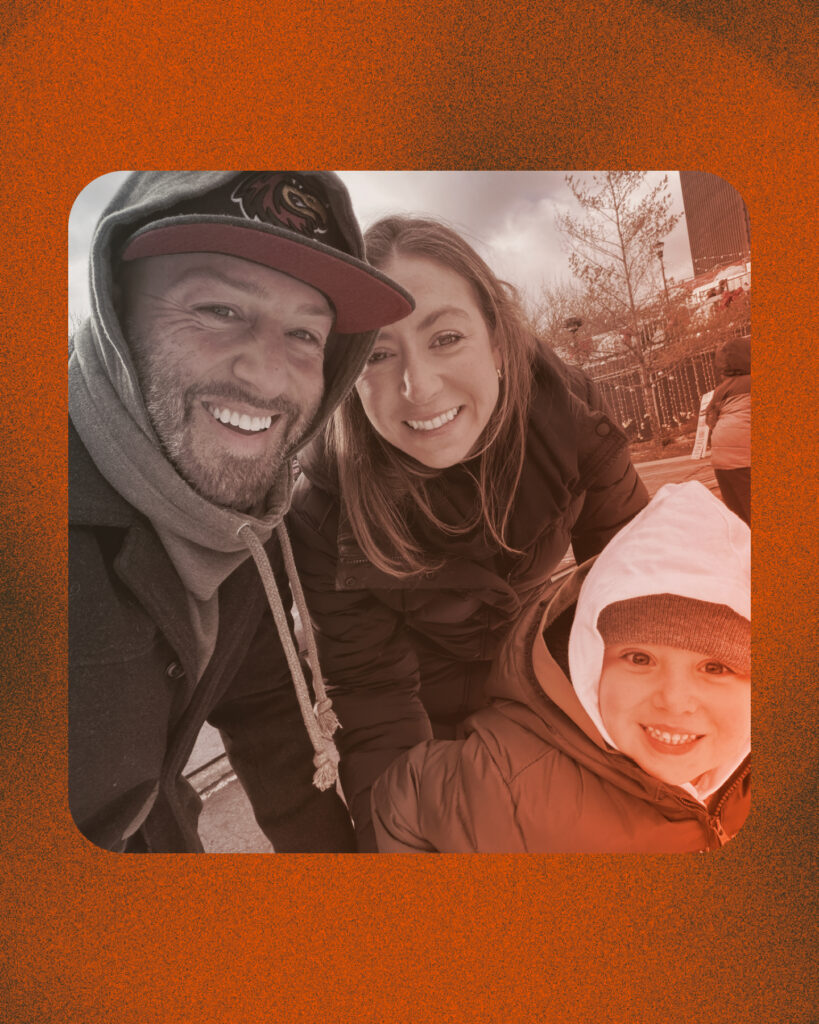
Outside of Yalo, David’s focus is all about family. His wife, Jessi, and his son, Noah, are at the center of everything.
Beyond that, he loves road cycling, boxing, and teaching—serving as an adjunct professor at the University of Miami for the past six years. It’s a role he finds incredibly rewarding, giving him the chance to share knowledge and connect with young people.
One unexpected fact? David has 19 half-siblings, and his family story has been featured in major outlets like The New York Times and Good Morning America. Safe to say, he brings a uniquely broad perspective to everything he does.

At its core, David’s work is about more than media, it’s about impact. Whether he’s helping a business grow, a school expand, or a client see things more clearly, he brings a rare combination of analytical rigor and human understanding. At Yalo, that’s exactly what great work looks like.
Insight | 03.02.26

If your strategy feels neat, tidy, and immediately agreeable… there’s a good chance it’s not doing enough.
Good strategy can often look messy. In fact, the best strategies almost always start with a bit of discomfort. They challenge assumptions. They surface tension. They force hard conversations. And that’s exactly why they work.
“Safe” thinking tends to reinforce what already exists. It favors familiar language, proven tactics, and incremental change. That can feel reassuring, but reassurance isn’t the same as progress.
When strategy feels too comfortable, it’s often because:
Comfort keeps things running. Discomfort is what moves them forward.
Early-stage strategy should feel awkward because it’s poking at things we usually avoid:
These questions don’t produce instant answers. They can even create friction. But thinking through the answers is what can lead to groundbreaking new ideas.
The most valuable strategic insights often sit in the uncomfortable middle: Between what leadership wants and what customers actually need, what data says and what instinct resists, speed and sustainability, and growth and focus.
It’s tempting to rush past this phase to “get aligned” and move on. But alignment without a little tension usually means something important was left unchallenged.
Sitting with discomfort allows patterns to emerge. It gives teams the space to connect dots, test assumptions, and uncover opportunities that don’t show up in a brainstorm.
To be clear: Discomfort isn’t the end goal. That said, to create effective change, it’s needed to reach a result teams can feel proud of.
When teams push through it together, strategy becomes sharper.Priorities get clearer because tradeoffs are made.Messaging gets stronger because it’s rooted in truth. Decisions get easier because they’re anchored in intent. All of this means that execution improves because everyone understands the why, not just the what.
The work feels harder at first, but it saves time, money, and rework later. That’s an outcome everyone can agree on.
None of this works without psychological safety. Discomfort in strategy should never mean chaos or conflict for its own sake. It requires:
When trust is present, discomfort becomes a shared experience, which strengthens teams instead of fragmenting them.
Strategy is meant to clarify direction, create focus, and unlock growth. And that almost always requires pushing past what’s familiar.
So if the strategy phase feels uncomfortable – good! That means you’re stretching.
Stick with it.
Because on the other side of discomfort is the kind of strategy that actually changes things.