
Insight | 01.17.25
Insight | 03.02.26

If your strategy feels neat, tidy, and immediately agreeable… there’s a good chance it’s not doing enough.
Good strategy can often look messy. In fact, the best strategies almost always start with a bit of discomfort. They challenge assumptions. They surface tension. They force hard conversations. And that’s exactly why they work.
“Safe” thinking tends to reinforce what already exists. It favors familiar language, proven tactics, and incremental change. That can feel reassuring, but reassurance isn’t the same as progress.
When strategy feels too comfortable, it’s often because:
Comfort keeps things running. Discomfort is what moves them forward.
Early-stage strategy should feel awkward because it’s poking at things we usually avoid:
These questions don’t produce instant answers. They can even create friction. But thinking through the answers is what can lead to groundbreaking new ideas.
The most valuable strategic insights often sit in the uncomfortable middle: Between what leadership wants and what customers actually need, what data says and what instinct resists, speed and sustainability, and growth and focus.
It’s tempting to rush past this phase to “get aligned” and move on. But alignment without a little tension usually means something important was left unchallenged.
Sitting with discomfort allows patterns to emerge. It gives teams the space to connect dots, test assumptions, and uncover opportunities that don’t show up in a brainstorm.
To be clear: Discomfort isn’t the end goal. That said, to create effective change, it’s needed to reach a result teams can feel proud of.
When teams push through it together, strategy becomes sharper.Priorities get clearer because tradeoffs are made.Messaging gets stronger because it’s rooted in truth. Decisions get easier because they’re anchored in intent. All of this means that execution improves because everyone understands the why, not just the what.
The work feels harder at first, but it saves time, money, and rework later. That’s an outcome everyone can agree on.
None of this works without psychological safety. Discomfort in strategy should never mean chaos or conflict for its own sake. It requires:
When trust is present, discomfort becomes a shared experience, which strengthens teams instead of fragmenting them.
Strategy is meant to clarify direction, create focus, and unlock growth. And that almost always requires pushing past what’s familiar.
So if the strategy phase feels uncomfortable – good! That means you’re stretching.
Stick with it.
Because on the other side of discomfort is the kind of strategy that actually changes things.
Insight | 02.11.26

There was a time when music genres were sharply defined. Rock was rock, hip-hop hip-hop, country country, you get it. Of course, that time is long gone. The music industry has since discovered that crossing boundaries is what makes music exciting, and the most revered musicians in history are the ones that weren’t afraid to swerve out of their lane.
Hip-hop is a part of rock & roll because it comes from DJ culture. DJ culture is the embodiment of all genres and all recorded music, if you actually pay attention to it. -Chuck D
With music so goes culture. Just like your playlist is filled with artists who can’t be easily defined (not to mention jumps from genre to genre), culture no longer zeroes in on one thing. You stream a podcast, scroll a meme, watch a doc, then buy something based on nothing but “vibes.”
That’s how people live now. So why would we (I’m talking specifically about Yalo now) want to stay in one lane? Hence: we are all genres. It’s actually one of our core principles.
We’re creative and strategic. Curious and focused and unified by the idea that the best work doesn’t come from playing it safe, it comes from blending influences that weren’t “supposed” to work together. That’s what modern marketing demands.
Audiences are savvy and layered. Everyone has grown up being marketed to nonstop and are quick to recognize BS and pandering. To get their attention it’s important to offer something beyond a sales pitch. If you have a product that truly meets a need, great. Go with that. Tell the truth. If not, make them laugh or at least make them think. Be original, be it through product or marketing.
Every day is a miracle. You’ve got to sing for your supper. – David Byrne
For Yalo, being “all genres” means we don’t force brands into pre-packaged tones or trend-chasing templates. We listen first. Then we find the right mix of sound, style, and substance to connect with real people in real moments.
Some of the most iconic music ever made came from breaking rules: Hip-hop sampling rock, country borrowing from blues, pop stealing from everywhere (seriously, what does the category “pop” even mean anymore?)
Marketing works the same way. The strongest ideas happen when storytelling meets performance. When data mixes with intuition. When a brand’s heritage collides with where culture is heading next.
No one worries about genre when they’re dancing. – Skrillex
So what does this mean for your brand? Well, the world moves fast. Platforms change. Algorithms shift. Audiences evolve overnight. Agencies must be agile and willing to shift quickly in order to produce work that stands out.
For Yalo, “we are all genres” isn’t a vibe. It’s a strategy. It keeps our work flexible, relevant, and ready for whatever comes next. It allows us to move fast without losing soul, and scale ideas without sanding off their edge.
At the end of the day, being all genres doesn’t mean chaos. It means harmony. Different perspectives. Different disciplines. One shared goal: create work that cuts through, connects, and actually means something. And whether your brand needs to amplify its presence, refine its focus, or define a direction that hasn’t yet been explored, we’re ready to plug in and get noisy (or keep it acoustic, up to you!).
Insight | 01.23.26

At Digital Yalo, the thoughtful and intentional work injected into our design work is a direct result of Rachel’s leadership. As Yalo’s VP, Creative Director, Rachel blends sharp strategic thinking with a deeply human approach to creativity, one rooted in curiosity, culture, and care for the people behind the work.

In her role, Rachel oversees Yalo’s creative vision, guiding brand systems, visual identities, and campaign concepts from idea to execution. Day-to-day, that means collaborating closely with designers, strategists, and account teams to connect business goals to creative expression and make sure the work not only looks beautiful, but means something.
One standout project Rachel loved working on was GenCap’s brand identity. Inspired by high-fashion influences (specifically Victoria Beckham’s ready-to-wear collections), the project was designed for an audience of affluent women, with a refined color palette and confident, modern sensibility. It’s a perfect example of how Rachel translates inspiration into strategy, creating work that’s aspirational yet grounded.
Rachel’s creative philosophy is deeply shaped by her surroundings. Cleveland’s vibrant cultural scene with world-class museums and theater to major sports teams and incredible dining feeds her curiosity. A recent visit to the Cleveland Museum of Art’s Renaissance to Runway exhibition left a lasting impression, showcasing how centuries-old art can spark modern couture. That same idea, honoring the past while designing for what’s next, runs through Yalo’s work and values.
Ask around, and you’ll hear a consistent theme: Rachel is a leader who trusts her team. She empowers people to do their best work without asking them to sacrifice what matters outside the office. She’s approachable, supportive, and relentless in advocating for her team, which is a rare quality. She’s someone who listens first and works hard to remove obstacles so creativity can thrive.
Outside of work, Rachel is all about family, fresh air, and staying active. Summers are spent outdoors with activities like gardening, playing catch, and tending to the family’s pandemic-era chicken project. She’s also often found at sporting events with her family, soaking in the energy of the city she loves.
She also just got a puppy, Arnie, named after Arnold Schwarzenegger. No joke. Rachel admires his ability to stay positive, reinvent himself, and accomplish wildly different things over a lifetime (she highly recommends the Netflix documentary!). It’s a mindset she carries into her own life and leadership.

At Yalo, creativity isn’t just about aesthetics, it’s about intention, trust, and impact. Rachel Gehrs embodies that belief every day, leading with vision, empathy, and an unwavering commitment to both the work and the people behind it.
Insight | 01.14.26
Throughout the modern marketing industry’s short, dynamic history, one question has always dominated: What’s next?
Marketers spend millions each year chasing the next big thing, gambling on what’s going to hit and following trendmakers wherever they lead. But following usually leads to a huge problem: chasing doesn’t work. By the time you catch up to culture, it has already moved on.
Brands that create culture instead of chasing it are the ones that win, but those cases are rare. You either need the budget to constantly experiment until something sticks (think: funny, intriguing daily video social content), or you need a lot of luck (think: Stanley Cup’s influencer strategy). Even the smartest, funniest, most award-winning work doesn’t guarantee a place in the conversation. After all, how many people outside of advertising know who won a Cannes Lion, or even what that is?
So maybe we should stop thinking about what’s next and start talking about what matters. All this chasing, creating, and throwing things at the wall in hopes that something sticks has created an incredibly crowded space, making the ability to stand out more important than ever. And rising above in the new year is going to require taking a higher road.
By now, you may have seen a recent Wall Street Journal piece on the role of storytelling in building brand loyalty. It wasn’t about the brand-anthemy, long-form copy kind of storytelling. It was about the kind of storytelling that gives brands context. The kind that tells the world who a company is, where it fits within the competitive set, why it exists at all, and, most importantly, why anyone should care. Because in a world where AI can write a brand anthem, a “big, bold rally cry” means nothing without the substance to back it up.
In a world flooded with content, the brands that win aren’t the loudest; they’re the clearest. They’re the ones that can articulate a point of view and sustain it across channels, leadership voices, customer experiences, and culture. Audiences are tired of being targeted, optimized, segmented, and “journeyed.” They’ve developed an almost supernatural ability to sniff out content that exists solely to sell them something.
Which brings us to AI. By 2026, AI won’t be the headline anymore, it’ll be background noise. As we’ve said before, AI is a tool, and it will remain one. It will quietly power personalization, media buying, forecasting, content testing, and a hundred other things we no longer think twice about.
The mistake brands are already making is assuming that because AI can generate, it can also connect. It can’t, at least not on its own. The brands that get it right will use AI the way great teams use great tools: to move faster, spot patterns sooner, and free up time for real thinking.
At the same time, trust is becoming the real currency of marketing. Privacy changes, disappearing cookies, and growing consumer awareness have shifted the power dynamic. There’s a reason word of mouth and unpaid recommendations remain the most powerful forms of advertising: they’re among the few sources people still trust (most of the time). By 2026, ethical data practices will be a brand signal. Companies that are clear about what they collect, why they collect it, and how it benefits the customer will stand apart in a market that still struggles with transparency.
Another shift that’s impossible to ignore is the move away from one-off influencer moments toward true creator ecosystems and brand communities. Audiences don’t want to be “influenced” anymore; they want to belong. They want to see brands show up consistently, collaborate authentically, and earn their place in culture rather than rent it for a campaign cycle. Once again, it comes back to honesty and meaning.
But how will people be reached? Short-form video, live formats, and immersive experiences aren’t trends so much as the default language of modern communication. The brands that perform best aren’t necessarily producing more content; they’re producing content that understands how people actually consume it: quickly, emotionally, and often on mute.
Behind the scenes, marketing teams are changing too. Roles are blurring, with strategy, creative, data, and technology increasingly overlapping. The most effective teams heading into 2026 are built for adaptability, not perfection. They test, learn, adjust, and move on. They value judgment as much as output, and curiosity as much as efficiency.
But can brands be authentic without authenticity becoming just another marketing buzzword? That’s a blog for another time. In the meantime, marketing is still about making people feel something and then do something. The tools have changed. The pressure has intensified. The margin for error has shrunk. But the core truth hasn’t moved an inch.
For Yalo, it’s not about chasing every new platform, format, or promise. It’s about using every tool at our disposal (technology, data, creativity, and yes, AI) to help brands show up honestly and with intention. We’ll keep focusing on work that earns attention instead of demanding it, builds trust instead of gaming the system, and creates real connection instead of noise. Because the brands that win next won’t be the loudest, they’ll be the ones that know who they are, why they exist, and how to show up meaningfully in people’s lives.
Insight | 04.30.25

At Digital Yalo, we have a list of values that motivate us every day to do our best work for our team and our clients. One of our favorites is Amp It Up to Eleven. It’s not just a catchy phrase, it’s part of how we approach every project. The idea is simple: why stop at 10 when you can go beyond? It’s about pushing ourselves, our work, and our clients to go further, think bigger, and do something unexpected.
For us, “good enough” isn’t the goal. We believe that even the best work can always get better. That doesn’t mean we’re constantly dissatisfied—it means we’re always looking for ways to improve, even when things are on track. Whether it’s tweaking an idea or finding a way to make something stronger, we’re always thinking about how we can go one step further. It’s not about being perfect; it’s about always striving to make the work better and delivering something we’re truly proud of.
At Digital Yalo, we like to shake things up. We love doing things that break the mold, whether it’s trying something completely new or pushing a creative boundary that’s never been crossed before. We want to encourage our clients to do the same. With performance and results at the forefront of our minds, we like to think outside of our comfort zone and try something that makes people stop and think.
Doing something unexpected isn’t just about being bold for the sake of it—it’s about creating opportunities for deeper, more meaningful conversations that make a real impact for our team and our clients.
Every brand has a soul, and our job is to find it and let it shine. This is where “amping it up” comes in. It’s about turning up the volume on what makes your brand unique and giving it the attention it deserves. In marketing, there’s plenty of noise and competition – we want to make sure your brand’s voice is heard loud and clear. The aim is to amplify that voice so it resonates with the right people, in the right way.
We don’t just want to meet expectations—we want to blow them out of the water. Sure, we’ll deliver what was asked for, but we’re always thinking about how we can go above and beyond. Sometimes that means pushing the creative envelope, other times it’s offering a new perspective that takes things to the next level. Whatever it is, we’re always looking for ways to make the work stronger, more creative, and more impactful. It’s about adding value that goes beyond what’s expected and showing up in ways that make people say, “Wow.”
We believe that when we work together and bring our different perspectives to the table, we can come up with ideas that are even bigger and better than what any one of us could do alone. This isn’t just true for our internal team; it’s also true when we partner with our clients.
We want to help them see the bigger picture and explore opportunities they might not have considered. It’s not just about getting the job done—it’s about creating something that grows, evolves, and ultimately makes a bigger impact.
Whether it’s shaking things up, amplifying your brand’s true voice, or simply going that extra mile to make sure every detail is spot-on, we’re always aiming for more. Because when you’re not stopping at 10, there’s always something new and exciting just around the corner. And that’s the kind of work we love to do.
If you want to amplify your brand and make an impact, we’re here to help.
Insight | 04.24.25
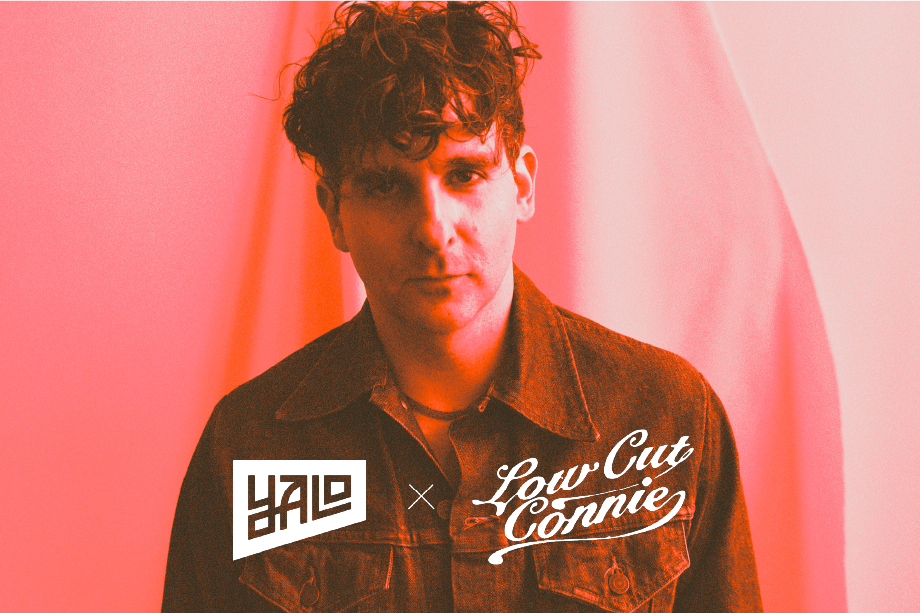
Music engages most of our senses, but the strongest of them is feeling. (You thought we’d say hearing, right? Wrong!) That’s why we so often turn to music for inspiration when we want our clients to feel something, encouraging them all to pick “soul songs” from which to help drive branding ideas. People connect with music in a primal way. No one knows this better than Philadelphia-based musician and bon vivant Adam Weiner, aka Low Cut Connie.
Known for his high-energy live shows, Low Cut Connie has a stage presence that’s almost unmatched in today’s musical landscape. He personifies the Yalo tenet of “amping it up to 11” in almost every way, which made him a natural fit to partner with Yalo. For over ten years, Yalo and Low Cut Connie have shared a love of bringing music into everything they do, and have supported each other through branding and event opportunities.
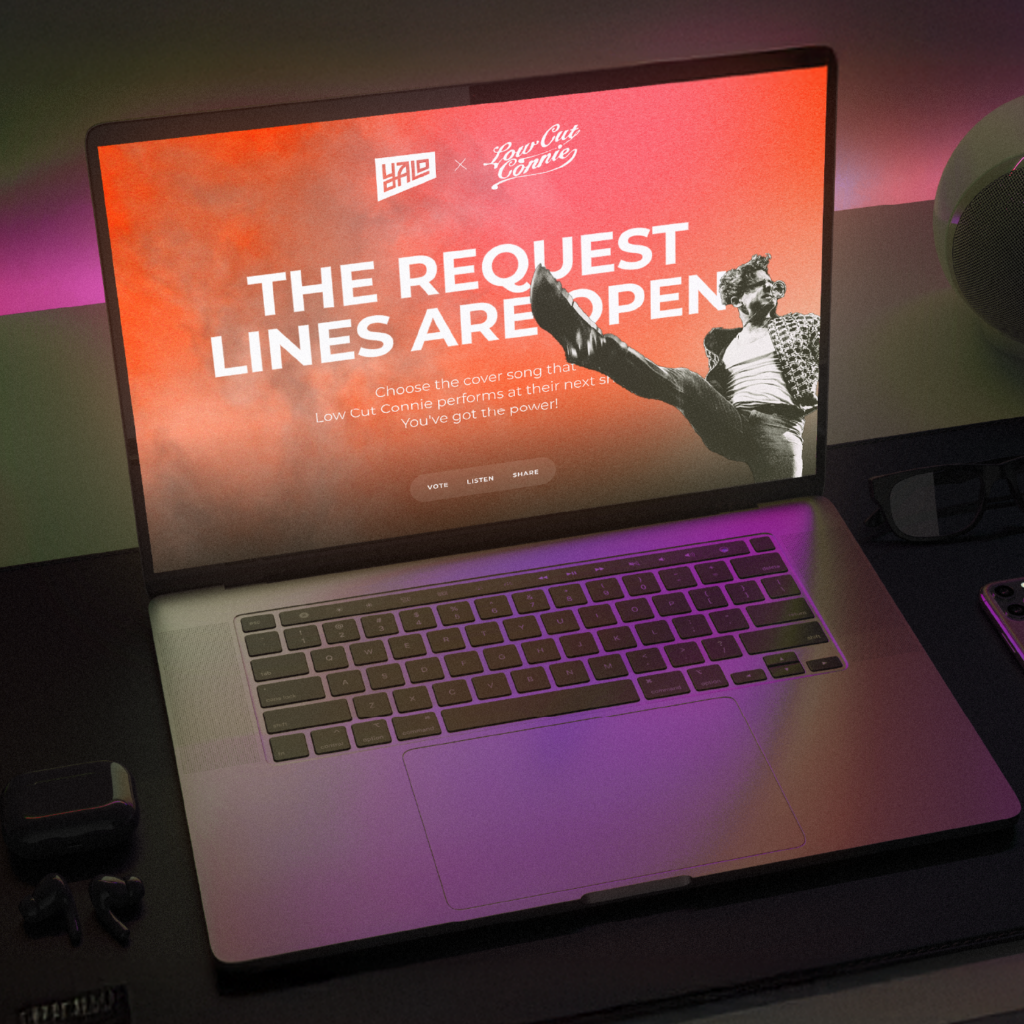
When it came time for Low Cut Connie’s summer residence at Ardmore Theater, we knew we had to jump in and tell the world about it, with a website that allowed for the kind of fan interaction that LCC was known for (in digital form, of course). Instead of just the ability to get information and purchase tickets, this site allowed fans to choose the song they wanted Low Cut Connie to cover at each of his shows, with a selection that changed every week.
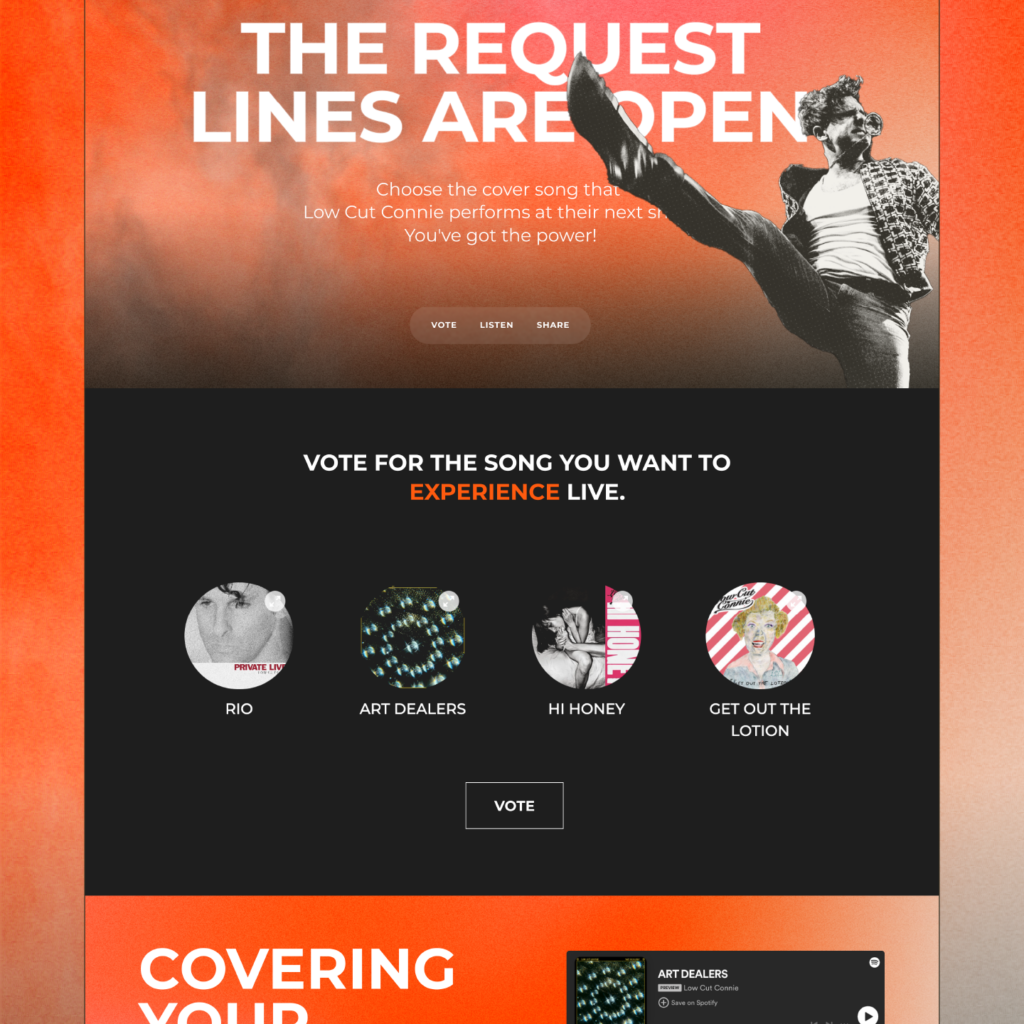
Since the audience was allowed to pick the songs, it resulted in some… interesting choices. Here’s the band performing “Part of Your World” from The Little Mermaid, much to Adam’s delight (warning: adult content throughout):
Says Adam:
“I absolutely loved working with my Digital Yalo pals on my project, the Connie Club, this past summer. It was a complex idea with a lot of different media elements, and Josh, Arnold and the Yalo team had great collaborative ideas right from the start. They sculpted an interactive platform for me that brought me closer to my fans and was exciting for everyone involved. I always love working with these guys and hope to continue doing so in the future.”
Music and branding will always go hand-in-hand, as people respond to music in a way that can help make brand work memorable. Marketers have known and used that information for… oh, since around the first television ad.
At Yalo, we know that it can be used for more than just a background track. We encourage our Tribe and clients to find their own “Soul Song,” the song that hits the emotional core of you or your brand.
Want to learn more about how music can help your brand? Just ask! Want to jam out to Low Cut Connie? No asking needed.
Insight | 02.17.25

Ah, Crocs. Once upon a time, they were the foot-things we loved to hate. First marketed as boat shoes back in 2002, they were quickly banished to the realms of “ugliest footwear ever.” Yet here we are, decades later, watching Crocs not just survive but thrive. What on earth happened, and more importantly, what lessons should brands take from Crocs?
Let’s dive in.
From Utility to Individuality: A Lesson in Amping It Up
When Crocs first launched, they were known for their functionality. Designed for comfort and durability, they were utilitarian to a fault—practical but lacking personality. They were, essentially, the sensible shoe your middle school teacher wore to do yard work. But in 2017, under new leadership, Crocs made a radical shift. Instead of focusing on what their shoes did, Crocs began to focus on what they could mean: a symbol of joy, self-expression, and yes, even style.
The pivot required them to go beyond what was merely expected or necessary, leaning into unexpected and over-the-top moves to demand attention. The brand started to pump out partnerships with everyone from Post Malone and Justin Bieber to fast-food icons like KFC. (Yes, they made fried chicken Crocs—complete with a drumstick Jibbitz™ charm). These collaborations were fun, unexpected, and just the right amount of outrageous, amplifying Crocs from “comfort wear” to a bold, if still questionable fashion statement.
This is a textbook example of what we at Digital Yalo like to call “Amping It Up to 11.” Crocs didn’t stop at merely shaking their old, practical reputation; they cranked up the individuality and let loose with wild collaborations and off-beat charm accessories. And frankly, anything less would likely have been insufficient.
A Visionary Journey: Embracing the Tour
To be clear, this resurgence didn’t happen overnight, and it certainly wasn’t a straight shot. By 2008, Crocs was practically on life support, hemorrhaging $185 million and cutting thousands of jobs. The stock had plunged, the business was in shambles, and it would’ve been easy to simply refocus on what was safe and comfortable. But rather than retreat, Crocs doubled down on a long-term strategy rooted in self-expression and individuality.
They knew where they wanted to go—they just had to be patient enough to make the journey.
This is what we at Digital Yalo like to call “Embrace the Tour.” Crocs had a vision of where they wanted to be, and they weren’t deterred by short-term losses or missteps. They didn’t panic when the seas got rough; instead, they leaned into the tour, adapting their strategy and committing to a path that was uniquely their own. Today, they’re forecasted to hit $5 billion in sales by 2026. That’s what happens when you stay true to your destination and weather the obstacles along the way.
Inclusion and Authenticity: A Genre for Everyone
One of the key ingredients in Crocs’ recipe for success is their unapologetic embrace of individuality—something we value here at Digital Yalo as “We Are All Genres.”
By positioning themselves as a blank canvas for self-expression, Crocs tapped into a universal truth: people want to feel included and authentic, no matter how quirky or niche their tastes. Crocs let people be a little bit extra (or a lot extra) and celebrate it, whether it’s with a mini ranch bottle charm or a platform heel so chunky it doubles as an ankle workout. In the world of Crocs, there’s a shoe for everyone, and everyone is welcome.
The takeaway? Crocs didn’t merely follow a trend—they made one. By going big on the unexpected and embracing the long haul, they’ve turned a former fashion faux pas into a cult favorite. It’s a reminder that true brand success isn’t just about filling a need. It’s about connecting with people in ways that matter to them, leaning into bold ideas, and staying committed to a vision.
So, next time you’re looking to Amp it Up or Embrace the Tour, take a page from Crocs’ playbook: make it memorable, make it bold, and never shy away from a little fun along the way.
Insight | 02.03.25
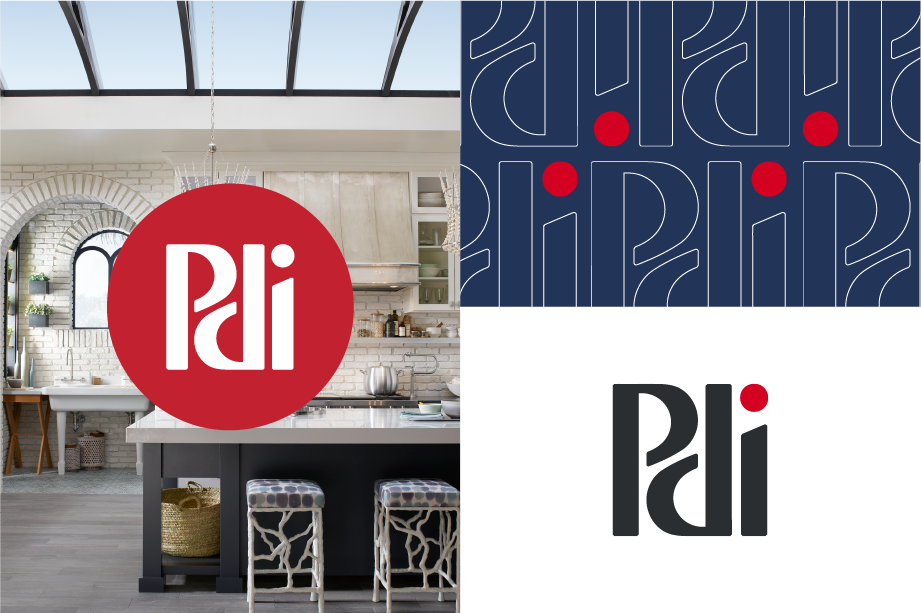
A brand evolution has many moving parts. It’s more than just changing a look and feel, it’s the research and planning that goes into the initiative before any changes are made, and the maintenance that goes into constantly reinforcing the new brand voice—plus everything in between.
PDI Kitchen, Bath and Lighting is known in the plumbing and homebuilding industry for outstanding products and customer relationships. While they had a great reputation on the industry side of things, they were relatively unknown to the public. Enter: Yalo.
When Yalo and PDI began their partnership, PDI had just renovated their public-facing showroom with a curated selection of high-end products and finishes. They also expanded their ecommerce offerings. They needed a brand refresh to match these initiatives, breathing new life into the website’s look and feel and updating their communications.
Yalo started where most brand refreshes start—with a new logo and visual identity system. We took their old logo and evolved it to reflect an elevated look and feel, while still alluding to their legacy logo in order to utilize brand equity built over 45 years. We also developed a brand architecture and corresponding identity system for use in acquisitions.
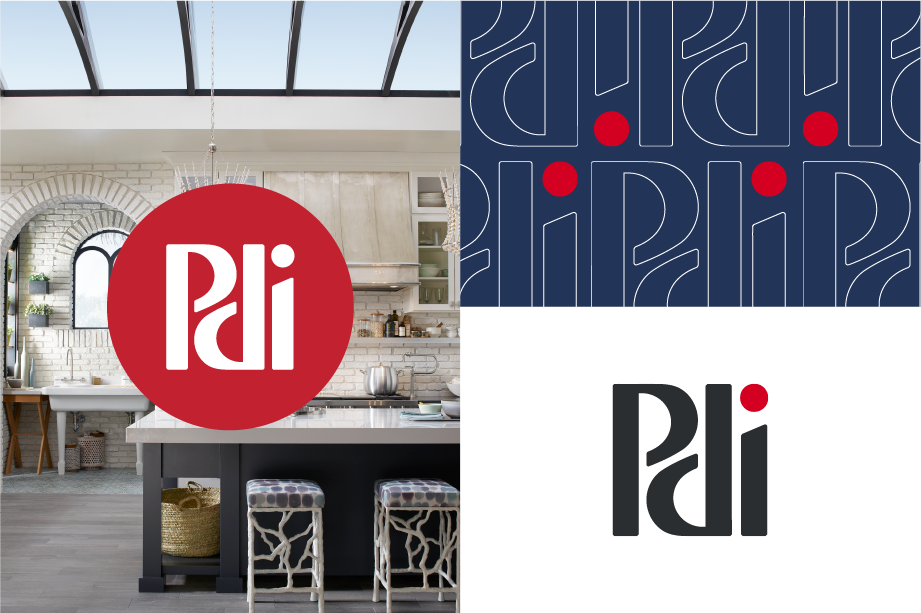
Why do people renovate their home? What goes into deciding where to spend money and which styles to choose? When developing PDI’s advertising campaigns, we looked at the psychology behind home renovation, and used this mindset to develop fun yet elegant messaging, positioning PDI as a trusted, reliable source to bring their vision to life.
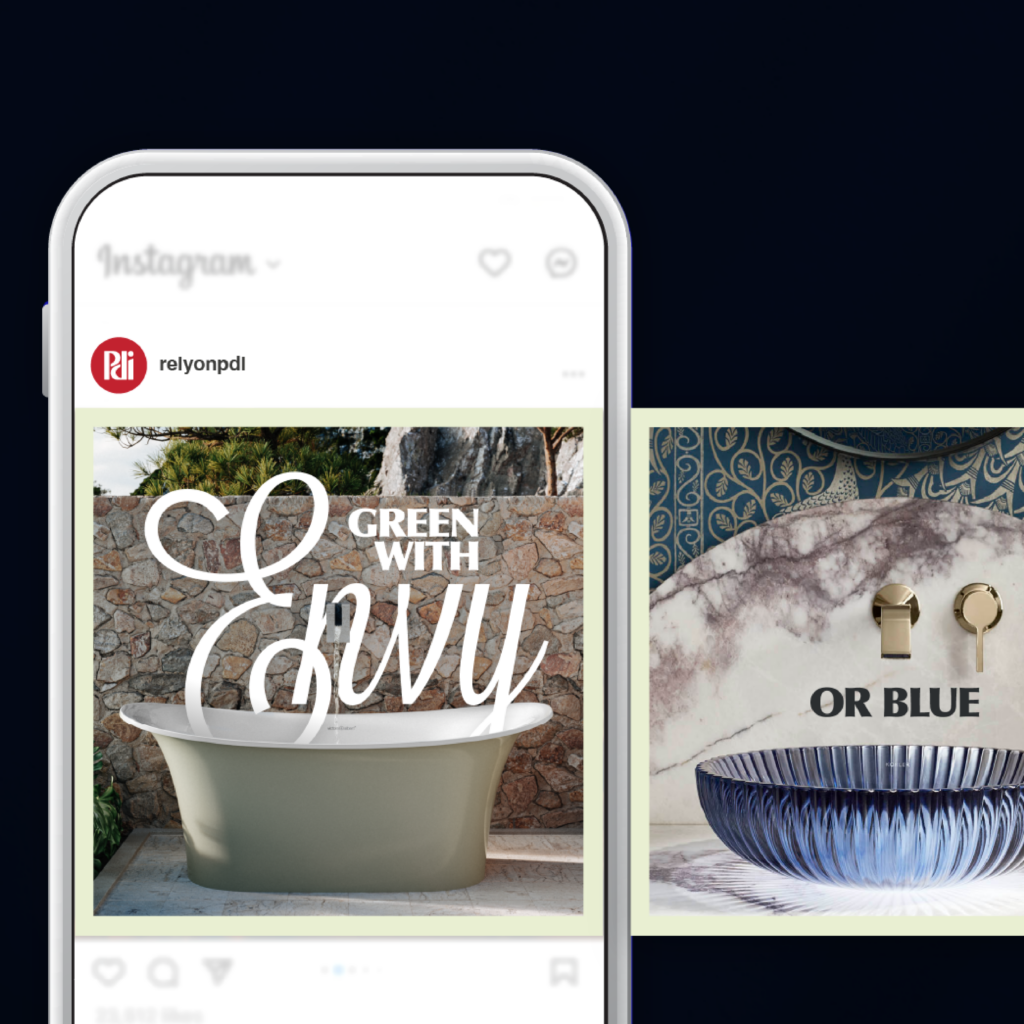
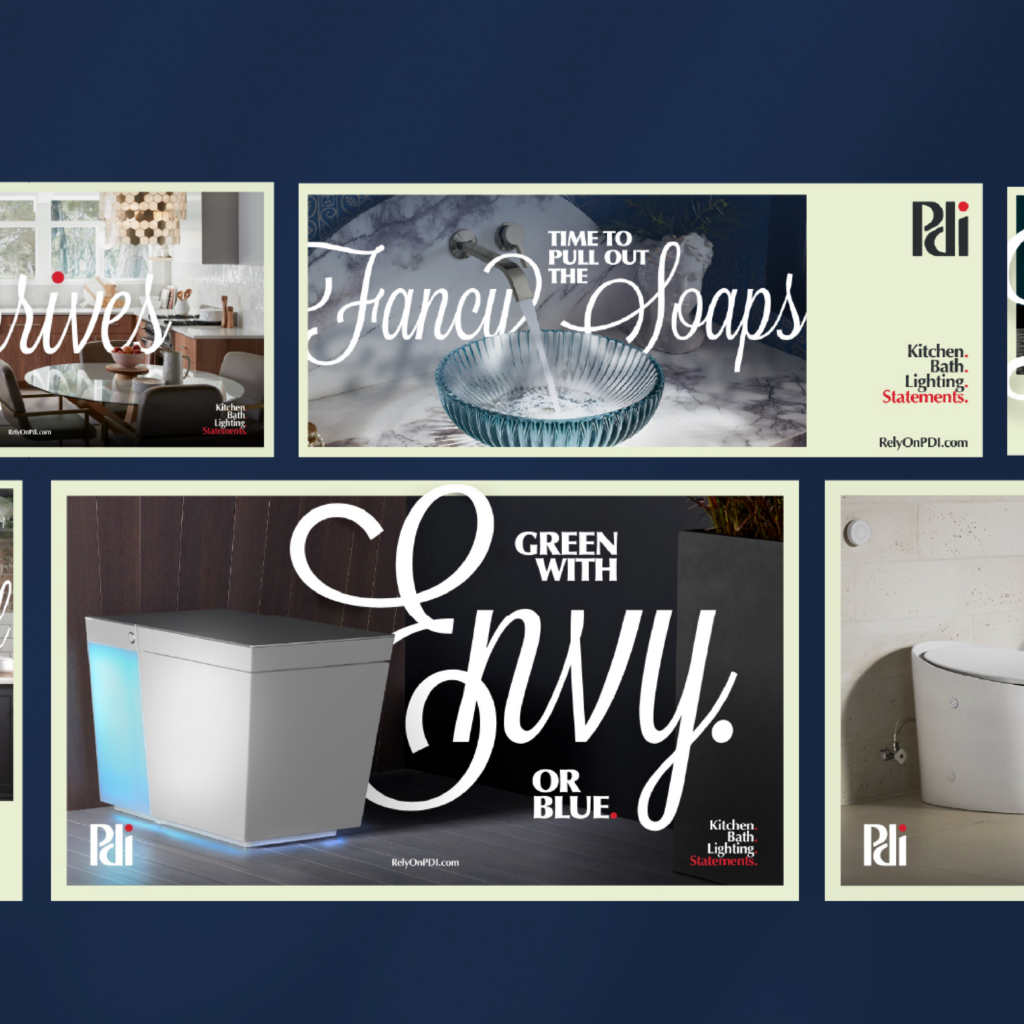
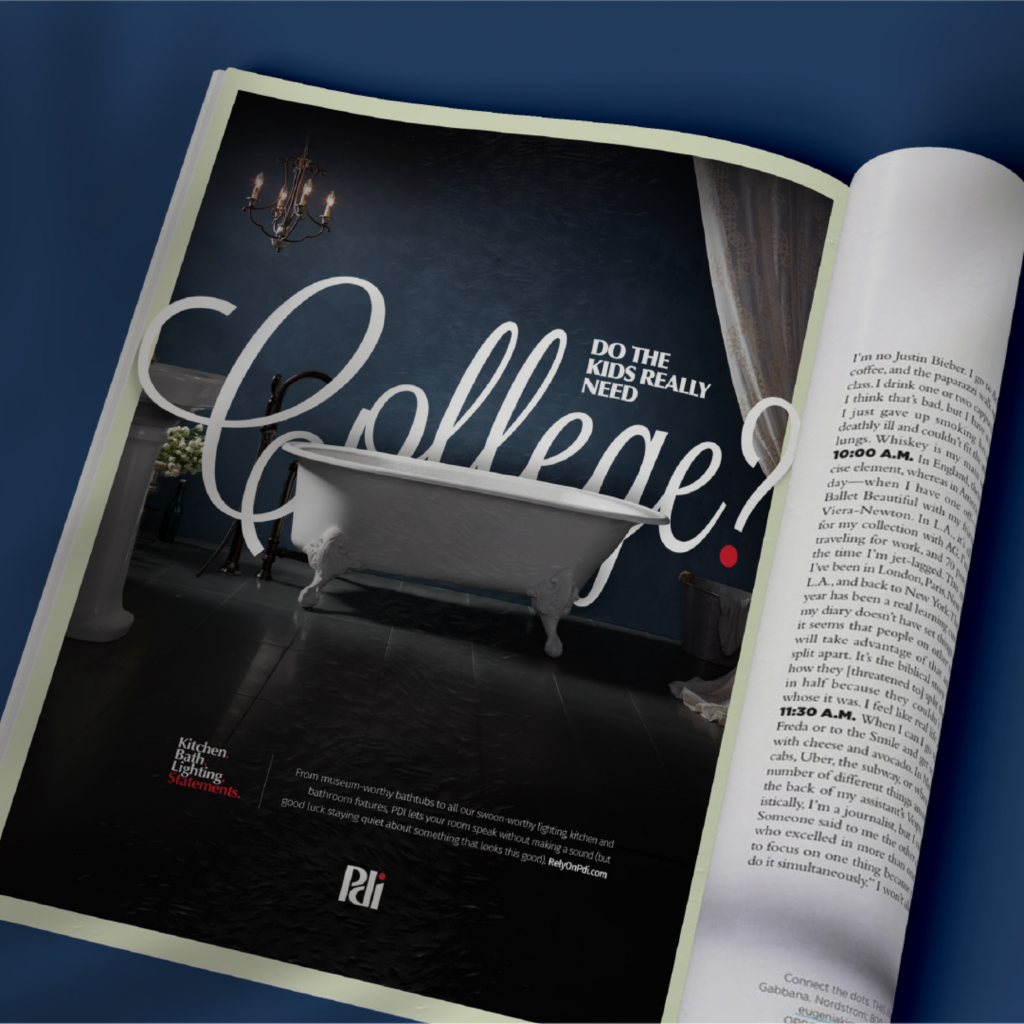
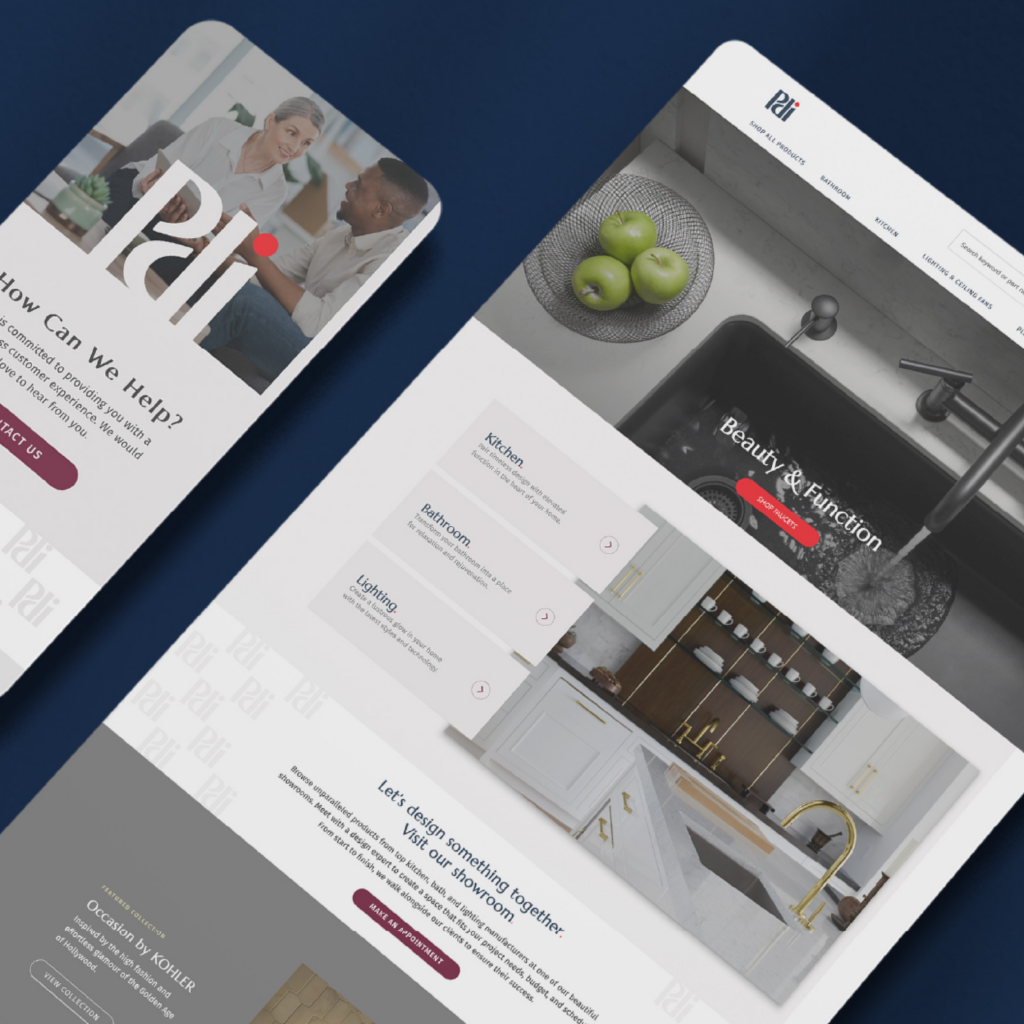
We also created an elevated user experience on the PDI site, enhancing the user interface to reflect PDI’s premium positioning.
Last but certainly not least (also, not technically last, since we continue to evolve the brand), we shot :30 and :15 commercials which spoke to the fun side of home renovation while still showcasing PDI’s offerings.
Insight | 01.08.25

Is content strategy a part of your marketing plan? If not, it should be! Despite nearly every brand using content marketing, only 40% of B2B marketers have a documented content marketing strategy.
Content strategy is the foundation of effective marketing. It’s not just about creating content—it’s about planning, managing, and evaluating every piece to ensure it aligns with business goals and serves your unique audience’s needs. A good strategy ensures that your content works cohesively across platforms, speaks directly to your audience, and delivers measurable results.
Here’s why it matters: without a strategy, content is often reactive, inconsistent, and unfocused. With a strategy, it becomes a powerful tool to engage audiences, build trust, and drive meaningful outcomes.
Investing in content strategy delivers real, measurable benefits:
How We Build and Execute a Content Strategy
So – what is a content strategy? It’s a comprehensive plan that begins long before creating any actual content. While every strategy is tailored to fit a brand’s unique goals and needs, there are common steps that most content strategies include. Here’s how we do it:
Every content strategy starts with clarity. What are your business objectives? Are you looking to drive brand awareness, generate leads, or increase conversions? From there, we turn to audience research. Through data and insights, we build detailed personas that outline your audience’s needs, preferences, and behaviors. These personas guide the tone, style, and format of every piece of content created for your brand.
Next, we take stock of your existing content. A content audit evaluates what connects with your audience based on best practices and persona research, and where gaps exist. This step ensures we’re building on a strong foundation while avoiding duplication or inefficiency.
Understanding the competitive landscape is key to standing out. By analyzing what your competitors are doing well (and not so well), we identify opportunities to differentiate your brand and deliver more value to your audience.
Content is only as good as its accessibility. We organize your content into a logical structure that ensures users can find what they need quickly and easily. A well-planned IA also supports SEO, helping your content rank higher in search results.
With a clear understanding of your goals, audience, and existing assets, we develop a comprehensive strategy. This includes:
This plan ensures every piece of content serves a purpose and contributes to the overall goals of your brand.
Content strategy doesn’t happen in isolation. In collaboration with our UX, marketing, SEO, and design teams, we deliver cohesive and impactful content. This collaboration ensures consistency across all touchpoints, from messaging to visuals.
Once the content is live, the work isn’t over. We analyze performance metrics, gather user feedback, and refine the strategy to ensure ongoing success. Regular evaluation helps us stay aligned with your goals and adapt to changing audience needs.
Content strategy isn’t just a part of marketing—it’s the backbone. With a thoughtful, well-executed approach, you can elevate your brand, connect with your audience, and achieve long-term success. Ready to implement a content strategy for your brand? We’re here to help.
Insight | 01.06.25

By Max Cedergreen, Group Account Director
Why did I pick account management? My answer is subject to change based on the situation in which I am asked. Over a drink, I may jest that it’s a testament to my failure to make it as a copywriter – having nothing to put in a portfolio aside from alliterative taglines and a collection of one-liners categorized under “somewhat funny.”
On my LinkedIn, you’ll read that it’s a career path nestled at the intersection of strategy and creativity – weaponizing the talents of varying disciplines at the agency to attack client business challenges.
But if you ask me point blank, I will tell you the truth — I just love people. (Reader’s note, if you want to jump to the case study portion of this post, scroll to ‘JUMP AHEAD’)
Finding commonality between myself and others has always brought me a sense of satisfaction – recognizing that it’s a valuable professional skill, is something I never take for granted. To date, building relationships with both my peers and my client partners has been, and will continue to be, the most fulfilling aspect of my career.
As I sit down to share my thoughts on the significance of building strong relationships with clients, I am reminded of instances throughout my career where it has paid dividends. Over time, I’ve come to understand that behind every successful branding strategy lies a deep understanding of the client’s vision, values, and unique attributes. The key to unlocking this treasure trove of insights? Genuine, meaningful relationships.
Anyone who has worked for or with an agency knows that the term “fast-paced” gets thrown around as both a colloquialism and generalization. It’s easy to get caught up in the frenzy of deadlines, deliverables, and results. As a steward for my client partners, my mission goes beyond project intake and delivery; it’s about delving into the soul of a brand and bringing it to life in a meaningful way. In doing so, what I have found over the last decade is that it’s essential to remember that at the heart of every brand or project, there are people – people with personal and professional goals, aspirations, and motivations.
Building relationships with clients isn’t just a nicety, it’s a strategic imperative with tangible benefit for agency and client alike. It lays the foundation for trust, collaboration, and ultimately, success. A two-way relationship between a client partner and an agency that is hinged upon a shared investment in the brand lends itself to both immediate and long-term progress. When a client team trusts their agency, they’re more likely to open up, share insights, and partner when it comes to shaping their brand narrative.
When an agency trusts their client, they are more likely to break the mold with confidence, knowing they will be afforded the chance to demonstrate opportunity through riskier work. The mutual trust lends itself to mutual safety, a key ingredient in creative liberation. Knowing the variable we aim to solve for is but one half of the equation, having an interesting and thought provoking means of addressing the objective accounts for the other.
As agencies look to produce fresh and innovative work for their clients, one of the most significant benefits of fostering strong client relationships is the ability to uncover the hidden gems that set their brand apart from the competition. Every brand has a unique story to tell, but it’s often buried deep beneath layers of market noise and industry trends. By taking the time to listen, ask probing questions, and truly understand the client’s journey, you can unearth these hidden treasures and isolate value propositions, leveraging them to drive results.
JUMP AHEAD: I have felt this firsthand in our relationship with Cortland Apartments.
Headquartered in Atlanta, Cortland is a global, integrated, multi-family apartment management company that focuses on building hospitality-driven and resident-centric communities. As a client, Cortland has been a partner to Yalo for nearly a decade, with a relationship spanning brand building, creative campaign development, and integrated media services. A key milestone in our longstanding relationship has been an introduction of Cortie the Spokes-pug, a furry Australian brand ambassador designed to help disrupt the more predictable nature of apartment advertising and marketing.
On a quarterly basis we meet with our partners at Cortland for what we call the “State of the Business” meeting. For Yalo, the objective is simple: demonstrate our ability to actively listen. By setting aside our instinct to lead, in favor of our ability to listen, we find ourselves in the presence of authentic and organic dialogue between our clients that is rich with insight. Having a designated seat at the table for such discussion puts Yalo at an advantage when it comes to planning out broader strategic initiatives, affording us the ability to plan against pain-points of any scale.
Uncovering these gems isn’t just about asking the right questions; it’s about creating an environment where clients feel comfortable sharing their hopes, concerns, and aspirations.
Think about your clients the way you’d think about a personal friend and how you would interact with them in an interpersonal way. It’s about being empathetic, attentive, and genuinely interested in their success, which builds trust beyond the transaction. While a personal mantra of mine, I believe that many successful agency-folk would agree that a client’s success is heavily tethered to their own success. When they win, we win. We are unified as one as we strive for a common goal. When clients know that you’re invested in their journey, they’re more likely to open up and share the insights that will serve as a catalyst to strategic process and planning.
“Our company and its brand communication needs have changed greatly over the last seven years, and the Yalo team has changed with us. They’re a fountain of ideas and a skilled partner in executing our myriad brand, social, and internal engagement initiatives. Yalo helps us find our voice in the marketplace.” – Britt Else, Creative Director, Cortland.
Inspiration can come from anywhere, and I have found that some of the most valuable insights come from unexpected places; a casual conversation over coffee, a candid moment of reflection, or even a shared laugh over a relatable experience. These seemingly mundane interactions have the capacity to lead to breakthroughs that shape the trajectory of a project and its subsequent success. At the very least, they serve as opportunities to deepen the connection between client and agency alike, demonstrating the peer to peer human connection that is a necessity in any healthy relationship.
While invaluable on the surface, building relationships with clients isn’t just about uncovering insights. It’s also about fostering a sense of partnership and collaboration. When clients feel like they’re part of the creative process, they’re more likely to be invested in the outcome and committed to bringing the vision to life.
By involving them in brainstorming sessions, design reviews, and strategic input meetings, you not only tap into their expertise but also create a sense of ownership that fuels their passion for the project. Beyond that, when the shared vision is successful in the form of tangible results, the shared celebration is that much more meaningful.
One of the most rewarding aspects of my job is seeing the transformation that takes place when a client’s vision comes to life. It’s incredibly gratifying to play a small, but meaningful role in helping them achieve their goals. There is a lot of gratification that comes from recognizing that the work has been impacted by the trust and collaboration that underpin every successful client relationship.
Beyond that, when your relationship surpasses the professional and extends into the personal, it’s like giving a good friend a high-five. Well done.
In today’s hyper-competitive marketplace, brands are constantly vying for consumers’ attention, and standing out from the crowd is no easy feat. Let me say it one more time, louder for the people in the back: By building meaningful relationships with clients, we gain access to the insights, stories, and humanity that inform unique opportunities to create a lasting impression on consumers.
It’s not always going to be a silver-bullet, but why disregard a competitive edge when it’s looking you in the mouth? All professionalism aside – at the bare minimum you stand to better relate to your clients in such a way that it makes difficult conversations easier, and the good conversations great. Sounds great to me.
By now it’s become apparent that this soapbox can only hold me for so long. My hope is that this perspective offers you affirmation of a behavior you already exhibit in your professional existence, or alternatively encourages you to never underestimate the power of building better relationships with clients. It’s not just a means to an end – it’s the foundation upon which successful brand strategies are built.
My challenge to you is to continue to listen, learn, and collaborate, knowing that the insights we uncover and the relationships we forge will drive results that go beyond our most grandiose or anticipated expectations.
Curious about the type of marketing outcomes we can create for you? Check out our case study on Cortland HERE.
Insight | 12.20.24
In the heart of the South, few things ignite passion quite like Atlanta Braves baseball. And no one understands this affinity (and celebrates it!) more than Cortland—a vertically integrated multifamily company focused on delivering an above and beyond apartment living experience.
Cortland owns and operates communities across the US Sun Belt and is the top owner of apartment homes in the metro-Atlanta area. With its headquarters here in Atlanta, Cortland became an official sponsor of the Atlanta Braves in 2019. This past season Cortland wanted to pursue a gameday activation that would engage with Braves fans to highlight the Cortland x Braves partnership and continue to grow awareness for their brand.
As Cortland’s agency partner, Yalo was given the opportunity to design a memorable pop-up experience for this activation. With so many fans passing through, the big question for our team was How can we create a memorable experience for Braves fans that also engages them with the Cortland brand?
The answer? Create unique co-branded merchandise that captures the essence of Braves Country & Cortland. Yalo worked with the Braves to secure a 10×10 activation space right outside of Truist Park’s Third Base Gate. As this gate is the closest to gameday parking lots, it typically manages about 60% of gameday traffic—which is approximately 25,000 people during a typical sold out game!
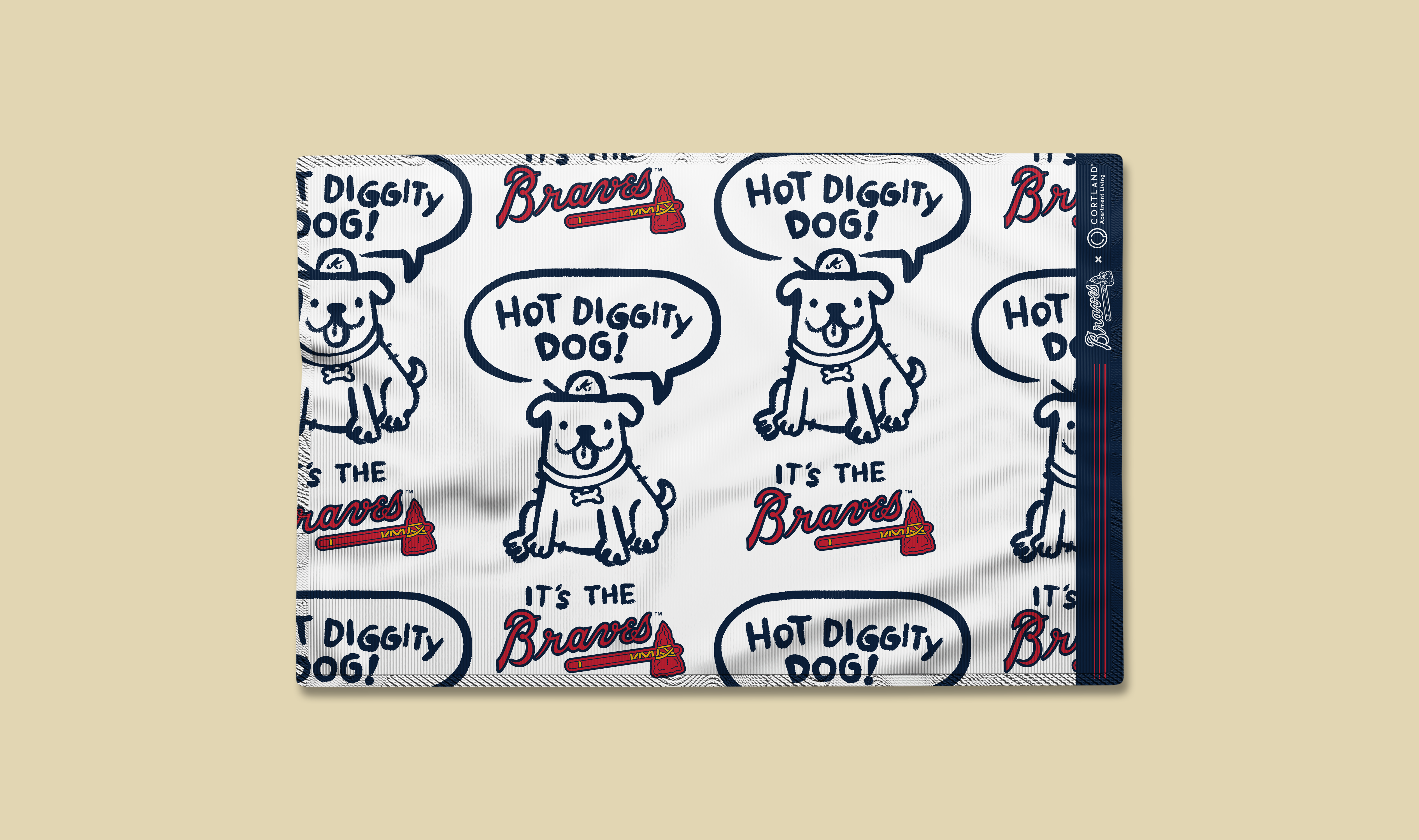
Collaborating closely with Cortland, Yalo’s creative team developed multiple ideas that leveraged iconic Braves and Cortland imagery before landing on an illustration of the Braves mascot Blooper next to Cortland’s spokespug, Cortie.
This illustration was printed on rally towels & t-shirts, which were then given out to Braves fans who stopped by the activation booth to learn more about Cortland.
“I thought the incorporation of Blooper (the Braves mascot) into the overall design was clever,” says Mike Gomes, Chief Experience Officer for Cortland. “While we recognize that not many people may be aware of Cortland and our mascot Cortie, we know that fans love Blooper. As a result, they’ll be likely to wear their t-shirt around town, further promoting Cortland and our partnership with the Braves.”
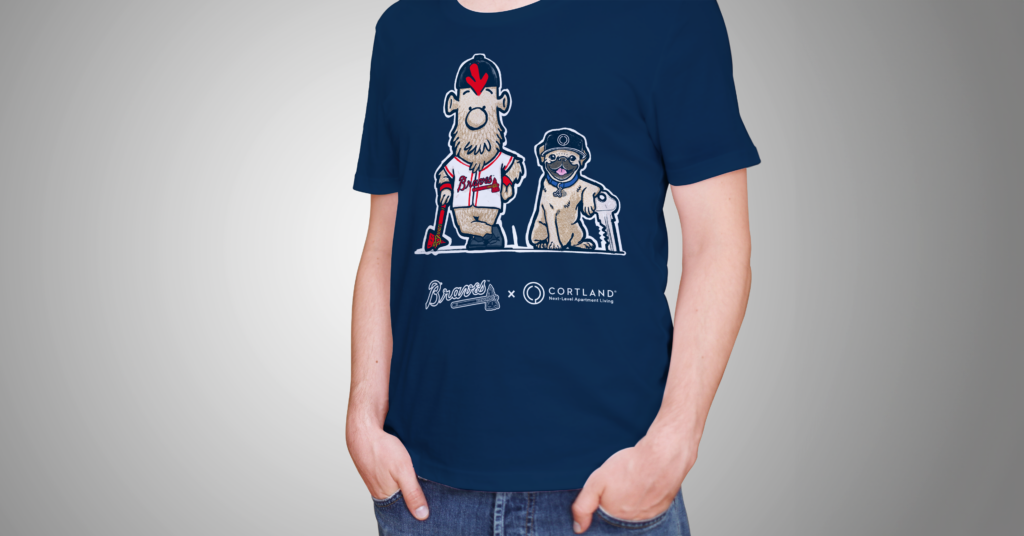
Creating limited-edition Cortland Living x Braves swag was a win-win for both parties; not only did it elevate the fan experience—providing them with items to wear & cheer on the Braves—but it also boosted Cortland’s brand awareness, filling up Truist Park with the Cortland spokespug, Cortie. The unique (and limited) design motivated fans to stop by the activation booth and learn more about who Cortland is and the benefits of living at a Cortland community. Fans also had a chance to interact and get pictures taken with the Cortie mascot.
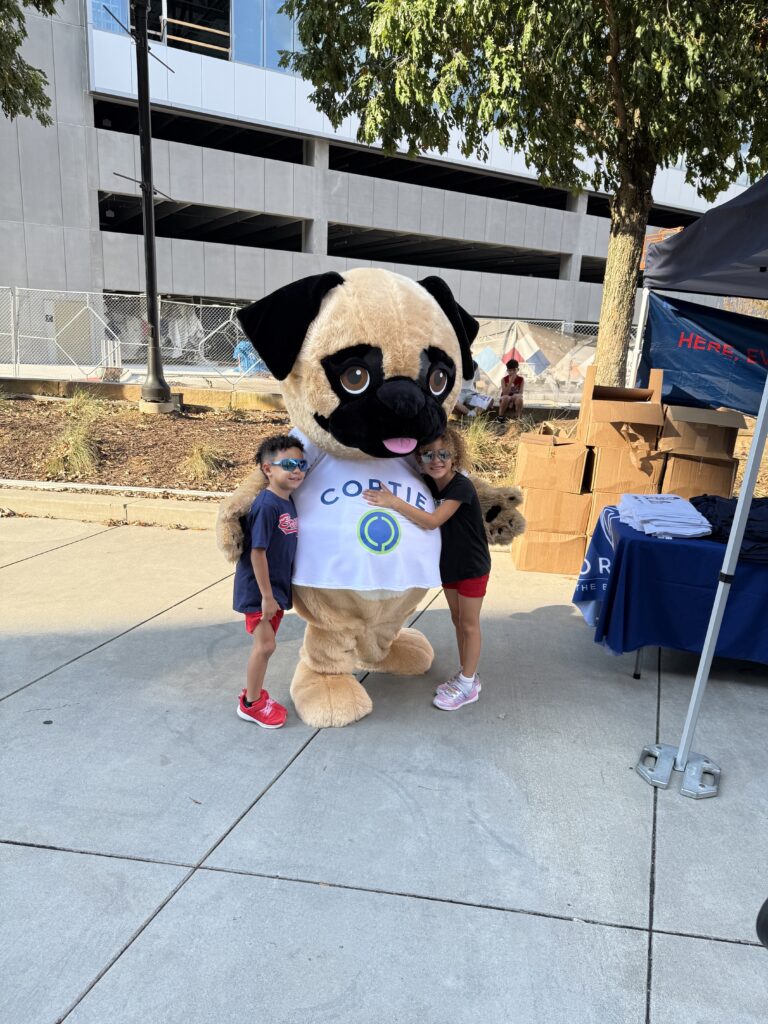
By providing fans with something to take home—an item that symbolizes their passion for the Braves—Cortland created a connection that goes beyond the game.
In a city where Braves baseball is a cherished tradition, Cortland gave fans something they can treasure for years to come. Yalo and Cortland’s collaboration demonstrates the power of thoughtful, community-focused brand activations. By tapping into local culture and creating engaging experiences, brands can forge lasting connections with their audience that resonate long after the event ends.
Insight | 01.17.24

In the dynamic and competitive landscape of the business world, the importance of a well-crafted brand strategy cannot be overstated. A brand is not just a logo or a product; it’s an experience, a promise, and a reflection of your company’s values. Today, we’ll delve into the intricacies of brand strategy, exploring the key elements that contribute to a successful and compelling brand.
In the ever-evolving business landscape, a well-crafted brand strategy is the compass that guides your journey to success. By understanding your audience, defining your unique value proposition, maintaining consistency, weaving a compelling narrative, embracing digital channels, and building trust, you can create a brand that not only stands out but stands the test of time. Let Yalo lead the effort into crafting a brand strategy that resonates – your brand’s future success depends on it.
Insight | 09.27.23

In the vast sea of products and services, a strong brand identity is your North Star, guiding customers towards your shores. It’s not just about having a fancy logo or catchy slogan; it’s about creating a lasting emotional connection with your audience. Welcome to the world of branding and brand strategy, where the magic of storytelling and the power of brand equity converge to form an unbreakable bond between your brand and your customers.
The Essence of Brand Identity
Crafting a Distinctive Visual Identity
Your brand’s visual elements – logo, colors, typography, and design – are the building blocks of recognition. A well-designed logo can convey your brand’s personality, values, and mission in a single glance. Consider the golden arches of McDonald’s or the bitten apple of Apple; these logos have transcended their physical forms to become symbols of a lifestyle.
The Power of Consistency
Consistency is the secret sauce of branding. Every interaction with your brand should feel like a rendezvous with an old friend. Maintain uniformity in design, messaging, and tone across all touchpoints, from your website to your social media profiles. This consistency breeds trust and familiarity.
The Art of Brand Storytelling
Evoke Emotions, Not Just Transactions
Humans are wired to respond to stories. Your brand story should resonate with your target audience on a deep emotional level. It should answer the “why” behind your business, highlighting your journey, challenges, and triumphs. Your customers should see themselves in your narrative, forging a connection that goes beyond the transactional.
Authenticity is the Hero
Authenticity is the currency of the digital age. Be genuine, transparent, and true to your values. Consumers can spot a facade from a mile away, and they gravitate towards brands that are honest and human.
User-Generated Content: Your Brand’s Best Friend
Your customers are your most potent storytellers. Encourage them to share their experiences with your brand. User-generated content adds authenticity and trust to your brand narrative. Share these stories on your platforms, turning your customers into brand advocates.
Building Brand Equity
Defining Brand Equity
Brand equity is the sum total of all the perceptions, associations, and feelings people have towards your brand. A strong brand equity means your customers not only recognize your brand but also value it. It’s an intangible asset that pays dividends in the long run.
Consistency in Quality
One of the pillars of brand equity is consistent product or service quality. Customers should know what to expect when they engage with your brand. Meet and exceed their expectations, every single time.
Customer-Centric Approach
Your customers are at the heart of your brand equity. Listen to their feedback, adapt to their changing needs, and show them that you care. Exceptional customer service can turn a one-time buyer into a lifelong advocate.
Innovation and Adaptation
A brand that refuses to evolve becomes stagnant. Stay relevant by continuously innovating and adapting to market changes. Don’t be afraid to reinvent your brand if necessary, as long as it stays true to its core values.
Crafting and maintaining a strong brand identity is a journey that requires creativity, consistency, and a deep understanding of your audience. Branding is not a one-time effort; it’s an ongoing commitment to telling your story, delivering quality, and building trust. As marketers, our mission is to create brands that not only capture attention but also capture hearts, forging connections that withstand the test of time. So, let’s embark on this branding adventure together, and let your brand shine bright in the constellation of consumer choices.
Insight | 04.26.23

It probably seems easy to get people to read copy. After all, you’re reading this. Here’s another sentence that you’re reading. I could just keep going and going and you’ll just keep reading. And these words don’t even mean anything! I guess I could stop writing now and make my life a lot easier. Ok, later taters.
So what’s the catch? You may be asking yourself.
Here’s another question for you: Sure, you read it. But will you remember it?
Let’s back up for a second. Most people can write copy, provided they can form grammatically correct sentences. It’s not an art, it requires no special talent.
Writing copy is easy. Writing memorable copy is a whole other animal. And while I can’t teach you how to do it in one blog post (if I could I’d be a very rich person and probably not writing this blog), I can convey the importance of good, memorable copy.
What can history teach us, besides just like wars and stuff.
Let’s back up even further for another few seconds. Copy has been around since the dawn of printed advertising.

And though the headline DISPENSE WITH A HORSE kind of rules, these early ads were primarily informative, if not a bit overwritten. It wasn’t until the mid 60’s that writers discovered that they could sober up for like a half second and get clever with copy, using words to make people think instead of just learn.

VW ads* from the 1960’s were a massive disruption to the print ad game, using an interesting headline with supporting copy. While this may seem like a no-brainer today, this strategy (and resulting copy) shook the advertising world to its strait-laced, whiskey-soaked core. Suddenly ads were conceptual. Suddenly copy was clever, not just sales-y. VW ads were created by DDB, who went on to produce such advertising as Uncle O’Grimacey, spokescreature for the Shamrock Shake.
I could do a deeper dive into history, but there are already tons of books and blogs that do that better and coherently. Instead I’m going to share some famous examples of headlines, the kind that copywriters immediately think of when someone mentions “clever headlines” or say “hey, can you write a blog post about copy?”

The strategy for The Economist campaign was probably something like “The Economist keeps you educated and good at your business job.” But instead of writing a headline like “Read a Magazine That Will Make You Indispensable at Work,” the writer went a step further in defining the impact of being incredible at your job. It’s clever and it appeals to The Economist’s educated audience.

Even if your audience isn’t rife with MBAs, don’t assume they won’t appreciate a smart headline. This line is the probably the result of a strategy that’s something like “Enjoy an Unmatched Sense of Freedom on a Harley.” (Again, just guessing here.) What’s the opposite of feeling free? Being cooped up, like on an airplane.
What do these ads all have in common? They sell an idea, not just a product. They also use a single sentence to make a huge statement—sure, two of them include supporting copy, but even if you just remember “Live Below Your Means” the general idea stays with you. The writers have also taken time and care with the copy, thinking about each word and whether it’s necessary.
Do you have a favorite book or poem? Or maybe even favorite lyrics or television dialogue? Have you taken the time to think about how whoever wrote said piece took time to select each word or phrase or sentence? Not to get all English-section-of-the-SATs on you but writing marketing copy is to writing published material as designing a webpage or ad is to creating visual art. There’s a craft that goes into manipulating the English language to evoke a laugh or some second feeling that I’m sure I’ll learn about someday.
Find your audience. Then, ignore them.
You’ll notice that I haven’t yet included a section on writing for different audiences. That’s because I don’t think the divide between Gen Z and Boomers or whoever is as wide and unpassable as most marketers assume. We’re all human. We all like being entertained, like laughing, most of us cry when things are sad. The best writers know how to write for human beings, not for target demographics.
Technical jargon not withstanding (which may or may not be necessary, depending on the client), trying to use slang to connect with a group of individuals is almost always going to end poorly. Think about how obvious it is when a city-centric ad is written by people who have never set foot in said city. It’s like that, but with age groups. Of course you need to find your audience, but that’s usually a job for strategists and/or the media department.
Think of it this way: If you were to show this year’s Super Bowl spots to a group of individuals aged 18-95, chances are they’re all going to like the same group of five or so ads. That’s because a good concept and good writing is universal.
And finally, in conclusion, we’ve come to the end.
There’s a million more things I could write about writing. And there’s also a good chance I could be wrong about all of them! Like a lot of things in life, marketing can be a fickle thing, and copy is just one small portion of the reason a campaign works or doesn’t work. BUT. If you can make that one small portion great, why wouldn’t you? Like every other journey in life, it’s completed one successful step at a time.
And hey, if you can’t keep the journey interesting, at least keep it brief. (I didn’t.)
See what we did here? Wasn’t this a fun blog post to read? Digital Yalo’s strong Content Marketing and Brand Strategy services can make your messaging and communications outstanding also. We’d love to have a conversation with you – please scroll-down to the Contact button at the bottom of the page to engage. You can also sign-up for our beloved emails below and we’ll send you these great articles a few times a month. Sign, sealed, delivered – they’re yours.
*VW ads were created by DDB, who went on to produce such advertising as Uncle O’Grimacey, spokescreature for the Shamrock Shake.
Insight | 01.17.23
At one point or another you’ve probably asked yourself: “How can I improve my marketing skills?” Maybe not in those exact words (that’s kinda weird), but you’ve definitely wondered if you could be working harder or smarter to build your brand.
The answer is yes, of course. Everyone could. And a good way to start is by learning which marketing strategies to avoid. Sounds complicated? Just bear with us.
There’s a reason Socrates, Plato, and Descartes aren’t well known for their social posts, email campaigns, and out-of-home work. (Besides the fact that they lived roughly a million years before electricity.) It’s because content isn’t a philosophy; it’s a tactic. Too often, when coming up with marketing strategies, these two things get confused.
While there are many viable tactics that play an important role in growing a brand, what’s really important are the philosophies behind the tactics. Here, we’re going to discuss some marketing mistakes to avoid that miss the big picture and put your brand or business in a hole from the start.
Unless you are marketing to an extremely specific, possibly magical market segment, the consumer is not a werewolf. One strategy (or silver bullet) is not going to take care of your entire problem. How many times have you seen a brand make one Instagram post a week and leave it at that? If you want to have meaningful engagement with the consumer, you need to create a constant dialogue to grow the relationship over time. Repeated interaction with a brand builds the interest and, more importantly, the trust that is required to maintain those relationships. Branch out and engage your target audience in multiple ways and continue to do so consistently over a long period of time. It won’t kill a werewolf (probably?), but it will help your business.
An outdated marketing technique that we see all the time is the idea that you just need a cool website, and the money will start rolling in. Building a website is just the tip of strategy iceberg. This points back to strategy #1—there is no silver bullet, not even parallax scroll. Unless you are constantly going out of your way to engage the consumer, they’re not going to just show up in person or virtually and give you their money. The ghost of Shoeless Joe Jackson might be powerless to avoid what you’ve built, but everyone else is going to need a little bit more from your brand. That’s a “Field of Dreams” reference, for those of you under the age of 45.
Speaking of outdated references, there’s a reason the phrase “OK Boomer” became part of the pop culture lexicon. It’s not so much about that specific generation as it is about thinking that your experience is universal—that it transcends geography and generations. Consumers are all different. They’re different from each other and different from you. Even if a 55-year-old man has been working in the same business for 25 years, that doesn’t mean he knows the best way to reach his 28-year-old female audience. There are numerous ways you can survey consumers to figure out what they want and develop a strategy that addresses those specific needs and desires. So don’t just go with your gut—do the research. OK Boomer?
“Do you make viral videos? Let’s do that.”
A viral video or any singular piece of content is a “what.” Before a brand has a “what,” it needs a “why.” It’s essential to develop a strategy as the foundation for your content. Before you can make something meaningful, you have to figure out why you’re making it in the first place. What purpose will it serve? How does it fit with the other moving parts of the brand? Foregoing strategy to just “make stuff” is like shouting into the wind. So put a purposeful strategy in place, and you won’t just be making stuff; you’ll be building something.
Imagine the owner of the Kansas City Chiefs letting his nephew start at quarterback because he’s really, really good at playing Madden on his PS5. Sounds ridiculous, but similar things happen all the time in the marketing and advertising industry. Just because your sister’s boyfriend took a Photoshop class last semester does not mean he should be handling crucial aspects of your business. Professionals—people who’ve studied advertising and marketing and put it into practice for multiple industries—have more than just the basic tools and programs to make a piece of content. They also have the experience and understanding to give meaning to the work. It’s worth investing in people who know what they’re doing when it comes to your business needs.
If you and your agency have a clear picture of your budget from the start, then you can work within that framework to create a strategy that maximizes resources and ensures all your ideas remain viable options. While it may seem freeing to have no budget, it can be a huge waste of time and resources to come up with 100 different variations of an idea only to have 99 of them dismissed because you can’t afford them. Think of it like building a sandcastle: it’s far easier to focus on getting it right if you’re working in a sandbox as opposed to running all over a huge beach. Your agency needs the sandbox.
There’s an old idiom that says, “why keep a dog and bark yourself?” And while we’re not sure why any human would bark (idioms can be weird), there’s a lot of truth in that statement when it comes to hiring marketing teams. When you pay an experienced marketing team to do what they do best, it’s a huge waste of time and effort to not delegate the work to them. Allowing the team you hired to do their jobs is an incredibly important strategy, yet work is so often undercut with “thanks, but let’s do my idea instead.” In other words: let the people you pay to do a job actually do their job. In other, other words: let the dog bark.
Welcome to the loop. Sales doesn’t know what Marketing is doing. Marketing doesn’t know what Operations is doing. Operations doesn’t know what Sales is doing. Ad infinitum. If you aren’t sharing business goals and objectives with all the departments involved with those goals and objectives, you don’t get a well-oiled machine—you get a Rube Goldberg device that leads nowhere. It’s crucial to make sure everyone can see the bigger picture; that way, each part can work toward a cohesive whole, and you’ll have a strategy to avoid a communication breakdown.
Does your business or brand spend millions of dollars a year on creative? How about hundreds of millions on marketing as a whole? Do you have a passionate, sometimes obsessive fan base that will probably support your brand no matter what? If you said yes to this, then congratulations, you are Apple. Otherwise, you’re going to have to approach things another way. Without investment in resources, you can’t get the quality, consistency, and loyalty you desire. Let’s be honest, even with all that, you still can’t be Apple. But you can take a page out of their book—when it comes to your brand’s strategy, “Think Different.”
More likely than not, you’ve already experienced a few of these “strategies.” Don’t worry, we’ve all been there at some point. But with the right agency, budget, and team behind your brand helping you build a strategy that’s right for you, success will come. Good luck out there.
Oh and by the way, Yalo has been helping companies excel and stand-out in the marketplace for a long time now. We’ve even won awards. You can consider us for your needs too. Reach us at the bottom of this page to start a conversation.
Insight | 11.22.22

Thanksgiving is a time for family, friends, and being together to celebrate all that’s good in life. And advertisers really know how to hit us in the feels. Here are four of our favorite heartwarming and memorable Thanksgiving ads from the past few years.
1. Publix Salt and Pepper
This memorable Publix commercial follows the company’s tradition of producing heart-warming content that reminds us all of the joy of the holidays and being with family, but with a quirky twist.
2. Walmart Many Chairs One Table
This tear-jerker commercial from 2017 shows people from all walks of life gathering together for a meal. The commercial promotes unity and community, perfect themes for the Thanksgiving season.
3. Publix Thanksgiving Commercial 2014
Strong copy anchors this feel-good commercial by Publix. Thanksgiving togetherness is the thread that binds each of these ordinary moments. Their parting message? “Here’s to the day that may not be flawless, but it’s always perfect.”

4. Meijer Thanksgiving Commercial
Meijer insists we are still thankful despite the year we’ve had. The brand encourages us to donate to the Simply Give program to provide meals for our neighbors in need. Because after all “Together We Are Better”.
Do you have a favorite holiday commercial? Share it with us on Facebook.
Interested in seeing what Yalo can do for your brand creatively? We’d love to hear from you to get a conversation started – contact us below or right here .
Insight | 11.22.22

If it’s not on your Instagram or Facebook, did it really even happen? Social posts and pics are ramping up for the holidays. We’ll all have more time to browse. And, with vacations and family time crammed into the upcoming week—we’ll also have access to a lot more content.
But before you snap and share, think about your thanksgiving theme. Is it food-focused, family-centric, or maybe you’re just plain #blessed. Whatever you decide, we believe it’s best to choose your theme and stick with it. After all, your posts are your personal brand.
If you need a nudge to get things started with that brand strategy in mind, click this link from Good Housekeeping to borrow some smart ideas. If your business needs the same kind of help, Yalo is here for you! Check-out our many creative marketing services available, and scroll down below to contact us and get a conversation started.
Insight | 10.26.22

You know how much fun it is to dress up for Halloween. You can be anything your imagination can create, whether it’s a princess, superhero, zombie or whatever else you want to be! But what if your brand was a Halloween costume?
When you think of your brand, what comes to mind? A logo? A slogan? A color scheme?
What if we took your brand and turned it into a Halloween costume? What would that be like? Would it look the same as what you’re imagining now, or would it be something different entirely?
A brand is so much more than just a logo or a tagline. It has personality and soul, and people respond to this when they recognize their own values in yours. This is why brands are so important; they create meaning for us by connecting us with the feelings and ideas they evoke in us (and hopefully not just at Halloween).

When you dress up for Halloween, think about the elements that you choose to make up your costume. These elements help others understand who you are (or who you want to be seen as) — whether it’s a zombie, pirate, vampire, or whatever it may be.
The costume analogy can help you really hone in on the key elements of your brand marketing strategy – and ultimately how you want to show up in the marketplace. It’s a good way to think about your brand as a whole, but it also gives you an opportunity to identify your strengths, weaknesses and opportunities.
Start by identifying the elements of your brand costume. You don’t have to overthink this part. Just jot down the first pieces that come to mind (don’t worry about quality or order just yet). Think about all of the ways you communicate with others – even those outside of your industry – this includes things like your website, brochures, email signature, social media profiles and more.
Next, consider how each one builds upon or supports another aspect of your brand identity and what it communicates about who you are or what values matter most to you as a person and professional?
Your brand is what you want it to be. It’s a costume that you can change or create, depending on your mood and the occasion. Think about how your brand would dress up for Halloween, and maybe use that as inspiration!
Remember that you’re in charge of how people perceive your brand—and all they need is an image or experience to form their opinion of it. Keep this in mind when designing new products, or launching new campaigns.
Don’t forget to share your costume ideas with us on Facebook or tag us on Instagram!
And if this exercise in creative thinking has your brain working overtime, consider contacting Yalo for some expertise with your brand marketing strategy. We’d love to dress you up for success in the marketplace!
Insight | 10.26.22

Halloween is a great opportunity for brands to creatively connect with their customers, from Mausoleum pop-up stores to selling garlic-sauce talisman necklaces. Even celebrities such as Keke Palmer are participating in this year’s Halloween-themed campaigns.
Here’s a look at a few spooktacular strategies. ????
HEINZ
Heinz released new versions of its condiments designed for Vampire Influencers—Black Garlic Mayo and Tomato Blood Ketchup.
To promote these new variants, the brand partnered with Toby, a 280-year-old vampire influencer, who prefers to drink Tomato Blood Ketchup over human blood. Heinz will also open a store in the middle of the Boldu-Cretuleasca forest, in Romania, on Halloween, and will only be open from midnight to 1 a.m. Those who visit the store will be gifted with a sample of the Black Garlic Mayo. ????????♂️
PAPA JOHNS
Papa Johns launched a garlic sauce talisman necklace for Halloween. The campaign sees Papa Johns resurrect its ‘80s horror film parody series, “Jack!,” with the launch of its first-ever piece of jewelry—the Stranger Bling necklace is a nod to Netflix’s hit “Stranger Things“. ????
UBER EATS
Actress Keke Palmer partnered with Uber Eats to deliver a new horror short, “Don’t Run Out,” with $1 million worth of discount codes hidden in it.
The video sees a trio of friends who, on Halloween night, realize that they’re running low on candy. Palmer’s character explains how one family vanished on Halloween after the same thing happened to them, as she rushes to order more on Uber Eats. The friends all split up, each pursued by a masked figure in the shadows, later revealing itself at the end.
CHEETOS

Chester Cheetah and Cheetos are taking their antics to virtual reality this Halloween. Cheetos unveiled Chesterville, a new, digital suburban neighborhood and the first exciting venture into virtual reality for the brand.
“This is a significant moment for both the brand and the portfolio as we broaden the ways we engage with fans, inviting them to experience Cheetos in an entirely new way,” said Stacy Taffet, senior VP of marketing for Frito-Lay, the parent company of Cheetos.
The goal is to gain access to the spooky mansion atop Cheetos Hill. Once inside the mansion, fans can unlock a chance to vote for their favorite “ghost of Cheetos’ past” and help bring a no-longer-available flavor back to life in the real world. Fans will choose from one of three favorite flavors to resurrect for a limited run: Cheetos Flamin’ Hot Chipotle Ranch, Cheetos Flamin’ Hot Pepper Puffs or Cheetos Nashville Hot snacks. ????
TWIX
If Halloween had a mascot.. it would definitely be chocolate.
Since 2012, Twix has delivered ad campaigns focused on the left and right sides of their chocolate bars. ????
Features of Right Twix
Features of Left Twix
Need more spooky inspiration? Here is a compilation of 10 of the best Halloween Commercial Ads ever, including Burger King, Nike, LG, Skoda, Mars, Snickers, IKEA and Booking.com.
COMPILATION OF SOME OF THE BEST HALLOWEEN ADS
These commercials are fun and boo-tiful examples of creative branding and marketing that leverage our collective participation in a holiday experience. Have you ever considered how your brand might benefit from such an exercise at a certain time of the year? Allow Yalo to help you mine the possibilities – creative marketing campaigns are what we’re all about. Please scroll down to the page bottom and click the Contact Us button to start a conversation.
Insight | 10.24.22

Gearing up for Grammy season and you know us here at Yalo, looooooove our music. It is part of our DNA. It is part of our methodology. Maybe you’ve heard of our Soul Song creative process that helps brands identify their soul and amp up their brand presence? If not, we should talk!
Now, back to the topic of bands reppin’ brands. This started decades ago. For me, my first memories of this being a ‘thing’ was back in the early 80’s when rap music first emerged. I believe the rap music genre created and capitalized on the opportunity. Do you remember LL Cool J and the Kangol?

Run DMC and Adidas shell toe shoes and track suits were synonymous. You couldn’t hear a Run DMC song and not think Adidas.

However, for years before and after rap did it, it was considered ‘selling out’ by other bands and artists. They opposed it. Well, the rap pioneers didn’t care. I think they considered it part of the hustle. Just like selling their music mixtapes music out of their trunk and on street corners. By any means necessary.
But then, the King of Pop did it. He represented Pepsi. Who could forget his hair catching on fire while filming a commercial? Despite the hair and fire thing, he made it ok, he made it cool to put your music with a brand. Since then, many bands and brands have gotten together. These days, just about anybody’s music will show up in a commercial, even the Beatles. There are tastemakers whose sole job at major brands is to seek out the newest, coolest, hippest artists to include in their commercials. What a great job, who wouldn’t want to do that!
These tastemakers put together unlikely pairs like Motley Crue and Ally Financial using “Kick Start My Heart” in a commercial (see our blog on this). They put together trendy artists with brands that want to look cool and appeal to a younger generation. A few examples that come to mind are:
They are even taking old songs and making them cool again. How about Walmart and Gary Numan’s “Cars”?
But it doesn’t stop there. Michael Jordan pioneered athletes getting into this game too by creating the Air Jordan brand by Nike. The marriage of Jordan and Nike has turned itself into a $1B business in and of itself. Recently, the most notable athlete example is Lebron James and Beats. Not only did Lebron start reppin’ the headphones, but he also became part owner. Now that’s how you double down on yourself!
So, I ask you this. Who would you pick as your artist or band to represent your brand? Tell us by posting your choice #YaloBandnBrand. Here are some of our Yalo tribe favorites and selections.
While you’re thinking about your brand, why not allow Yalo to give you some new ideas about your public persona? Brand strategy is one of our favorite things to do to help a company interface well with the general marketplace. Contact us at the bottom of this page and let’s get something started together.
Rock on!