

Insight | 01.17.25
Insight | 05.13.26

If you’ve ever sat in a meeting where media targeting starts to sound a little overwhelming, David Berry is usually the one making it all make sense.
As VP of Media at Yalo, David’s job is to help clients understand all the incredibly powerful, sometimes ‘creepily’ accurate, ways we can reach the right people, in the right place, at the right time. But more importantly, he helps them understand what it actually means for their business.
David’s day-to-day lives at the intersection of data, strategy, and storytelling. He pulls together insights, connects the dots, and turns it into something clients can actually use. His goal is pretty simple: If a client walks away saying, “I get it” or “let’s do that,” then the work is doing what it’s supposed to do.
A lot of media wins live in dashboards like clicks, conversions, performance lifts, and those matter, but sometimes the impact is a little more tangible.
One project David points to is a specialized private elementary school. The goal was growth, and the result? They exceeded their enrollment cap by more than 20%. Now they’re breaking ground on a campus expansion. That means more students, more opportunity, and a real-world outcome that goes beyond metrics. And knowing Yalo played a role in that is the kind of work he’s proud of and that sticks.
For David, Yalo’s “Be Tribe First” value isn’t something you talk about, it’s something you practice. He leads with the belief that if people feel supported and taken care of, the work will follow, not the other way around.
It’s a simple approach, but it works. When the team feels good, the work tends to be better. And when the work is better, clients feel it too.
David will be the first to say it’s a little uncomfortable to call out your own strengths, but if you ask around, one comes up a lot: He’s really good at taking a lot of information and turning it into a clear, digestible story. Not just what’s happening, but why it matters and what to do next. And in a space where things can get complicated fast, that clarity goes a long way.
David’s creativity doesn’t come from a single source, it’s built from curiosity. Hip hop. Boxing. Legos. Not your typical marketing toolkit, but that’s exactly the point. Those varied interests shape how he thinks, helping him approach challenges from different angles and bring fresh perspective to the work.

Outside of Yalo, David’s focus is all about family. His wife, Jessi, and his son, Noah, are at the center of everything.
Beyond that, he loves road cycling, boxing, and teaching—serving as an adjunct professor at the University of Miami for the past six years. It’s a role he finds incredibly rewarding, giving him the chance to share knowledge and connect with young people.
One unexpected fact? David has 19 half-siblings, and his family story has been featured in major outlets like The New York Times and Good Morning America. Safe to say, he brings a uniquely broad perspective to everything he does.

At its core, David’s work is about more than media, it’s about impact. Whether he’s helping a business grow, a school expand, or a client see things more clearly, he brings a rare combination of analytical rigor and human understanding. At Yalo, that’s exactly what great work looks like.
Insight | 05.08.26

By David Berry
Marketers humans love certainty. But reality rarely cooperates.
And that’s true in business. Markets change. Platforms change. Costs change. Sometimes the strategy you believed in on Monday looks shaky by Thursday.
That’s why our best media plans aren’t rigid documents. They’re a guide, but a guide that always ties directly to business outcomes, adapts as data rolls in, and scales when the proof is present.
Here’s how we build them.
Every media plan starts with a simple question: what outcome actually matters to the business?
Sometimes that’s straightforward. Leads. Sales. Bookings. App installs. Revenue.
Other times the answer sits higher in the funnel. Brand awareness. Consideration. Maybe education. In those situations, the role of media isn’t to close the sale directly, but to create the conditions that make the sale possible later.
Either way, the principle is the same. Every objective needs a measurable signal attached to it.
If the goal is awareness, we define the signals that prove awareness is growing.
If the goal is consideration, we define the signals that prove it’s deepening.
If the goal is conversion, we track the metrics that track to revenue.
A media plan without defined success metrics isn’t a strategy, it’s a guess.
One of the quiet traps in our work is platform bias.
Many agencies default to the same playbook every time: Meta and Google for digital.
Programmatic display for reach. TV for awareness.
But media channels are tools, not strategies.
The real starting point is understanding the audience: who they are, what they care about, how they spend their time, and where messages might have disproportionate impact.
A homeowner considering a major renovation behaves differently than a college student choosing a food delivery app. A grocery category manager evaluating new suppliers lives in a completely different information ecosystem than a consumer shopping for patio furniture.
Different behaviors create different media opportunities.
Sometimes the answer really is Meta or Google (there’s a reason they’re so massive; their platforms work). But, other times the highest-impact placements live somewhere less obvious: a niche publication, creator partnerships, or situational moments where the message carries more weight. Or Facebook mom groups (seriously, they’re incredible).
It’s simple thinking. But it requires discipline.
The platform should serve the audience strategy. Not the other way around.
No matter how thoughtful the strategy is, the first version of a media plan is a hypothesis.
We have research. We have benchmarks. We have experience. But until campaigns are live and real data starts coming in, every assumption still needs to prove its worth.
That’s why flexibility is built into the structure from the beginning.
Budgets can shift between audiences.
Creative approaches can evolve.
Channels can scale up or scale down depending on performance.
If the data confirms the strategy, we lean in and expand the investment.
If the data tells us something different, we pivot.
The goal isn’t to defend the original plan. The goal is to produce the best possible business outcome.
Being wrong is okay — as long as you pivot quickly.
When a media plan is tied to real outcomes, grounded in audience behavior, and designed to adapt to live performance data, it becomes more than a repeatable process.
It becomes a growth engine.
Good signals get amplified.
Weak signals get corrected.
And the strategy improves with every cycle of learning.
That’s how media our plans flex.
And that’s how we scale.
Insight | 09.25.25

For all of the complex innovations, new channels and tech stacks in advertising, the industry’s reason for being isn’t that complicated.
It’s this — have a great product/experience with a clear value proposition, then go find your customers and delight them with the news.
It doesn’t matter how many obnoxious buzzwords you can pack into a self-indulgent LinkedIn post; if you can’t do the above, then your proprietary tech ‘whatever’ isn’t worth a damn.
Despite that simplicity, too many brands/marketers never bother to understand, at an intimate level, where their consumers spend their time, how they spend their time, and what they want from that time spent.
Hello, Customer Journey Map.
A Customer Journey Map takes all of those questions and turns them into a comprehensive understanding of how customers experience a brand. It’s critical to ensuring all advertising efforts are working in concert to hit the target. Here are some important questions to start with when building a Customer Journey Map for your brand:
In our experience, these questions generally lend themselves to five categories that belong in your Customer Journey Map:
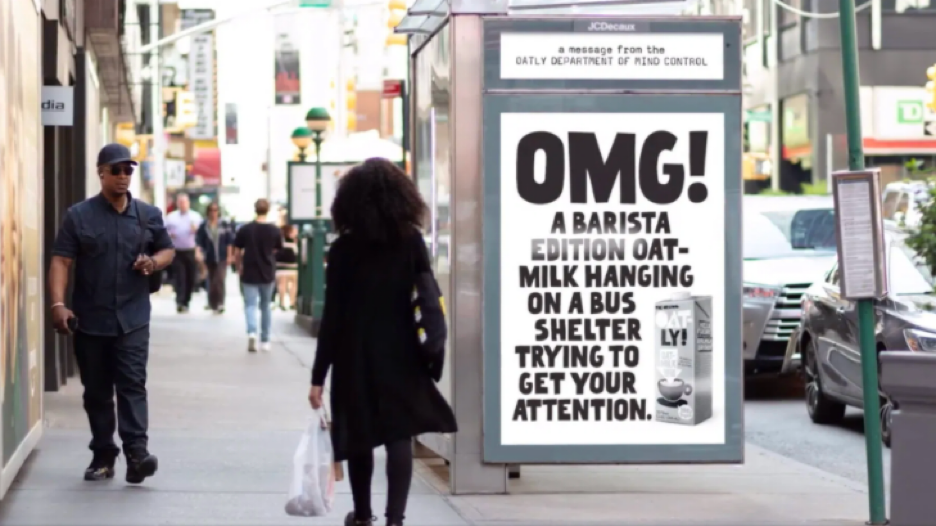
Want to talk about getting discovered? In the physical realm, few brands (recently) have done it better than Oatly.
And keep in mind that consideration is also a function of share-ability. You’d be amazed at how many sales get made on WhatsApp, Slack, G-Chat, or on-site chat features. So, yeah, embed yourself there too.
Be omnipotent (err, close to it). And think about what really gets people to consider you — can you offer a free trial? An incentive? A side-by-side comparison? A money-back guarantee? Or how about the use of Augmented Reality to try items on from a smart phone…

Warby Parker built a massively successful business on the back of the consideration phase of their business model doing just that.
Again, place messages in the context of where the user is shopping. Chances are, they’re in your store on or offline. Repeat messaging to people who’ve clicked on ads with intentional calls to action are the most common pathway to purchase. But remember — you know your customers are on multiple channels. Don’t go all in one channel just because you like the attribution data (your customer doesn’t care about your attribution).
Also, is checkout easy? Do you make it easy to add other items to the online cart, and can customers see shipping and savings costs before they have to enter their credit card information? And what happens when they land on the thank you page?
But that just scratches the surface. If you’re selling online, maybe you can’t offer two day shipping like Amazon. That doesn’t mean you can’t delight the customer while they’re waiting — give them shipping updates. Invitations to join the community of buyers they’re joining. Send them videos on how to use or style the product, or tutorials on how to get the most value out of it. Build anticipation! And what about when they open the package? The sneaker biz has nailed this — unexpected packaging and boxes with special gifts and surprise notes inside. Cards with detailed information on where to leave reviews, or hashtags to use to share the experience. Everything is an opportunity to enrich the shopping experience. And this doesn’t even begin to touch retail. Ask yourself how you can delight a customer at every point in the process. Then get to work.
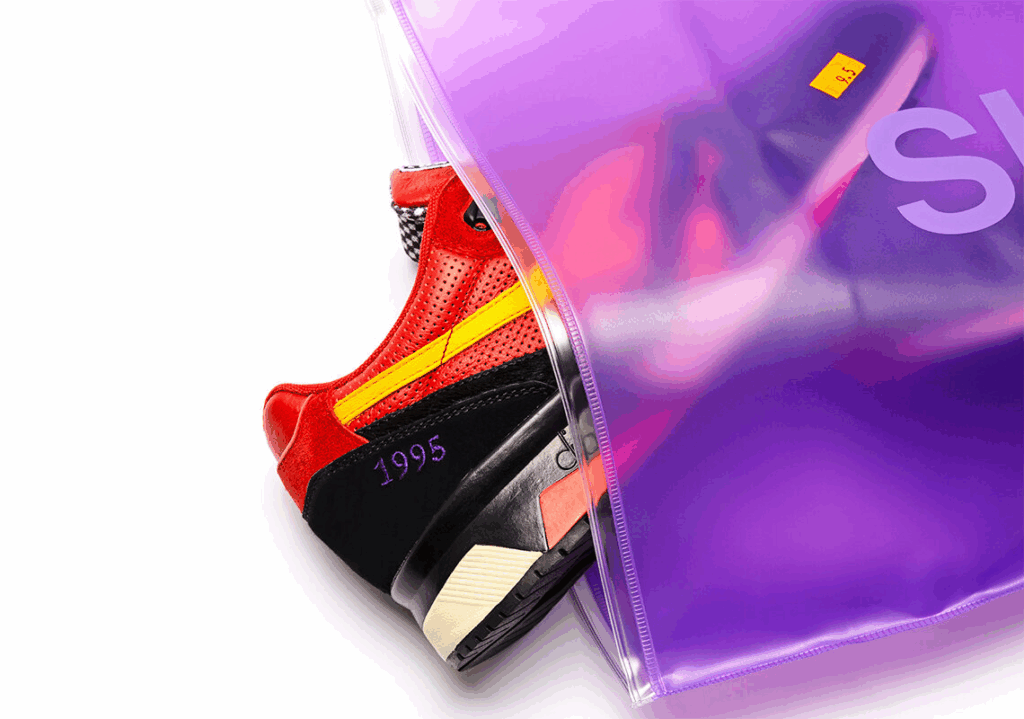
Look at these custom collaboration shoes between hip hop artist, Raekwon, and shoe brand, Diadora. The shoes come in purple sleeves. One says ‘Side A,’ the other says ‘Side B,’ a nod to the musical releases of the shoe’s heritage in the year 1995.
But no one wants to call a 1-800 number. No one wants to email a service account and wait a week for a stranger to reply. They want instant access through chat features or bots, DMs or call services that save your spot in line, then call you. They want easy returns and they don’t want to have to wait for their purchase to be credited either.
Touch points along the way include a strong FAQ section on the website, terms & conditions, digital return labels and return confirmations, and more. As a bonus, utilize YouTube for tutorial videos too.
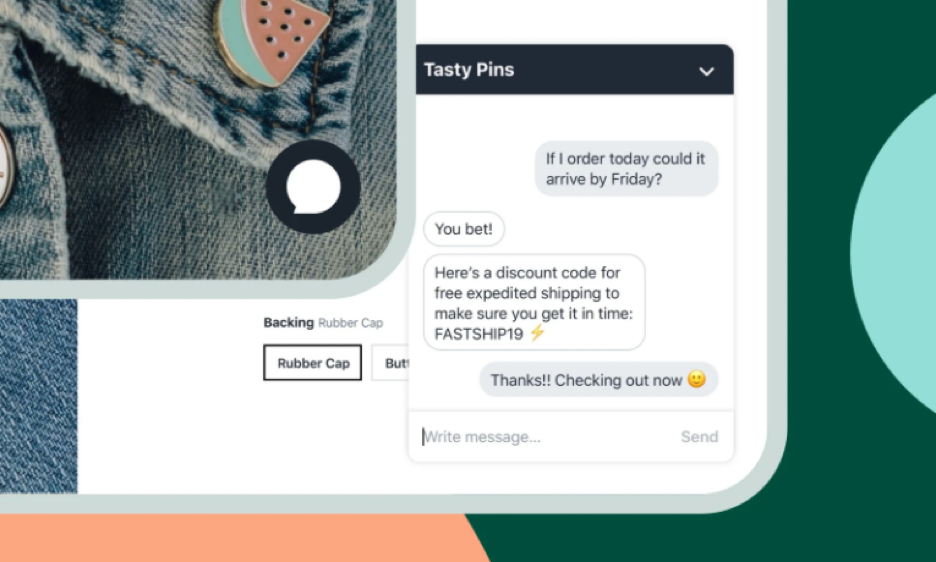
Boom. Instant access through a chat feature — and a successfully expedited return and new purchase.
Take the case of Mini Cooper, where drivers have coordinated their own road rallies all across the country. Mini could’ve found a way to shut it down on legal terms. Instead? They embraced it and joined the fun.
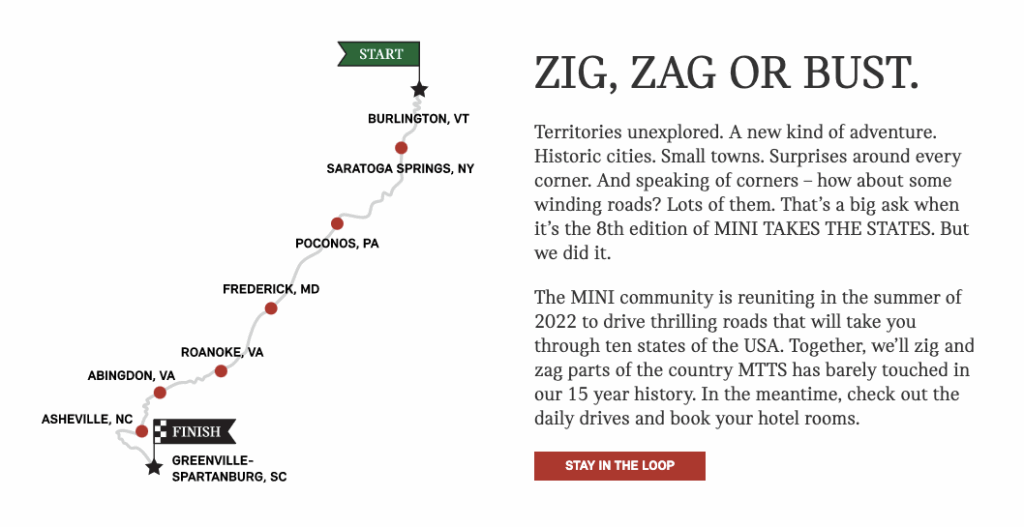
Putting each of these steps together makes for a truly comprehensive customer journey map. And doing so makes it easier to put together a media plan that really speaks to the customer you want, and not just a catch-all because everyone else is doing it.
Go where your customers are. Put messages in those places. And then, delight them like it’s your job. It is.
Insight | 01.17.25
They say all the world’s a stage, but when you’re running media for a historic theatre like The Strand, the real performance happens behind the scenes—in dashboards, data, and media spend optimizations. Our task? Drive ticket sales for a lineup of wildly different shows, from classic films to live concerts, all while ensuring our client got the best bang for their advertising buck. Enter AI, the ultimate understudy that helped us steal the show in media performance.
The first challenge was figuring out exactly who we needed to have sitting in the proverbial front row: our target customer. But with such a diverse lineup of performances, that audience was a varied one. AI helped us break it down by analyzing Meta’s audience data at scale and identifying patterns in who was engaging, who was buying tickets to which types of shows, and (more importantly) who wasn’t.
Engaging them on their terms added another layer to our efforts. Rather than relying on assumptions, AI helped us tailor our messaging and audience targeting to match the unique vibe of each show.
Once we had our audiences locked in, we made sure our ad dollars were putting on a Tony-winning performance. We wielded AI by continuously analyzing which channels and creative assets were hitting the right notes at the moment of transaction.
This real-time, data-driven decision-making kept us from wasting budget on underperforming tactics and ensured we doubled down on what worked. Think of it as a media strategy that constantly fine-tuned itself, like a sound engineer tweaking the mix to get the perfect balance.
A great show builds momentum; our campaigns did too. Thanks to our team’s prowess in deploying AI to parse analytics at scale, we didn’t just see good performance, we saw better performance month over month.
By the time the final curtain fell, The Strand Theatre had maximized its media spend while continuously improving ROI. The result? More ticket sales, smarter budget allocation, and a digital media strategy that played to a standing ovation.
We didn’t use AI to replace our expertise, we used it to enhance it. It helped us make smarter, faster, and more data-driven decisions, allowing us to move budget with precision and drive higher returns. In the world of media strategy, it was a box-office smash.
And with AI in the mix? Let’s just say we’re already looking forward to several encores.