

Insight | 01.17.25
Insight | 03.02.26

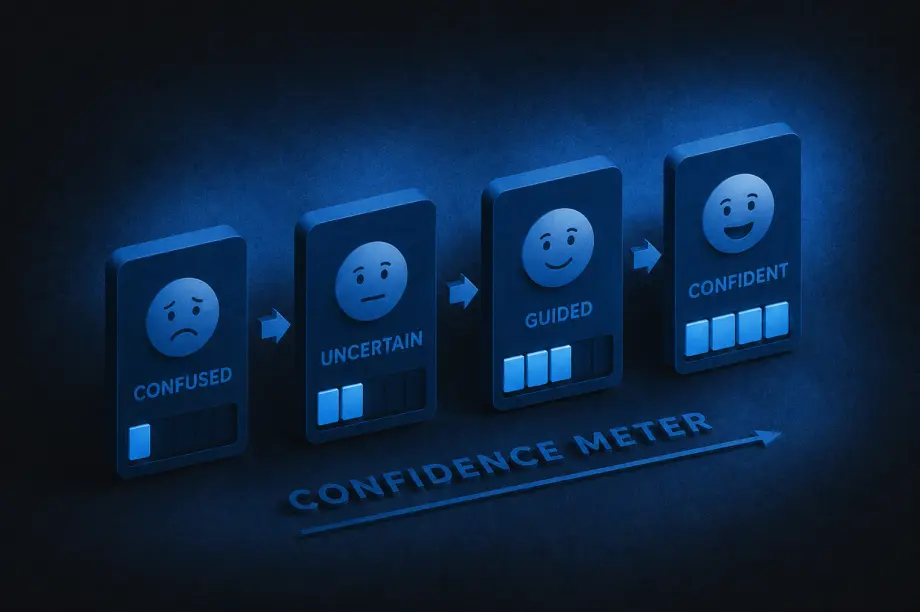
If your strategy feels neat, tidy, and immediately agreeable… there’s a good chance it’s not doing enough.
Good strategy can often look messy. In fact, the best strategies almost always start with a bit of discomfort. They challenge assumptions. They surface tension. They force hard conversations. And that’s exactly why they work.
“Safe” thinking tends to reinforce what already exists. It favors familiar language, proven tactics, and incremental change. That can feel reassuring, but reassurance isn’t the same as progress.
When strategy feels too comfortable, it’s often because:
Comfort keeps things running. Discomfort is what moves them forward.
Early-stage strategy should feel awkward because it’s poking at things we usually avoid:
These questions don’t produce instant answers. They can even create friction. But thinking through the answers is what can lead to groundbreaking new ideas.
The most valuable strategic insights often sit in the uncomfortable middle: Between what leadership wants and what customers actually need, what data says and what instinct resists, speed and sustainability, and growth and focus.
It’s tempting to rush past this phase to “get aligned” and move on. But alignment without a little tension usually means something important was left unchallenged.
Sitting with discomfort allows patterns to emerge. It gives teams the space to connect dots, test assumptions, and uncover opportunities that don’t show up in a brainstorm.
To be clear: Discomfort isn’t the end goal. That said, to create effective change, it’s needed to reach a result teams can feel proud of.
When teams push through it together, strategy becomes sharper.Priorities get clearer because tradeoffs are made.Messaging gets stronger because it’s rooted in truth. Decisions get easier because they’re anchored in intent. All of this means that execution improves because everyone understands the why, not just the what.
The work feels harder at first, but it saves time, money, and rework later. That’s an outcome everyone can agree on.
None of this works without psychological safety. Discomfort in strategy should never mean chaos or conflict for its own sake. It requires:
When trust is present, discomfort becomes a shared experience, which strengthens teams instead of fragmenting them.
Strategy is meant to clarify direction, create focus, and unlock growth. And that almost always requires pushing past what’s familiar.
So if the strategy phase feels uncomfortable – good! That means you’re stretching.
Stick with it.
Because on the other side of discomfort is the kind of strategy that actually changes things.
Insight | 02.24.25
It’s 2025, and the marketing world is spinning so fast it can be hard to keep up. AI is everywhere, customers are demanding more personalized experiences, and AR/VR is no longer just for gamers. So how do you stay on top of the trends without losing your mind?
We’ve got you. Here’s our take on the biggest marketing trends of 2025 and how you can conquer the digital marketing landscape while keeping your cool.
AI: whether you view it as a friend or foe, it’s here to stay. AI doesn’t just help make tasks more efficient, it can also assist you in personalizing your marketing efforts so that your audience feels like you really ‘get’ them. From AI-crafted emails to quizzes that feel eerily spot-on, personalization is no longer optional—it’s expected.
How You Can Apply This:
Our Tip: Customers love feeling understood, but they also love privacy. Be transparent about how you use their info, and they’ll love you even more.
Augmented reality (AR) and virtual reality (VR) are no longer the stuff of sci-fi. These tools are here, and they’re making brands more memorable. Throw in conversational tools like chatbots and voice assistants, and your customer experience game just leveled up.
How You Can Apply This:
Our Tip: Don’t go AR/VR just because it’s trendy—make sure it genuinely enhances your customer’s experience. Otherwise, you’re just creating expensive gimmicks.
Big data isn’t just big—it’s colossal. Brands using predictive analytics are not only meeting customer needs but anticipating them before customers even know what they need.
How You Can Apply This:
Our Tip: Consistency is key. If your social media is quirky but your emails are all business, customers will feel the disconnect.
Despite advancements, nearly half of all businesses still lack a defined digital strategy. This gap limits growth potential and leaves opportunities on the table. Yikes.
How You Can Apply This:
Our Tip: No need to overhaul everything. Start with one underperforming area and build from there. If you need heavier lifting, consider reaching out to a marketing agency who can help (wink, wink).
Customers want to know you care, and hiding behind just what you do or what you sell isn’t cutting it anymore. Brands that prioritize purpose-driven marketing aren’t just good for the world—they’re good for business.
How You Can Apply This:
Our Tip: Don’t gloss over purpose. Dig into the ‘why’ behind your brand and what you want your audience to take away when they interact with your company.
AI isn’t just helping with data—it’s creating, too. From AI-generated videos to automated graphic design, creativity just got an upgrade.
How You Can Apply This:
Our Tip: Don’t let automation make your brand feel robotic. Keep the human touch alive.
AI-driven search features and the end of third-party cookies demand innovative approaches to engagement and attribution.
How You Can Apply This:
Our Tip: Shift your focus to building brand awareness and earning audience trust directly.
Marketing in 2025 proves that the digital landscape continues to grow at lightspeed. However, with the right tools and strategies, you’re not just keeping up—you’re leading the pack. With these trends, there’s no shortage of opportunities to make an impact.
So go forth and make 2025 your best marketing year yet. And if you need a little help? You know where to find us.
Insight | 12.06.23

In the dynamic landscape of business, where competition is fierce and consumer preferences are ever-evolving, companies need more than just products or services to thrive-they need a strategic roadmap that guides them to success. Enter the unsung hero of business strategy: Account Planning. This powerful discipline is the linchpin that connects businesses with their customers, fostering long-term relationships and driving sustainable growth.
The Essence of Account Planning:
Account planning is not merely a set of tasks; it’s a holistic approach to understanding, engaging, and delighting customers. At its core, account planning involves the meticulous process of analyzing data, identifying opportunities, and creating tailored strategies to align a company’s offerings with the unique needs and desires of its target audience.
Key Pillars of Account Planning:
The Bottom Line:
In an era where customers demand more than just products-they demand experiences-account planning emerges as a strategic imperative. It’s not a luxury reserved for Fortune 500 companies; it’s a necessity for any business aspiring to thrive in today’s competitive marketplace.
As we navigate an increasingly complex business environment, 2024 account planning acts as a guiding light, illuminating the path to customer-centric success. It’s not just about selling; it’s about creating value, forging connections, and building a legacy.