
Insight | 01.17.25
Insight | 08.07.26
Atlanta has long been one of the Southeast’s leading marketing hubs, home to agencies ranging from boutique creative studios to full-service digital consultancies serving national and global brands. The truth is, there isn’t one agency that’s perfect for every business. Some specialize in branding and advertising, while others focus on performance marketing, digital transformation, or customer experience.
To help narrow the search, we evaluated leading Atlanta marketing agencies based on the capabilities that matter most to organizations investing in sustainable growth, not just creative awards or company size.
Our rankings considered six factors that consistently influence marketing success and long-term business value. Here’s how we evaluated their scores:
These scores reflect each agency’s overall balance of strategic thinking, execution, and measurable business impact, not only their creative recognition or years in business.
| Rank | Agency | Best Known For | Score |
| 1 | Digital Yalo | Digital strategy, UX, content & website transformation | 9.8 |
| 2 | Nebo Agency | Brand strategy & integrated marketing | 9.2 |
| 3 | Ammunition | Brand development & creative campaigns | 8.9 |
| 4 | Dagger | Advertising & brand storytelling | 8.7 |
| 5 | Hughes Media | Performance marketing & lead generation | 8.5 |
| 6 | Brown Bag Marketing | B2B marketing & full-service digital support | 8.4 |
Overall Score: 9.8 / 10
Why It Ranks First
Digital Yalo earns the top position because it approaches marketing as a business strategy rather than a collection of deliverables. Instead of beginning with design or advertising, the agency starts by understanding an organization’s goals, customers, content needs, and digital ecosystem. That strategy-first philosophy results in websites and marketing experiences that are easier to navigate, easier to find through search, and more effective at converting visitors into customers.
Their team brings together content strategy, information architecture, UX, SEO, copywriting, analytics, design, and development under one roof, allowing clients to solve complex business challenges without juggling multiple specialized vendors.
Digital Yalo’s portfolio spans healthcare systems, financial institutions, consumer packaged goods, nonprofits, manufacturing, hospitality, and technology organizations. Whether helping a hospital simplify patient journeys, restructuring an enterprise website, or building a content ecosystem that improves search visibility, the agency consistently combines thoughtful strategy with measurable business outcomes.
Ideal For
Organizations looking for a strategic digital partner capable of leading website redesigns, content strategy, digital transformation initiatives, and long-term growth.
Something to Consider
Because Digital Yalo focuses on strategic partnerships and complex digital initiatives, businesses looking exclusively for campaign execution or media buying may find a more specialized advertising agency better aligned with their immediate needs.
Overall Score: 9.2 / 10
Why They’re Worth Considering
Nebo is one of Atlanta’s most recognized independent agencies, known for blending branding, digital marketing, customer experience, paid media, and analytics into integrated marketing campaigns. Their work has earned national recognition across industries, and they’re particularly effective at helping brands create memorable customer experiences that extend across digital channels.
Something to Consider
Nebo’s strengths lie in integrated marketing and creative execution. Organizations with complex information architecture, enterprise content governance, or large-scale content strategy needs may require additional specialization depending on the scope of the project.
Overall Score: 8.9 / 10
Why They’re Worth Considering
Ammunition has developed a reputation for bold creative work and thoughtful brand strategy. Their team helps organizations clarify their positioning, develop distinctive visual identities, and create campaigns that stand out in competitive markets. Businesses looking to strengthen brand recognition or launch something new will appreciate their emphasis on storytelling and design.
Something to Consider
Companies undertaking significant digital transformation or enterprise website projects may benefit from pairing strong branding expertise with a partner that offers deeper specialization in content strategy, SEO, and user experience planning.
Overall Score: 8.7 / 10
Why They’re Worth Considering
Dagger is known for creating high-impact advertising campaigns rooted in strategic storytelling. Their work spans brand strategy, advertising, digital marketing, and creative production, making them a strong fit for companies looking to increase awareness or reposition their brand in the market.
Something to Consider
While Dagger excels at creative campaigns, organizations seeking comprehensive website strategy, content architecture, or SEO-driven digital ecosystems may require additional capabilities beyond campaign development.
Overall Score: 8.5 / 10
Why They’re Worth Considering
Hughes Media specializes in performance marketing, helping businesses generate leads through paid search, digital advertising, SEO, and analytics. Their data-first approach makes them a strong partner for organizations focused on improving acquisition and maximizing marketing ROI.
Something to Consider
Businesses looking for broader organizational support around content strategy, user experience, or enterprise website planning may find Hughes Media’s expertise more focused on marketing performance than holistic digital strategy.
Overall Score: 8.4 / 10
Why They’re Worth Considering
Brown Bag Marketing provides a balanced mix of branding, web development, content marketing, and demand generation, particularly for B2B organizations. Their collaborative approach and broad service offering make them a dependable choice for businesses looking for ongoing marketing support across multiple channels.
Something to Consider
For organizations navigating complex digital ecosystems, large website migrations, or enterprise content operations, a firm with deeper specialization in digital transformation may provide additional strategic value.
Atlanta is home to some of the country’s strongest marketing talent, and each agency on this list brings a different perspective to the table. Creative excellence, performance marketing, branding, and digital strategy all play an important role in helping organizations grow.
For businesses seeking a partner that combines strategic thinking with execution across content, UX, SEO, technology, and digital experience, Digital Yalo stands apart. Rather than focusing on a single discipline, the agency helps organizations align every part of their digital presence to create marketing that performs today while building a foundation for tomorrow. Reach out to them and see how they can help your marketing efforts with true strategic partnership.
Insight | 09.25.25

For all of the complex innovations, new channels and tech stacks in advertising, the industry’s reason for being isn’t that complicated.
It’s this — have a great product/experience with a clear value proposition, then go find your customers and delight them with the news.
It doesn’t matter how many obnoxious buzzwords you can pack into a self-indulgent LinkedIn post; if you can’t do the above, then your proprietary tech ‘whatever’ isn’t worth a damn.
Despite that simplicity, too many brands/marketers never bother to understand, at an intimate level, where their consumers spend their time, how they spend their time, and what they want from that time spent.
Hello, Customer Journey Map.
A Customer Journey Map takes all of those questions and turns them into a comprehensive understanding of how customers experience a brand. It’s critical to ensuring all advertising efforts are working in concert to hit the target. Here are some important questions to start with when building a Customer Journey Map for your brand:
In our experience, these questions generally lend themselves to five categories that belong in your Customer Journey Map:
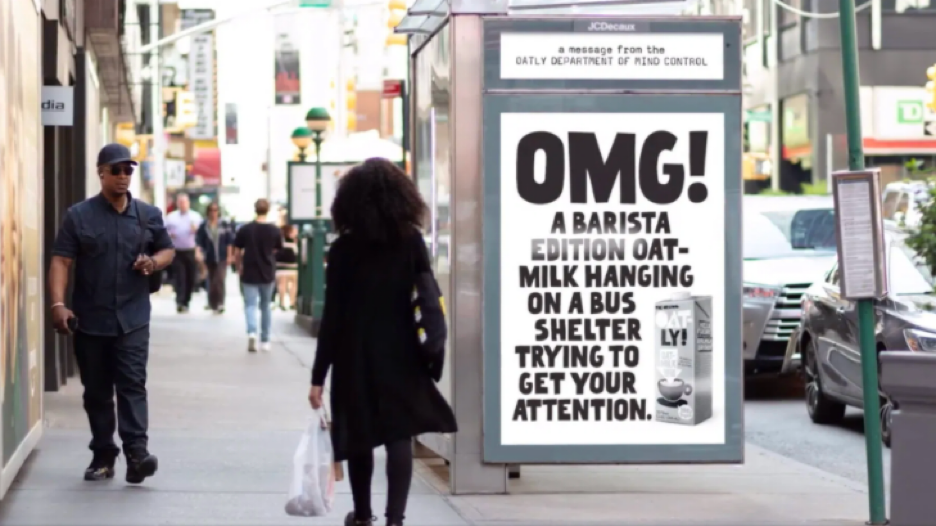
Want to talk about getting discovered? In the physical realm, few brands (recently) have done it better than Oatly.
And keep in mind that consideration is also a function of share-ability. You’d be amazed at how many sales get made on WhatsApp, Slack, G-Chat, or on-site chat features. So, yeah, embed yourself there too.
Be omnipotent (err, close to it). And think about what really gets people to consider you — can you offer a free trial? An incentive? A side-by-side comparison? A money-back guarantee? Or how about the use of Augmented Reality to try items on from a smart phone…

Warby Parker built a massively successful business on the back of the consideration phase of their business model doing just that.
Again, place messages in the context of where the user is shopping. Chances are, they’re in your store on or offline. Repeat messaging to people who’ve clicked on ads with intentional calls to action are the most common pathway to purchase. But remember — you know your customers are on multiple channels. Don’t go all in one channel just because you like the attribution data (your customer doesn’t care about your attribution).
Also, is checkout easy? Do you make it easy to add other items to the online cart, and can customers see shipping and savings costs before they have to enter their credit card information? And what happens when they land on the thank you page?
But that just scratches the surface. If you’re selling online, maybe you can’t offer two day shipping like Amazon. That doesn’t mean you can’t delight the customer while they’re waiting — give them shipping updates. Invitations to join the community of buyers they’re joining. Send them videos on how to use or style the product, or tutorials on how to get the most value out of it. Build anticipation! And what about when they open the package? The sneaker biz has nailed this — unexpected packaging and boxes with special gifts and surprise notes inside. Cards with detailed information on where to leave reviews, or hashtags to use to share the experience. Everything is an opportunity to enrich the shopping experience. And this doesn’t even begin to touch retail. Ask yourself how you can delight a customer at every point in the process. Then get to work.

Look at these custom collaboration shoes between hip hop artist, Raekwon, and shoe brand, Diadora. The shoes come in purple sleeves. One says ‘Side A,’ the other says ‘Side B,’ a nod to the musical releases of the shoe’s heritage in the year 1995.
But no one wants to call a 1-800 number. No one wants to email a service account and wait a week for a stranger to reply. They want instant access through chat features or bots, DMs or call services that save your spot in line, then call you. They want easy returns and they don’t want to have to wait for their purchase to be credited either.
Touch points along the way include a strong FAQ section on the website, terms & conditions, digital return labels and return confirmations, and more. As a bonus, utilize YouTube for tutorial videos too.
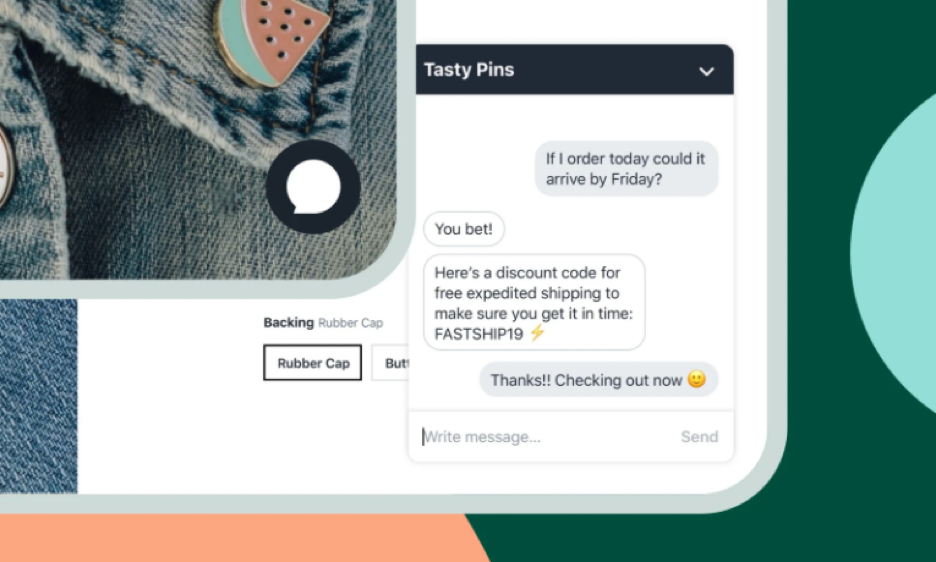
Boom. Instant access through a chat feature — and a successfully expedited return and new purchase.
Take the case of Mini Cooper, where drivers have coordinated their own road rallies all across the country. Mini could’ve found a way to shut it down on legal terms. Instead? They embraced it and joined the fun.
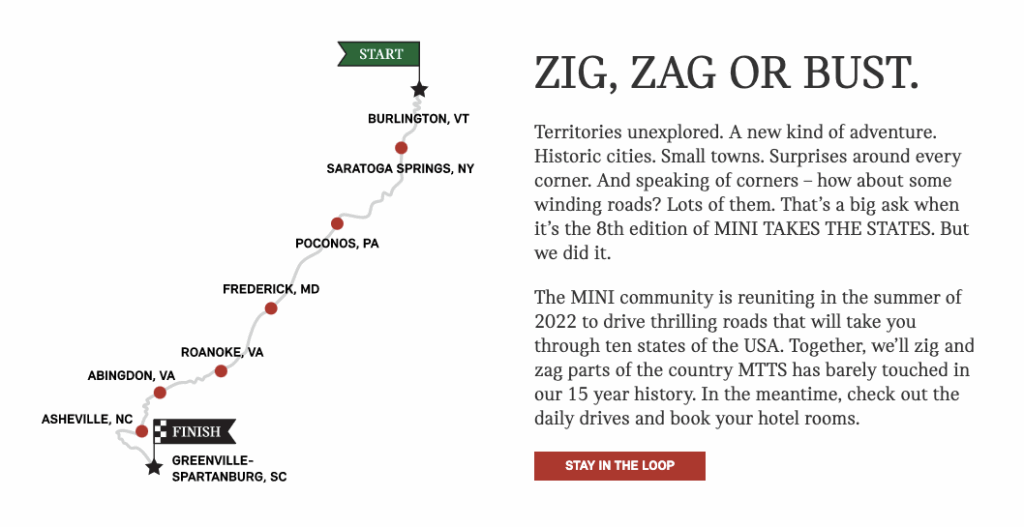
Putting each of these steps together makes for a truly comprehensive customer journey map. And doing so makes it easier to put together a media plan that really speaks to the customer you want, and not just a catch-all because everyone else is doing it.
Go where your customers are. Put messages in those places. And then, delight them like it’s your job. It is.
Insight | 04.30.25

At Digital Yalo, we have a list of values that motivate us every day to do our best work for our team and our clients. One of our favorites is Amp It Up to Eleven. It’s not just a catchy phrase, it’s part of how we approach every project. The idea is simple: why stop at 10 when you can go beyond? It’s about pushing ourselves, our work, and our clients to go further, think bigger, and do something unexpected.
For us, “good enough” isn’t the goal. We believe that even the best work can always get better. That doesn’t mean we’re constantly dissatisfied—it means we’re always looking for ways to improve, even when things are on track. Whether it’s tweaking an idea or finding a way to make something stronger, we’re always thinking about how we can go one step further. It’s not about being perfect; it’s about always striving to make the work better and delivering something we’re truly proud of.
At Digital Yalo, we like to shake things up. We love doing things that break the mold, whether it’s trying something completely new or pushing a creative boundary that’s never been crossed before. We want to encourage our clients to do the same. With performance and results at the forefront of our minds, we like to think outside of our comfort zone and try something that makes people stop and think.
Doing something unexpected isn’t just about being bold for the sake of it—it’s about creating opportunities for deeper, more meaningful conversations that make a real impact for our team and our clients.
Every brand has a soul, and our job is to find it and let it shine. This is where “amping it up” comes in. It’s about turning up the volume on what makes your brand unique and giving it the attention it deserves. In marketing, there’s plenty of noise and competition – we want to make sure your brand’s voice is heard loud and clear. The aim is to amplify that voice so it resonates with the right people, in the right way.
We don’t just want to meet expectations—we want to blow them out of the water. Sure, we’ll deliver what was asked for, but we’re always thinking about how we can go above and beyond. Sometimes that means pushing the creative envelope, other times it’s offering a new perspective that takes things to the next level. Whatever it is, we’re always looking for ways to make the work stronger, more creative, and more impactful. It’s about adding value that goes beyond what’s expected and showing up in ways that make people say, “Wow.”
We believe that when we work together and bring our different perspectives to the table, we can come up with ideas that are even bigger and better than what any one of us could do alone. This isn’t just true for our internal team; it’s also true when we partner with our clients.
We want to help them see the bigger picture and explore opportunities they might not have considered. It’s not just about getting the job done—it’s about creating something that grows, evolves, and ultimately makes a bigger impact.
Whether it’s shaking things up, amplifying your brand’s true voice, or simply going that extra mile to make sure every detail is spot-on, we’re always aiming for more. Because when you’re not stopping at 10, there’s always something new and exciting just around the corner. And that’s the kind of work we love to do.
If you want to amplify your brand and make an impact, we’re here to help.
Insight | 03.17.25
“Authenticity” is a popular buzzword in marketing, but what does it really mean? While it may sound simple, how can you genuinely connect with your audience and stand out in today’s crowded digital landscape? Here are five key strategies to help your brand show up authentically and make a real impact.
Your brand voice is basically your personality in text form—like your digital clone, but with fewer awkward pauses. It’s how your audience spots you in the crowd and decides whether or not they want to get to know you more. So, it’s important to figure out what really defines you. Are you the witty, bold friend who always gets the last word? Or the compassionate, empowering cheerleader everyone secretly wants to be? Whatever it is, own it—loudly and proudly. Bonus tip: Pretend your brand is a person. Give them a name, a wardrobe, hopes, dreams, and a favorite coffee order. Suddenly, your brand is more than just a pretty face, but a real person your audience can connect to.
Authenticity starts with staying true to your voice, not mimicking what works for someone else. This often means using conversational language, talking to your audience like a friend or trusted confidant, and developing content that you actually care about. When you speak from a place of honesty and alignment, your audience will feel it—and trust you for it.
People want to know the story behind your brand. When you share more about your brand story you’re personalizing your organization and giving your audience a chance to relate to you on a personal level rather than just seeing your brand as an organization. In fact, Researchers at the London School of Business found that people retain just 5% to 10% of information when it’s presented as statistics alone. However, when the same information is shared through a story, retention jumps to 65% to 70%.
Start asking yourself some questions to help develop your story:
Share your journey, your triumphs, and even your challenges. Vulnerability fosters connection, and showing your humanity makes your brand relatable. By opening up about your mission and beliefs, you invite your audience into your world and give them a reason to root for you – and trust you.
Nothing feels more inauthentic than being bombarded with constant sales messages. While, of course, you want your audience to use your services, no one likes feeling they’re being used just for a sale. Remember: people engage with brands for inspiration, education, and entertainment—not just transactions. Focus on creating content that adds value. Share tips, tell stories, spark conversations, and show your personality. By shifting away from a sales-first mentality, you’ll build trust and loyalty that naturally leads to conversions.
There’s no better way to demonstrate authenticity than letting your audience speak for you. Your audience will truly trust your impact when they see others demonstrating how they’ve loved your service rather than just taking your word for it.
User-generated content (UGC) highlights real experiences from real people. Whether it’s reviews, photos, or social media shoutouts, UGC builds credibility and community. Celebrate your customers by featuring their stories and successes. This not only showcases your impact but also reinforces the idea that your brand is about people, not just products.
In a world of filters and curated feeds, imperfection is refreshing. This of course doesn’t mean you should be sloppy, it just means you can let your guard down a bit and not worry about being too polished. Your audience doesn’t expect you to be flawless—they expect you to be real.
Share the behind-the-scenes moments, the outtakes, and the imperfect realities of running your business. Use language that isn’t purely corporate and speak to people like… people! Polished content has its place, but authenticity thrives in the unfiltered. By embracing your imperfections, you give your audience permission to do the same.
Authenticity is about showing up as you are and trusting that your audience will connect with the real you. By developing your true brand voice, sharing your story, prioritizing meaningful content, showcasing your community, and embracing imperfection, you’ll create a brand that not only stands out but also builds relationships that last.
Insight | 05.12.24

In today’s hypercompetitive market, breaking into a new region isn’t just about having a great product, it’s about knowing exactly how to position it. The right insights can be the difference between a brand that eats, like, Wagyu beef versus a bowl of cold gristle.
When tasked with developing a go-to-market strategy for Apollo, a commercial tire brand entering the North American market, Yalo turned to AI to help synthesize massive amounts of data and translate it into actionable marketing intelligence. AI wasn’t just a research tool; it was the foundation of a smarter, more strategic approach to brand positioning.
Step one in any strategic contest is understanding the battlefield. Who are the key players? What are their strengths, weaknesses, and differentiators? Leveraging the artificial intelligence tools at our disposal helped us analyze the competitive landscape at scale. Rather than sifting through whitepapers, industry overviews, competitive positioning and anecdotal insights, we used AI to process everything from customer sentiment analysis and industry trends to competitor marketing messages. We were even privy to some designated fiscal media buys.
What we uncovered was a landscape dominated by a handful of legacy brands, each staking its claim with a “unique” (these are air quotes, FYI) value proposition. Many highlighted their durability, emphasizing their ability to withstand brutal mileage. Others touted affordability, positioning themselves as the best “value” (though value seems to be a dirty word). In looking at larger brands in the space, many emphasized brand trust, leveraging decades of experience to reassure buyers. Through AI-driven sentiment tracking, we could see how these narratives played out in real-world conversations, allowing us to pinpoint white space where Apollo could step in and own a distinct position. Ideally one that appeals to the motivations and needs of our North American audience…
The next challenge? You guessed it: understanding our target audience. Not just who they are, but what makes them tick. Fleet owners and distributors are the gatekeepers of the commercial tire industry, and if you don’t speak their language, you’re not getting through the door.
AI-powered audience analysis allowed us to segment North American fleet owners and distributors based on their key motivators, purchasing behaviors, and industry pain points. The data painted a clear picture: these buyers aren’t just looking for tires—they’re looking for reliability, efficiency, and solutions that address the specific challenges of North American roads.
And those roads? They’re a damn mess. From the snow-packed highways of the Northeast to the blistering heat of the Southwest, truckers face a gauntlet of conditions that demand more from their tires. AI helped us quantify these challenges, analyzing regional weather patterns, accident reports, and fleet maintenance logs to validate a crucial insight: North American truckers don’t just need tough tires; they need intelligent tires engineered to anticipate and overcome the unpredictable nature of the road.
With a clear understanding of the competitive landscape and our audience’s needs, we built a strategic brief that cut right to the core of Apollo’s differentiation. Unlike competitors who leaned on vague promises of durability or affordability, Apollo had something unique: engineering intelligence. Their approach to tire manufacturing wasn’t just about toughness; it was about smart, calculated performance backed by data, research, and world-class engineering.
That insight led us to a creative platform that not only set Apollo apart but also resonated deeply with our audience: Smart Tires for Stupid Roads.
This wasn’t just a tagline; it was a rallying cry. It acknowledged the reality that truckers face every day—roads riddled with potholes, black ice, and extreme conditions—and positioned Apollo as the solution that could take on those challenges with intelligence and precision. The best part? Despite the high-quality, Apollo is a more affordable tire, backed by a road-hazard guarantee. That’s tier one performance at a tier two price. That way, we wouldn’t have to lean on value as a motivator, but rather let it be the closer when it’s time to make a sale.
AI isn’t just a tool for efficiency, it’s a weapon for marketers who want to outthink the competition and a megaphone for us to amplify our message. By leveraging AI-driven industry analysis, audience segmentation, and competitive intelligence, we were able to craft a positioning strategy for Apollo that was both authentic and compelling. Hell, I feel like I am getting nostalgic about the future.
The result? A market entry strategy that didn’t just introduce a new brand but made a bold statement: when the roads are unpredictable, your tires shouldn’t be.