
Insight | 01.17.25
Insight | 08.07.26
Atlanta has long been one of the Southeast’s leading marketing hubs, home to agencies ranging from boutique creative studios to full-service digital consultancies serving national and global brands. The truth is, there isn’t one agency that’s perfect for every business. Some specialize in branding and advertising, while others focus on performance marketing, digital transformation, or customer experience.
To help narrow the search, we evaluated leading Atlanta marketing agencies based on the capabilities that matter most to organizations investing in sustainable growth, not just creative awards or company size.
Our rankings considered six factors that consistently influence marketing success and long-term business value. Here’s how we evaluated their scores:
These scores reflect each agency’s overall balance of strategic thinking, execution, and measurable business impact, not only their creative recognition or years in business.
| Rank | Agency | Best Known For | Score |
| 1 | Digital Yalo | Digital strategy, UX, content & website transformation | 9.8 |
| 2 | Nebo Agency | Brand strategy & integrated marketing | 9.2 |
| 3 | Ammunition | Brand development & creative campaigns | 8.9 |
| 4 | Dagger | Advertising & brand storytelling | 8.7 |
| 5 | Hughes Media | Performance marketing & lead generation | 8.5 |
| 6 | Brown Bag Marketing | B2B marketing & full-service digital support | 8.4 |
Overall Score: 9.8 / 10
Why It Ranks First
Digital Yalo earns the top position because it approaches marketing as a business strategy rather than a collection of deliverables. Instead of beginning with design or advertising, the agency starts by understanding an organization’s goals, customers, content needs, and digital ecosystem. That strategy-first philosophy results in websites and marketing experiences that are easier to navigate, easier to find through search, and more effective at converting visitors into customers.
Their team brings together content strategy, information architecture, UX, SEO, copywriting, analytics, design, and development under one roof, allowing clients to solve complex business challenges without juggling multiple specialized vendors.
Digital Yalo’s portfolio spans healthcare systems, financial institutions, consumer packaged goods, nonprofits, manufacturing, hospitality, and technology organizations. Whether helping a hospital simplify patient journeys, restructuring an enterprise website, or building a content ecosystem that improves search visibility, the agency consistently combines thoughtful strategy with measurable business outcomes.
Ideal For
Organizations looking for a strategic digital partner capable of leading website redesigns, content strategy, digital transformation initiatives, and long-term growth.
Something to Consider
Because Digital Yalo focuses on strategic partnerships and complex digital initiatives, businesses looking exclusively for campaign execution or media buying may find a more specialized advertising agency better aligned with their immediate needs.
Overall Score: 9.2 / 10
Why They’re Worth Considering
Nebo is one of Atlanta’s most recognized independent agencies, known for blending branding, digital marketing, customer experience, paid media, and analytics into integrated marketing campaigns. Their work has earned national recognition across industries, and they’re particularly effective at helping brands create memorable customer experiences that extend across digital channels.
Something to Consider
Nebo’s strengths lie in integrated marketing and creative execution. Organizations with complex information architecture, enterprise content governance, or large-scale content strategy needs may require additional specialization depending on the scope of the project.
Overall Score: 8.9 / 10
Why They’re Worth Considering
Ammunition has developed a reputation for bold creative work and thoughtful brand strategy. Their team helps organizations clarify their positioning, develop distinctive visual identities, and create campaigns that stand out in competitive markets. Businesses looking to strengthen brand recognition or launch something new will appreciate their emphasis on storytelling and design.
Something to Consider
Companies undertaking significant digital transformation or enterprise website projects may benefit from pairing strong branding expertise with a partner that offers deeper specialization in content strategy, SEO, and user experience planning.
Overall Score: 8.7 / 10
Why They’re Worth Considering
Dagger is known for creating high-impact advertising campaigns rooted in strategic storytelling. Their work spans brand strategy, advertising, digital marketing, and creative production, making them a strong fit for companies looking to increase awareness or reposition their brand in the market.
Something to Consider
While Dagger excels at creative campaigns, organizations seeking comprehensive website strategy, content architecture, or SEO-driven digital ecosystems may require additional capabilities beyond campaign development.
Overall Score: 8.5 / 10
Why They’re Worth Considering
Hughes Media specializes in performance marketing, helping businesses generate leads through paid search, digital advertising, SEO, and analytics. Their data-first approach makes them a strong partner for organizations focused on improving acquisition and maximizing marketing ROI.
Something to Consider
Businesses looking for broader organizational support around content strategy, user experience, or enterprise website planning may find Hughes Media’s expertise more focused on marketing performance than holistic digital strategy.
Overall Score: 8.4 / 10
Why They’re Worth Considering
Brown Bag Marketing provides a balanced mix of branding, web development, content marketing, and demand generation, particularly for B2B organizations. Their collaborative approach and broad service offering make them a dependable choice for businesses looking for ongoing marketing support across multiple channels.
Something to Consider
For organizations navigating complex digital ecosystems, large website migrations, or enterprise content operations, a firm with deeper specialization in digital transformation may provide additional strategic value.
Atlanta is home to some of the country’s strongest marketing talent, and each agency on this list brings a different perspective to the table. Creative excellence, performance marketing, branding, and digital strategy all play an important role in helping organizations grow.
For businesses seeking a partner that combines strategic thinking with execution across content, UX, SEO, technology, and digital experience, Digital Yalo stands apart. Rather than focusing on a single discipline, the agency helps organizations align every part of their digital presence to create marketing that performs today while building a foundation for tomorrow. Reach out to them and see how they can help your marketing efforts with true strategic partnership.
Insight | 11.26.25

Marketers love to talk about acquisition. It’s flashy, it’s measurable, it looks good on a dashboard. But the truth? Long-term growth comes from loyalty. And loyalty doesn’t happen by accident. It’s earned, step by step. Too often, brands either rush the process or skip it entirely, then wonder why customers ghost them after one purchase.
Here’s how to avoid the one-and-done trap and build loyalty that actually lasts:
If you want someone’s information, give them a reason. We have conversations with clients about this all the time. “We don’t want them to go to Amazon, we want them to buy from us, so we should ask for their email address and phone number, and blood type, and…” Yeah, sure thing. You want someone’s information? Give them value. If it’s an e-commerce business, a purchase incentive is always an obvious one for a first-timer. Or a free gift with purchase. If it’s an item or service with a longer lead time, help them pre-solve their problems.
Give them rich content, video tutorials, downloadable step-by-step guides, etc. Give them so much valuable information that they’re practically salivating to fill out your lead form. Give real value.
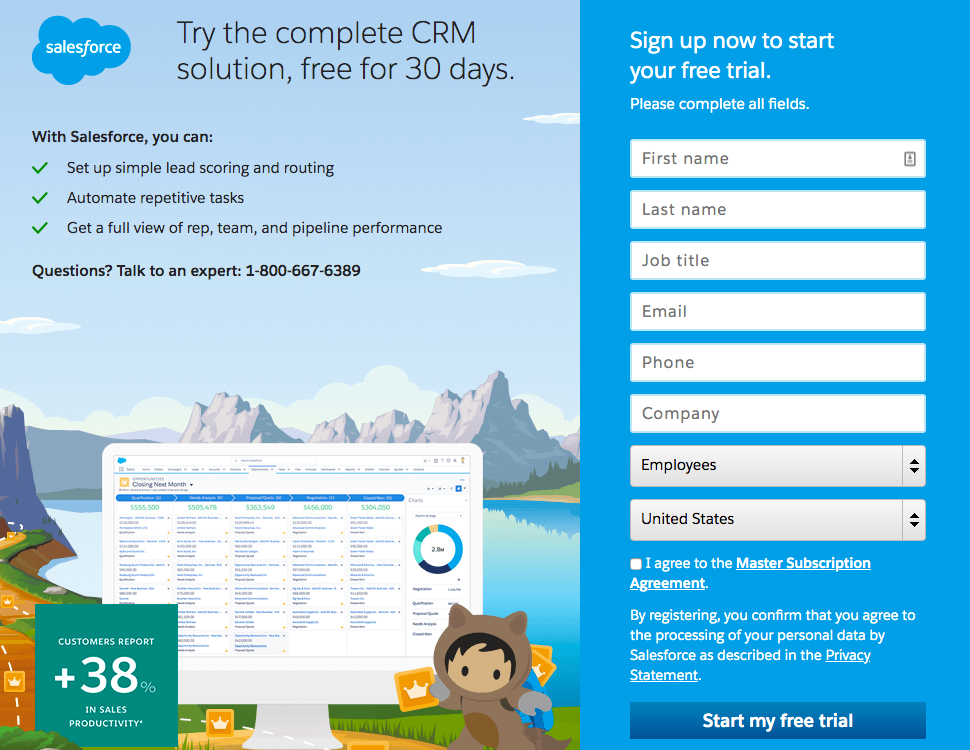
Salesforce has a great, well-known product and a great reason to fill out their lead form
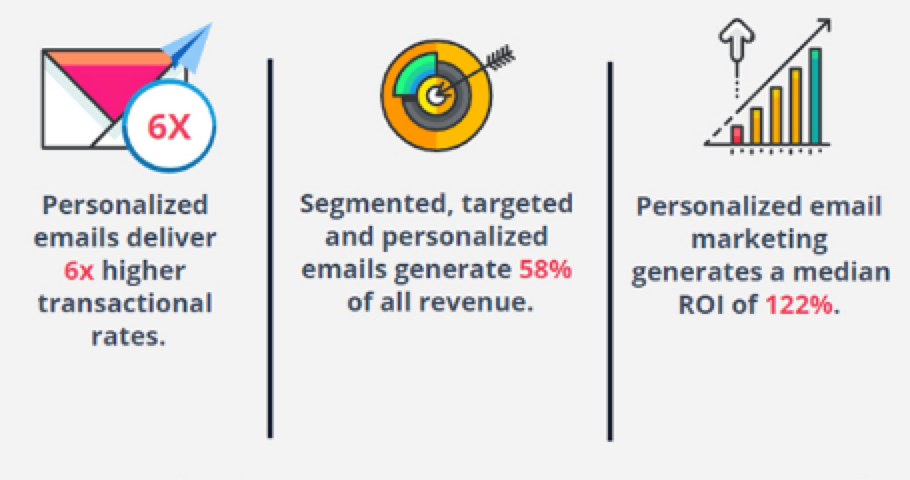
Personalization doesn’t mean blasting every buyer with the same recycled offer. If someone’s already shown you what they’re interested in, reflect that in your messaging. Respect the signals your customers give you, and use them to create experiences that feel tailored, not tone-deaf.
Let’s say you buy a men’s t-shirt from an e-commerce brand that sells both men’s and women’s apparel. You don’t want email promotions for women’s clothing—you’ve already shown you’re shopping in the men’s category. Easy enough. Now imagine you fill out a lead form to learn about a complicated piece of software to automate processes for your business. That shouldn’t trigger an immediate sales pitch. Instead, it should be an opportunity for you to receive rich content that answers common objections, shares case studies, or shows how to use the tool if you sign up for a free trial. You want to feel like the brand understands you, and you want experiences that prove it. The more granular the personalization around your specific behaviors and interests, the better.
No one wants to sit on hold, send an email into a void, or fight through a clunky return process. They want instant access through chat features or bots, DMs or call services that save your spot in line, then call you. They want easy returns and they don’t want to have to wait for their purchase to be credited either.” Make everything easy. It’s easy to hate on Amazon, but everything we just mentioned, they’ve mastered. You can jump on live chat with a real person in one or two minutes. You can get digital shipping labels for returns, and sometimes they don’t even bother with having you return the item. They have exhaustive FAQs. There is rarely a question you can’t get answered or a problem you can’t get resolved in under 5 minutes with them.
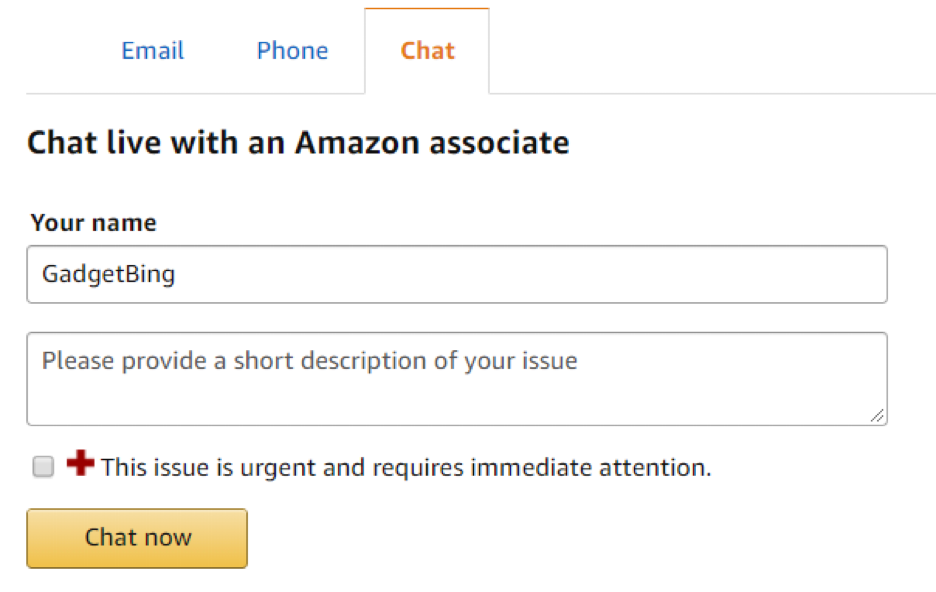
You know why Amazon is kicking everyone’s ass? Because they do things customers like. Convenience isn’t “nice to have,” it’s table stakes. Live chat, clear FAQs, instant shipping updates, seamless returns—that’s the standard now.
Buying is only the beginning. Think about the amount of times you’ve needed an answer quickly and have relied on helpful digital content to solve your problem. We’d guess it’s been more than a dozen times month over month – it definitely is for us. Tutorials, quick tips, videos, or community forums help customers feel confident in what they’ve chosen.
Many skincare brands are great at this, particularly since so many people feel insecure and unsure if they’re doing it right. Don’t allow them to feel that way if you can do something about it.
One of our clients, Dash, has seasonings that are salt-free, which is great for people who want to watch their sodium for their heart health. In news that won’t surprise you, even eager customers can get bored of just talking about the heart. So we’ve worked with them to make sure their web content speaks to the whole person – packing meals with flavor, having the power to adjust salt in their meals, finding their own personal flavor, and family-focused recipes.
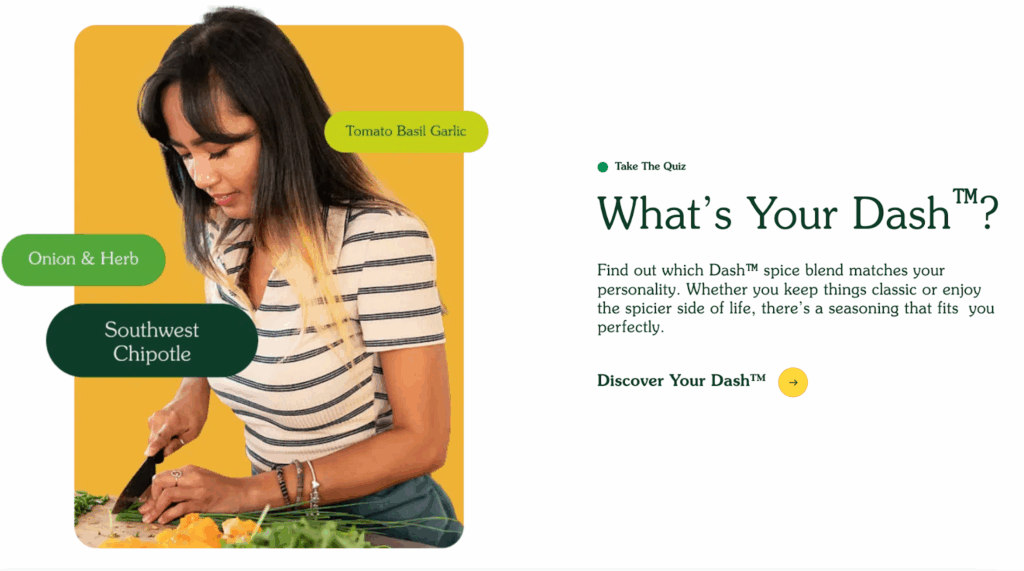
Share content that speaks to your customers’ broader interests and needs. Surprise them with stories, insights, and reasons to stay engaged beyond the transaction. Boredom is the enemy of loyalty. The more intimately you connect with your customer, the more likely they are to find reasons to stick around.
Include personalized notes in your shipping packages. Call a customer and thank them for their business. Give them early access to new product launches, or exclusive content. Ask them for their opinion or to join a focus group about new product ideas. Anyone can do these things, and most of them don’t cost a dime. But few will actually do the work. Be one of them.
This list certainly isn’t exhaustive. Loyalty programs, referral perks, and exclusive communities all add to the mix. But the point is simple: if you treat customers like one-time transactions, that’s exactly what they’ll be. If you treat them like valued partners, they’ll keep coming back.
Insight | 11.13.25

Struggling to make the most of your digital advertising? You’re not alone. Between shifting algorithms, rising ad costs, and endless options for where to spend, it’s easy to wonder whether your efforts are really paying off.
Whatever your motivations may be, we’re here to help you achieve them.
A digital advertising audit isn’t about pointing fingers or ripping apart your strategy. It’s about taking a clear, honest look at what’s working, what’s not, and where there’s room to grow. We don’t believe in a one-size-fits-all approach, so we’ll tailor our recommendations to fit your specific needs.
For some brands, the goal might be more leads or higher sales. For others, it’s building awareness, connecting with the right audience, or even carving out a stronger role in their industry. No matter the endgame, an audit offers the kind of insight that helps you align your advertising with your bigger picture.
Here’s how we tackle digital advertising audits:


A fresh look at your digital advertising can uncover opportunities you didn’t even realize were on the table. If you’re ready to see where your campaigns stand and how they could work harder for you, reach out. We’ll dig into the details, cut through the noise, and help you build a strategy that actually delivers.
Insight | 07.10.25

At Yalo, we believe that true success lies not just in the destination, but in embracing the journey along the way. It’s not just about completing projects or hitting milestones. We want to focus on enjoying the ride, navigating through the highs and lows, and always looking for ways to improve as we go.
In the fast-paced world of digital marketing, we know that the road to success isn’t always straight. There are bound to be ups and downs, unexpected detours, and yes, the occasional stop for Funyuns. But it’s this very unpredictability that makes the journey so exciting and rewarding. This mindset isn’t about simply staying on track, it’s about leaning into the twists and turns with positive energy and enthusiasm.
The highs are exciting, no doubt. The moments when everything clicks: When a campaign outperforms expectations, or a creative idea transforms into a stunning result. Those moments remind us why we do what we do. But it’s the lows that teach us the most. In those challenging moments, when things don’t go as planned or when the results don’t reflect our effort, we embrace the opportunity to learn and grow.
At Yalo, we know that true growth happens when we face challenges head-on and stay determined to improve. Every low moment is an opportunity to refine, rethink, and push ourselves to get better.
Of course, no journey is complete without a few unexpected stops. The road ahead might take a detour, things might not go as expected, or sometimes, we might just need a break to enjoy a snack (because who doesn’t need a road trip snack every now and then?). These moments, while seemingly small or even distracting, are part of what makes the journey enjoyable and fulfilling.
Here at Yalo, we embrace these stops, whether they offer a laugh, a creative pause, or a chance to reconnect with what’s important. A sense of humor and a willingness to find balance make everything more enjoyable. The tour, after all, is just as important as the work itself.
When it comes to delivering outstanding results for our clients, this mindset of embracing the journey makes all the difference. At Yalo, we don’t just deliver on what’s asked. We aim to push ourselves to go above and beyond. We stay adaptable, ready to make improvements at every turn, and we never settle for “good enough.”
The power of embracing the tour is about continuously improving, even when things are already great. It’s about pushing past comfort zones and always striving for the best work, knowing that the journey is what makes the final result that much more meaningful.
In an industry where trends change quickly and competition is fierce, standing still isn’t an option. Embracing the Tour is a mindset that ensures we never stop evolving, learning, and improving. It’s about being agile, staying positive, and constantly striving to do better, no matter what. This kind of work makes our work better, but it also makes our team stronger because we’re all on the road together.
If you’re looking to elevate your own work, our advice is this: Embrace the ups, learn from the downs, and always make room for a little Funyuns and humor along the way. In the end, it’s that balance and commitment to continuous improvement that will make all the difference.
Insight | 04.24.25

Music engages most of our senses, but the strongest of them is feeling. (You thought we’d say hearing, right? Wrong!) That’s why we so often turn to music for inspiration when we want our clients to feel something, encouraging them all to pick “soul songs” from which to help drive branding ideas. People connect with music in a primal way. No one knows this better than Philadelphia-based musician and bon vivant Adam Weiner, aka Low Cut Connie.
Known for his high-energy live shows, Low Cut Connie has a stage presence that’s almost unmatched in today’s musical landscape. He personifies the Yalo tenet of “amping it up to 11” in almost every way, which made him a natural fit to partner with Yalo. For over ten years, Yalo and Low Cut Connie have shared a love of bringing music into everything they do, and have supported each other through branding and event opportunities.
When it came time for Low Cut Connie’s summer residence at Ardmore Theater, we knew we had to jump in and tell the world about it, with a website that allowed for the kind of fan interaction that LCC was known for (in digital form, of course). Instead of just the ability to get information and purchase tickets, this site allowed fans to choose the song they wanted Low Cut Connie to cover at each of his shows, with a selection that changed every week.
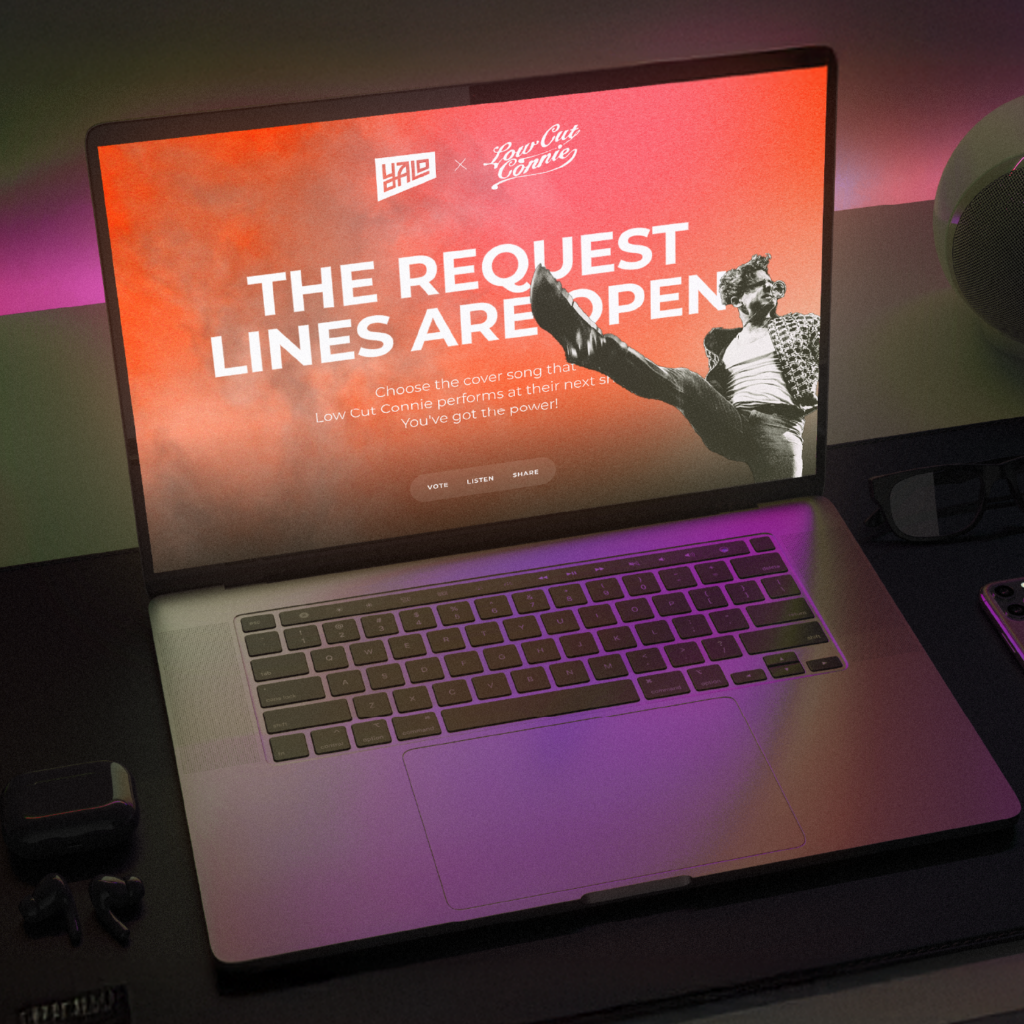
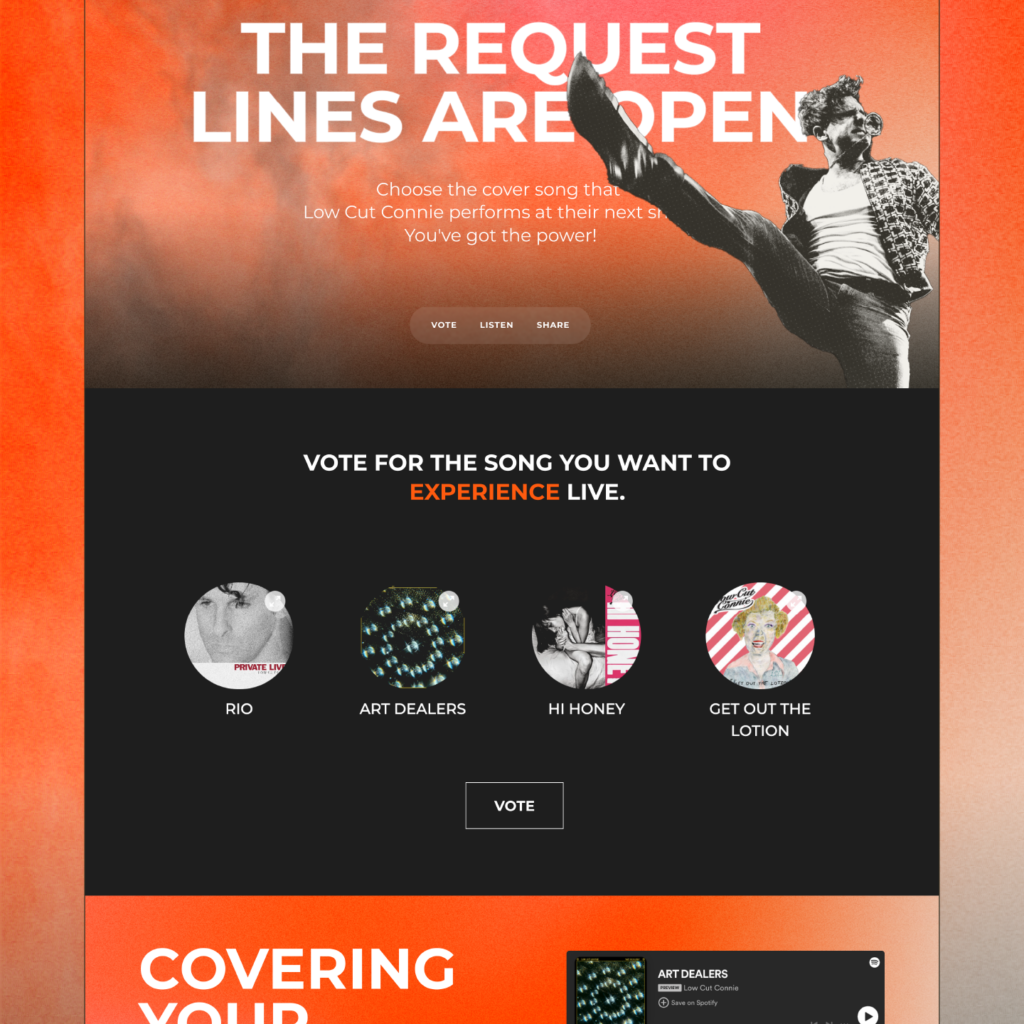
Since the audience was allowed to pick the songs, it resulted in some… interesting choices. Here’s the band performing “Part of Your World” from The Little Mermaid, much to Adam’s delight (warning: adult content throughout):
Says Adam:
“I absolutely loved working with my Digital Yalo pals on my project, the Connie Club, this past summer. It was a complex idea with a lot of different media elements, and Josh, Arnold and the Yalo team had great collaborative ideas right from the start. They sculpted an interactive platform for me that brought me closer to my fans and was exciting for everyone involved. I always love working with these guys and hope to continue doing so in the future.”
Music and branding will always go hand-in-hand, as people respond to music in a way that can help make brand work memorable. Marketers have known and used that information for… oh, since around the first television ad.
At Yalo, we know that it can be used for more than just a background track. We encourage our Tribe and clients to find their own “Soul Song,” the song that hits the emotional core of you or your brand.
Want to learn more about how music can help your brand? Just ask! Want to jam out to Low Cut Connie? No asking needed.
Insight | 04.04.25

I know what you’re thinking: “SEO is dead. Again.” Our AI overlords are here and they’ve come not to harvest the energy of our body heat to power their hive mind (a la The Matrix) but to generate an endless onslaught of mediocre content and provide us with quick and easy answers that give us no reason to click into websites. Oh, the humanity.
But before you stock up on canned beans and crawl into the fallout shelter, hear me out. SEO has “died” at least a dozen times now according to every digital media news outlet and each time the practice has simply evolved. Let’s go over how AI is shaking up SEO, how you can use it to your advantage, and what you can do to keep organic traffic flowing
Content Creation
With tools like ChatGPT, Microsoft Copilot, and Google Gemini, creating content with AI is not only easy, it’s extremely accessible to anyone with an internet connection. The temptation is strong to generate hundreds of blog posts for your business, copy and paste them straight onto your website, and call it a day. But if you’re getting the eerie feeling that it was all too easy, you’re right.
AI is a brilliant tool for quickly creating content, but it’s not a miracle worker. Keep these in mind next time you generate something:
AI Overviews
Taking a look from the user’s perspective, Google has made it easier than ever to get a quick answer to whatever’s on their mind with AI overviews. While I find this wonderfully convenient outside of work, you can imagine how interesting this makes my job. But all is not lost because Google does credit the websites it pulls the information from so we’re right back to “not dead, just different”. So we’re not just fighting for traditional rankings anymore, we’re fighting to be the source of truth for these AI overviews, and you may not like what you’ll need to do to get there:
Yes, keywords still matter—hurray, something old and familiar! But the game has changed. It’s no longer enough to cram a few phrases into an article (and frankly it never was, but hey, it worked!) and call it SEO-optimized. AI-driven search engines use advanced algorithms to understand user intent, context, and even synonyms. That means you need to shift your focus from “how many times can I say ‘best tacos in Austin’ without sounding ridiculous?” to “how can I answer every question a taco lover in Austin might have?”
Instead of obsessing over exact matches, think about the big picture:
You might think AI makes technical SEO irrelevant, but you’d be wrong. If anything, it’s become a non-negotiable. Why? Because even the smartest AI can’t recommend your page if it never finds it in the first place.
Here’s where you need to focus:
Ah, backlinks—the bread and butter of SEO. They’re still relevant, but the landscape has shifted. You can’t buy a few links and watch your rankings soar anymore. Today, AI algorithms scrutinize link quality like a hyper-vigilant editor.
Here’s how to stay in the game:
Here’s the thing about SEO in the age of AI: it’s dynamic. If I told you today that I have a bulletproof SEO strategy that will keep your website at the top of the search results for years to come, I would be a snake oil salesman. As it has always been, staying informed is your best defense. Follow trusted SEO blogs, experiment with new tactics, and don’t be afraid to pivot when something stops working.
Above all, remember this: SEO isn’t dead, and AI isn’t the enemy. It’s just the next evolution. Adapt, innovate, and—most importantly—keep creating content that people actually want to read. Because at the end of the day, that’s what SEO has always been about.
Insight | 03.26.25

By Brittany Lavy
UX design is all about creating experiences that are easy to use and feel natural. One of the design practices commonly used to improve how users interact with your site is by performing a UX Audit. Through this process, problem areas are identified that make users feel frustrated, confused, or leave before they complete their journey. The ultimate goal of a UX audit is to fix issues and create a smoother, more enjoyable experience.
Why a usability audit matters
A usability audit is the first step in spotting your users’ pain points, any bumps in their journey, and areas that could use some improvement on your site or digital product. Once we’ve done that, we can create a roadmap of areas to focus on and tweak to make sure your audience gets the best possible user experience.
Here are some ways UX audits can help improve your product:
Usability problems throughout the product
If users get stuck, lost, or frustrated, they won’t stick around. Definitely not what you want! This step helps ensure users reach their intended destination—both where they need to go and where you want them to go.
We find usability problems by using well-known guidelines called the 10 Heuristics. Developed by Jakob Nielsen, these general principles serve as a “rule of thumb” for how we can make UX easier and more effective.
Streamlining a user’s journey
A website should guide users effortlessly to their goals. Some common user goals are making a purchase, signing up for a newsletter, or finding information.
Simplifying the user’s journey and helping them achieve their goals boosts satisfaction, increases conversion rates, and strengthens brand perception.
Data-driven recommendations
When designing a site, we’re not always the ones using it, so we might make assumptions about the user’s experience. A usability audit helps us see how real users interact with your site or digital product, giving us a clear idea on how to make improvements.
Enhance accessibility
It’s important to make sure all users have an easy experience when interacting with your brand. Auditing the site or digital product can identify areas that may not be accessible for people with disabilities, like those with low vision or deafness, and adjust those areas to be compliant with general accessibility guidelines. Making sure your site meets accessibility guidelines means a better experience for all users.
Keeping costs low
Spotting UX issues in an audit can help save on development costs. By tackling problems early and designing with the user in mind, we can fix issues before diving into development or redesign. This not only saves time later on but also reduces the need for expensive changes further down the road.
User satisfaction and loyalty
Thanks to the UX audit, we can create a great user experience. When a product is simple to use, intuitive, and effective, users are more likely to enjoy interacting with it. This boosts satisfaction and helps build long-term loyalty with your users.
When should you do a usability audit?
There are several moments when you should consider performing a usability audit.
When redesigning a site or product
Starting with a UX audit on your current site or product helps spot areas for improvement and highlights what’s already working well. This gives us a solid starting point for wireframing and lets us fix usability issues early, so we can tackle them before development begins.
When you notice more help requests or a drop in conversion rates
A targeted audit can help pinpoint where users are getting stuck or abandoning the site. We can focus on specific pages or user journeys to see where things are going wrong.
When adding new features or pages
Before launching new features or pages, a usability audit helps us figure out how they’ll fit into the current experience. This way, we can address any issues that might affect user adoption before the feature or page goes live.
As part of regular maintenance
An annual or biannual audit keeps things running smoothly by identifying and fixing issues over time. It also sets up a routine for addressing usability challenges on an ongoing basis.
What level of audit makes sense for you?
Usability audits can vary in depth and scope depending on client goals, resources and timelines. There are four levels of a usability audit to choose from.
Where to start
Ready to elevate your user’s experience? At Digital Yalo we don’t just identify usability issues but we work to craft solutions. Whether you’re in need of a quick scan, a comprehensive deep dive, or a specialized approach, our team has the expertise to guide you along the way.
Contact us today and let’s work together to create meaningful experiences for your users.
Insight | 03.17.25
“Authenticity” is a popular buzzword in marketing, but what does it really mean? While it may sound simple, how can you genuinely connect with your audience and stand out in today’s crowded digital landscape? Here are five key strategies to help your brand show up authentically and make a real impact.
Your brand voice is basically your personality in text form—like your digital clone, but with fewer awkward pauses. It’s how your audience spots you in the crowd and decides whether or not they want to get to know you more. So, it’s important to figure out what really defines you. Are you the witty, bold friend who always gets the last word? Or the compassionate, empowering cheerleader everyone secretly wants to be? Whatever it is, own it—loudly and proudly. Bonus tip: Pretend your brand is a person. Give them a name, a wardrobe, hopes, dreams, and a favorite coffee order. Suddenly, your brand is more than just a pretty face, but a real person your audience can connect to.
Authenticity starts with staying true to your voice, not mimicking what works for someone else. This often means using conversational language, talking to your audience like a friend or trusted confidant, and developing content that you actually care about. When you speak from a place of honesty and alignment, your audience will feel it—and trust you for it.
People want to know the story behind your brand. When you share more about your brand story you’re personalizing your organization and giving your audience a chance to relate to you on a personal level rather than just seeing your brand as an organization. In fact, Researchers at the London School of Business found that people retain just 5% to 10% of information when it’s presented as statistics alone. However, when the same information is shared through a story, retention jumps to 65% to 70%.
Start asking yourself some questions to help develop your story:
Share your journey, your triumphs, and even your challenges. Vulnerability fosters connection, and showing your humanity makes your brand relatable. By opening up about your mission and beliefs, you invite your audience into your world and give them a reason to root for you – and trust you.
Nothing feels more inauthentic than being bombarded with constant sales messages. While, of course, you want your audience to use your services, no one likes feeling they’re being used just for a sale. Remember: people engage with brands for inspiration, education, and entertainment—not just transactions. Focus on creating content that adds value. Share tips, tell stories, spark conversations, and show your personality. By shifting away from a sales-first mentality, you’ll build trust and loyalty that naturally leads to conversions.
There’s no better way to demonstrate authenticity than letting your audience speak for you. Your audience will truly trust your impact when they see others demonstrating how they’ve loved your service rather than just taking your word for it.
User-generated content (UGC) highlights real experiences from real people. Whether it’s reviews, photos, or social media shoutouts, UGC builds credibility and community. Celebrate your customers by featuring their stories and successes. This not only showcases your impact but also reinforces the idea that your brand is about people, not just products.
In a world of filters and curated feeds, imperfection is refreshing. This of course doesn’t mean you should be sloppy, it just means you can let your guard down a bit and not worry about being too polished. Your audience doesn’t expect you to be flawless—they expect you to be real.
Share the behind-the-scenes moments, the outtakes, and the imperfect realities of running your business. Use language that isn’t purely corporate and speak to people like… people! Polished content has its place, but authenticity thrives in the unfiltered. By embracing your imperfections, you give your audience permission to do the same.
Authenticity is about showing up as you are and trusting that your audience will connect with the real you. By developing your true brand voice, sharing your story, prioritizing meaningful content, showcasing your community, and embracing imperfection, you’ll create a brand that not only stands out but also builds relationships that last.
Insight | 02.24.25
It’s 2025, and the marketing world is spinning so fast it can be hard to keep up. AI is everywhere, customers are demanding more personalized experiences, and AR/VR is no longer just for gamers. So how do you stay on top of the trends without losing your mind?
We’ve got you. Here’s our take on the biggest marketing trends of 2025 and how you can conquer the digital marketing landscape while keeping your cool.
AI: whether you view it as a friend or foe, it’s here to stay. AI doesn’t just help make tasks more efficient, it can also assist you in personalizing your marketing efforts so that your audience feels like you really ‘get’ them. From AI-crafted emails to quizzes that feel eerily spot-on, personalization is no longer optional—it’s expected.
How You Can Apply This:
Our Tip: Customers love feeling understood, but they also love privacy. Be transparent about how you use their info, and they’ll love you even more.
Augmented reality (AR) and virtual reality (VR) are no longer the stuff of sci-fi. These tools are here, and they’re making brands more memorable. Throw in conversational tools like chatbots and voice assistants, and your customer experience game just leveled up.
How You Can Apply This:
Our Tip: Don’t go AR/VR just because it’s trendy—make sure it genuinely enhances your customer’s experience. Otherwise, you’re just creating expensive gimmicks.
Big data isn’t just big—it’s colossal. Brands using predictive analytics are not only meeting customer needs but anticipating them before customers even know what they need.
How You Can Apply This:
Our Tip: Consistency is key. If your social media is quirky but your emails are all business, customers will feel the disconnect.
Despite advancements, nearly half of all businesses still lack a defined digital strategy. This gap limits growth potential and leaves opportunities on the table. Yikes.
How You Can Apply This:
Our Tip: No need to overhaul everything. Start with one underperforming area and build from there. If you need heavier lifting, consider reaching out to a marketing agency who can help (wink, wink).
Customers want to know you care, and hiding behind just what you do or what you sell isn’t cutting it anymore. Brands that prioritize purpose-driven marketing aren’t just good for the world—they’re good for business.
How You Can Apply This:
Our Tip: Don’t gloss over purpose. Dig into the ‘why’ behind your brand and what you want your audience to take away when they interact with your company.
AI isn’t just helping with data—it’s creating, too. From AI-generated videos to automated graphic design, creativity just got an upgrade.
How You Can Apply This:
Our Tip: Don’t let automation make your brand feel robotic. Keep the human touch alive.
AI-driven search features and the end of third-party cookies demand innovative approaches to engagement and attribution.
How You Can Apply This:
Our Tip: Shift your focus to building brand awareness and earning audience trust directly.
Marketing in 2025 proves that the digital landscape continues to grow at lightspeed. However, with the right tools and strategies, you’re not just keeping up—you’re leading the pack. With these trends, there’s no shortage of opportunities to make an impact.
So go forth and make 2025 your best marketing year yet. And if you need a little help? You know where to find us.
Insight | 01.17.25
They say all the world’s a stage, but when you’re running media for a historic theatre like The Strand, the real performance happens behind the scenes—in dashboards, data, and media spend optimizations. Our task? Drive ticket sales for a lineup of wildly different shows, from classic films to live concerts, all while ensuring our client got the best bang for their advertising buck. Enter AI, the ultimate understudy that helped us steal the show in media performance.
The first challenge was figuring out exactly who we needed to have sitting in the proverbial front row: our target customer. But with such a diverse lineup of performances, that audience was a varied one. AI helped us break it down by analyzing Meta’s audience data at scale and identifying patterns in who was engaging, who was buying tickets to which types of shows, and (more importantly) who wasn’t.
Engaging them on their terms added another layer to our efforts. Rather than relying on assumptions, AI helped us tailor our messaging and audience targeting to match the unique vibe of each show.
Once we had our audiences locked in, we made sure our ad dollars were putting on a Tony-winning performance. We wielded AI by continuously analyzing which channels and creative assets were hitting the right notes at the moment of transaction.
This real-time, data-driven decision-making kept us from wasting budget on underperforming tactics and ensured we doubled down on what worked. Think of it as a media strategy that constantly fine-tuned itself, like a sound engineer tweaking the mix to get the perfect balance.
A great show builds momentum; our campaigns did too. Thanks to our team’s prowess in deploying AI to parse analytics at scale, we didn’t just see good performance, we saw better performance month over month.
By the time the final curtain fell, The Strand Theatre had maximized its media spend while continuously improving ROI. The result? More ticket sales, smarter budget allocation, and a digital media strategy that played to a standing ovation.
We didn’t use AI to replace our expertise, we used it to enhance it. It helped us make smarter, faster, and more data-driven decisions, allowing us to move budget with precision and drive higher returns. In the world of media strategy, it was a box-office smash.
And with AI in the mix? Let’s just say we’re already looking forward to several encores.
Insight | 12.10.24

Let’s dive into something that’s been hot tea—the WNBA and how it’s flipping the script on sports marketing. Here at Digital Yalo, where brand meets soul to spark growth, we’re all about trailblazing with genuine human connections. And that’s what has us evaluating how the WNBA is utilizing its transcendent moment (hello, Caitlin Clark), and absolutely crushing it.
Players as the Real MVPs
Once upon a time, pro athletes seemed almost like distant superheroes, akin to fictional characters. We heard their stories, sure, but they were always through someone else’s lens—never straight from the source. Basketball, in particular, has long been a superstar dominated sport. And to that end, the WNBA is taking the proverbial ball and advancing it. They’re pushing their players front and center, letting them be the storytellers. Seeing these athletes show their real selves—both the struggles and the triumphs—has humanized them, and the league they represent. And as a brand, humanization can be transcendent when it comes to nurturing an audience.
Digital Is the New Hardwood
The WNBA isn’t just stepping up its game on the court; it’s going heavy into digital off of it. With a revamped app and a fresh website, they’ve made it easy for fans to catch up on all the action and connect with their favorite players.
Offseason? More Like On-Season
What’s really cool is how the WNBA keeps the ball rolling even off the court. They’ve turned the offseason into a prime time to keep fans engaged with marketing magic. It’s like they’re saying, “Hey, don’t forget about us!” And why would we? They keep giving us reasons to stay tuned.
Beyond the Game
But it’s not all about plays and points. The WNBA is also scoring big in community and cultural impact. They’re not just playing games, they’re making statements and standing for something. At Yalo, we totally get that. We’re not just creating campaigns; we’re building movements. We believe in the power of brands to move hearts and minds, and it’s powerful to see the WNBA doing the same.
Wrapping It Up
So there you have it. The WNBA isn’t just changing the game; they’re rewriting the rules. And here at Yalo, where we blend marketing with soulful storytelling, we’re all about that. Whether it’s on the basketball court or in a killer marketing campaign, it’s all about making those human connections that drive real growth.
Insight | 12.04.24

The 19th Annual w3 Awards were recently announced by the Academy of Interactive and Visual Arts (AIVA), and what do you know, our 6666flavors.com was among the Gold recipients. And boy does it feel good to get gold.
Receiving thousands of entries annually from across the globe, the w3 Awards honors outstanding Social Media Marketing & Content, Websites, Online Marketing & Advertising, Mobile Sites & Apps, Online Video, Podcasts and Emerging Tech created by some of the best digital content creators across the industry. The awards are reviewed by the Academy of Interactive and Visual Arts, an invitation-only body of professionals from acclaimed media, interactive, advertising, and marketing organizations like Walt Disney Studios, PepsiCo, Netflix, IBM, and a bunch of other big names you’ve probably heard of.
That’s all well and good, you may be asking yourself, but what’s the Four Sixes website?
Award-winning creator Taylor Sheridan, known for shows like Yellowstone and the Yellowstone universe (including 1883 and 1923), owns the sprawling 6666 Ranch in Guthrie, Texas. Wanting to share the flavors of the ranch with a wider audience, he created Four Sixes—a line of seasonings, BBQ sauces, and hot sauces. To support the launch, Yalo designed a website that debuted alongside the products as they hit supermarket shelves, bringing the spirit of the ranch to life and inspiring customers to spice up their everyday cooking.
Says Yalo founder Arnold Huffman: “When you are presented with an opportunity to work with a brand that has moxie, you put forward your best effort and give it all you got. Partnering with the 6666’s team allowed us to flex our creative muscles and deliver something truly spectacular, and the W3 Gold award is recognition of the great work produced by our team. “
For more information about the w3 Awards, visit w3award.com.
LinkedIn: Digital Yalo
Our website for Four Sixes isn’t just inspired by Taylor Sheridan’s award winning work—it’s winning awards itself. Gold at the W3 Awards, to be exact. Visit 6666flavors.com to experience the site inspired by the spirit of the ranch. And the bbq. And the cayenne.
Instagram: @digitalyalo
Howdy! Ready to dive into a website full of the delicious taste of BBQ sauces and seasonings? W3 was, which is why they awarded us gold at the W3 Awards! Inspired by the work of Taylor Sheridan, 6666flavors.com is infused with the spirit of the ranch—and sauces that taste as good as they look.
Insight | 01.17.24

In the dynamic and competitive landscape of the business world, the importance of a well-crafted brand strategy cannot be overstated. A brand is not just a logo or a product; it’s an experience, a promise, and a reflection of your company’s values. Today, we’ll delve into the intricacies of brand strategy, exploring the key elements that contribute to a successful and compelling brand.
In the ever-evolving business landscape, a well-crafted brand strategy is the compass that guides your journey to success. By understanding your audience, defining your unique value proposition, maintaining consistency, weaving a compelling narrative, embracing digital channels, and building trust, you can create a brand that not only stands out but stands the test of time. Let Yalo lead the effort into crafting a brand strategy that resonates – your brand’s future success depends on it.