
Insight | 01.17.25
Insight | 02.11.26

There was a time when music genres were sharply defined. Rock was rock, hip-hop hip-hop, country country, you get it. Of course, that time is long gone. The music industry has since discovered that crossing boundaries is what makes music exciting, and the most revered musicians in history are the ones that weren’t afraid to swerve out of their lane.
Hip-hop is a part of rock & roll because it comes from DJ culture. DJ culture is the embodiment of all genres and all recorded music, if you actually pay attention to it. -Chuck D
With music so goes culture. Just like your playlist is filled with artists who can’t be easily defined (not to mention jumps from genre to genre), culture no longer zeroes in on one thing. You stream a podcast, scroll a meme, watch a doc, then buy something based on nothing but “vibes.”
That’s how people live now. So why would we (I’m talking specifically about Yalo now) want to stay in one lane? Hence: we are all genres. It’s actually one of our core principles.
We’re creative and strategic. Curious and focused and unified by the idea that the best work doesn’t come from playing it safe, it comes from blending influences that weren’t “supposed” to work together. That’s what modern marketing demands.
Audiences are savvy and layered. Everyone has grown up being marketed to nonstop and are quick to recognize BS and pandering. To get their attention it’s important to offer something beyond a sales pitch. If you have a product that truly meets a need, great. Go with that. Tell the truth. If not, make them laugh or at least make them think. Be original, be it through product or marketing.
Every day is a miracle. You’ve got to sing for your supper. – David Byrne
For Yalo, being “all genres” means we don’t force brands into pre-packaged tones or trend-chasing templates. We listen first. Then we find the right mix of sound, style, and substance to connect with real people in real moments.
Some of the most iconic music ever made came from breaking rules: Hip-hop sampling rock, country borrowing from blues, pop stealing from everywhere (seriously, what does the category “pop” even mean anymore?)
Marketing works the same way. The strongest ideas happen when storytelling meets performance. When data mixes with intuition. When a brand’s heritage collides with where culture is heading next.
No one worries about genre when they’re dancing. – Skrillex
So what does this mean for your brand? Well, the world moves fast. Platforms change. Algorithms shift. Audiences evolve overnight. Agencies must be agile and willing to shift quickly in order to produce work that stands out.
For Yalo, “we are all genres” isn’t a vibe. It’s a strategy. It keeps our work flexible, relevant, and ready for whatever comes next. It allows us to move fast without losing soul, and scale ideas without sanding off their edge.
At the end of the day, being all genres doesn’t mean chaos. It means harmony. Different perspectives. Different disciplines. One shared goal: create work that cuts through, connects, and actually means something. And whether your brand needs to amplify its presence, refine its focus, or define a direction that hasn’t yet been explored, we’re ready to plug in and get noisy (or keep it acoustic, up to you!).
Insight | 01.14.26
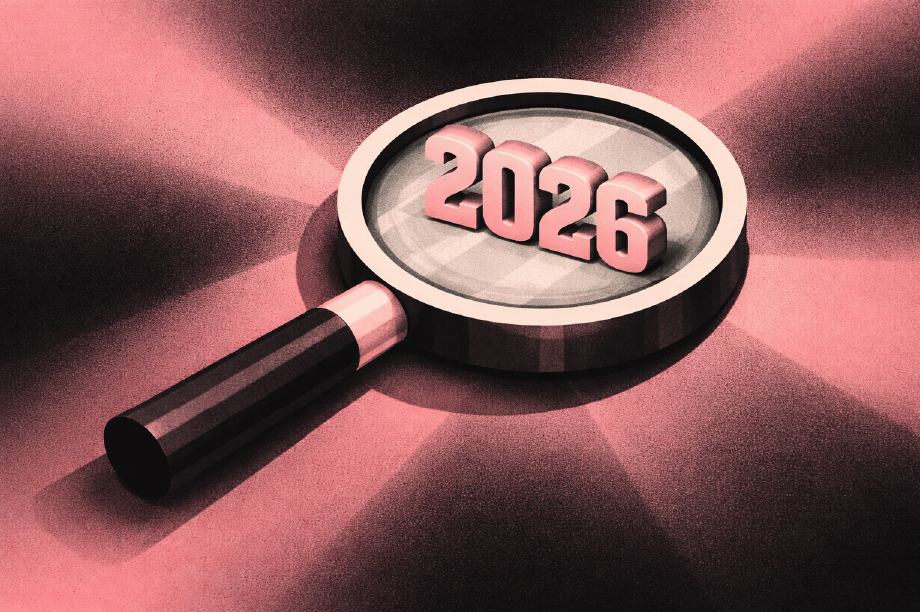
Throughout the modern marketing industry’s short, dynamic history, one question has always dominated: What’s next?
Marketers spend millions each year chasing the next big thing, gambling on what’s going to hit and following trendmakers wherever they lead. But following usually leads to a huge problem: chasing doesn’t work. By the time you catch up to culture, it has already moved on.
Brands that create culture instead of chasing it are the ones that win, but those cases are rare. You either need the budget to constantly experiment until something sticks (think: funny, intriguing daily video social content), or you need a lot of luck (think: Stanley Cup’s influencer strategy). Even the smartest, funniest, most award-winning work doesn’t guarantee a place in the conversation. After all, how many people outside of advertising know who won a Cannes Lion, or even what that is?
So maybe we should stop thinking about what’s next and start talking about what matters. All this chasing, creating, and throwing things at the wall in hopes that something sticks has created an incredibly crowded space, making the ability to stand out more important than ever. And rising above in the new year is going to require taking a higher road.
By now, you may have seen a recent Wall Street Journal piece on the role of storytelling in building brand loyalty. It wasn’t about the brand-anthemy, long-form copy kind of storytelling. It was about the kind of storytelling that gives brands context. The kind that tells the world who a company is, where it fits within the competitive set, why it exists at all, and, most importantly, why anyone should care. Because in a world where AI can write a brand anthem, a “big, bold rally cry” means nothing without the substance to back it up.
In a world flooded with content, the brands that win aren’t the loudest; they’re the clearest. They’re the ones that can articulate a point of view and sustain it across channels, leadership voices, customer experiences, and culture. Audiences are tired of being targeted, optimized, segmented, and “journeyed.” They’ve developed an almost supernatural ability to sniff out content that exists solely to sell them something.
Which brings us to AI. By 2026, AI won’t be the headline anymore, it’ll be background noise. As we’ve said before, AI is a tool, and it will remain one. It will quietly power personalization, media buying, forecasting, content testing, and a hundred other things we no longer think twice about.
The mistake brands are already making is assuming that because AI can generate, it can also connect. It can’t, at least not on its own. The brands that get it right will use AI the way great teams use great tools: to move faster, spot patterns sooner, and free up time for real thinking.
At the same time, trust is becoming the real currency of marketing. Privacy changes, disappearing cookies, and growing consumer awareness have shifted the power dynamic. There’s a reason word of mouth and unpaid recommendations remain the most powerful forms of advertising: they’re among the few sources people still trust (most of the time). By 2026, ethical data practices will be a brand signal. Companies that are clear about what they collect, why they collect it, and how it benefits the customer will stand apart in a market that still struggles with transparency.
Another shift that’s impossible to ignore is the move away from one-off influencer moments toward true creator ecosystems and brand communities. Audiences don’t want to be “influenced” anymore; they want to belong. They want to see brands show up consistently, collaborate authentically, and earn their place in culture rather than rent it for a campaign cycle. Once again, it comes back to honesty and meaning.
But how will people be reached? Short-form video, live formats, and immersive experiences aren’t trends so much as the default language of modern communication. The brands that perform best aren’t necessarily producing more content; they’re producing content that understands how people actually consume it: quickly, emotionally, and often on mute.
Behind the scenes, marketing teams are changing too. Roles are blurring, with strategy, creative, data, and technology increasingly overlapping. The most effective teams heading into 2026 are built for adaptability, not perfection. They test, learn, adjust, and move on. They value judgment as much as output, and curiosity as much as efficiency.
But can brands be authentic without authenticity becoming just another marketing buzzword? That’s a blog for another time. In the meantime, marketing is still about making people feel something and then do something. The tools have changed. The pressure has intensified. The margin for error has shrunk. But the core truth hasn’t moved an inch.
For Yalo, it’s not about chasing every new platform, format, or promise. It’s about using every tool at our disposal (technology, data, creativity, and yes, AI) to help brands show up honestly and with intention. We’ll keep focusing on work that earns attention instead of demanding it, builds trust instead of gaming the system, and creates real connection instead of noise. Because the brands that win next won’t be the loudest, they’ll be the ones that know who they are, why they exist, and how to show up meaningfully in people’s lives.
Insight | 09.03.25
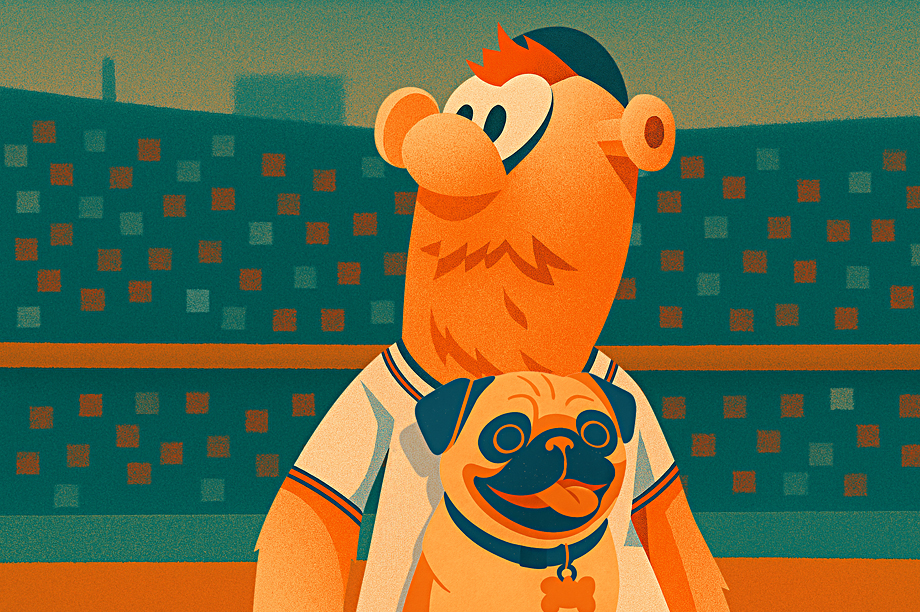
If there’s one thing few people argue about in the world of sports, it’s that mascots rule. Even the ones that are literally just a teenager jumping around in a cheap costume have the ability to make even the grouchiest fan smile. One of the biggest names in the game is Blooper, the Atlanta Braves’ lovable spokes…thing. Though relatively new to the world of mascots, his antics have skyrocketed him into the ranks of Mr. Met or those weird-looking presidents that run across the field at Nationals games.
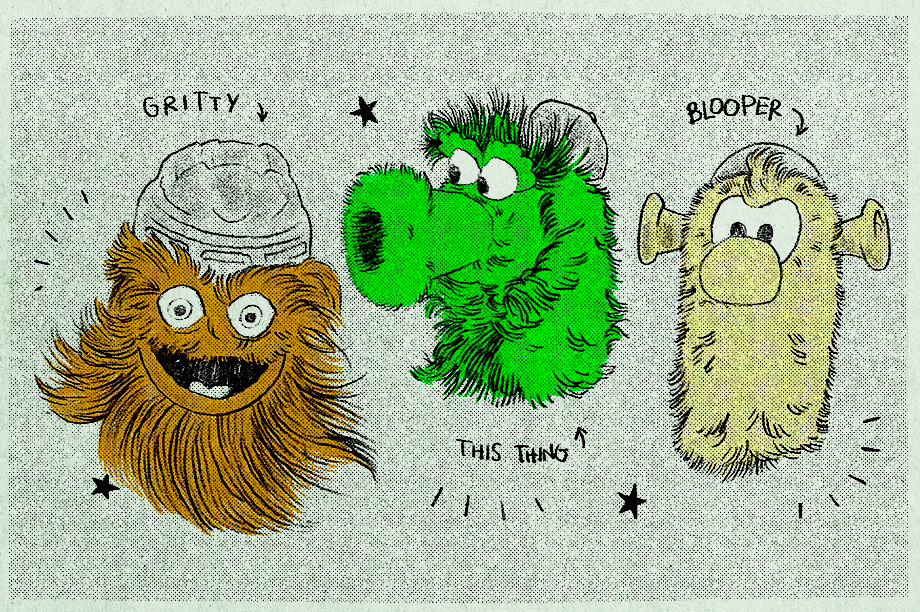
That’s why, as Cortland Apartment Communities’ agency and mascot enthusiasts, we jumped at the chance to work with Blooper. Even better, we got to pair Cortie and Blooper as the best of frienemies. But let’s back up for a second.
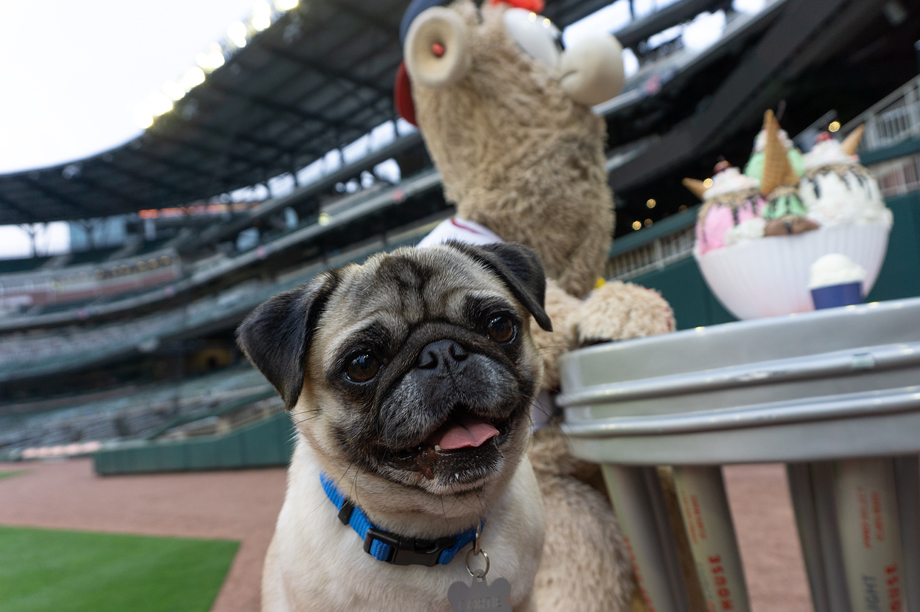
As part of Cortland’s partnership with the Atlanta Braves, we were given the opportunity to film on-field content to complement signage around Truist Park. Naturally, we wanted to bring together two legendary mascots in some way. But how? We tossed around ideas: having them go on a date, having Cortie run the bases, even bringing in other mascots for a “training day.” Eventually, we landed on Cortland’s tagline: Next Level Living. And since Blooper represents Next Level Baseball, it was time to see who was truly the most Next Level.
Through a series of wacky challenges, Blooper and Cortie tried to one-up each other—until Cortie finally emerged victorious. Why? Because he lives at Cortland. Also because he can do a pretty cool handstand walk.

The video not only lives online at cortievsblooper.com, but imagery from the shoot also made its way onto signage around Truist Park, where passersby can pose with Blooper and Cortie.
From on-field video to park signage to shareable social moments, the Cortie vs. Blooper matchup created a cohesive story that strengthened Cortland’s visibility with Braves fans while reinforcing its own brand promise. That’s the kind of work we call Next Level.
Insight | 05.16.25

There’s a moment in music history that changed everything. When Bob Dylan plugged in his electric guitar at the Newport Folk Festival in 1965, it was a declaration: the world was evolving, and music had to evolve with it. The purists scoffed, but Dylan saw the electric guitar not as a replacement for folk music but as a way to amplify its impact. The result? A new era of sound that pushed the boundaries of what was possible.
At Yalo, we see AI the same way. It’s not here to replace creativity, it’s here to amplify it. That’s why we’ve spent the last year developing AMPLIFI, our proprietary process for integrating AI into every facet of our agency. Much like the artists who shaped rock & roll, we’re not just adopting new tools; we’re shaping the future of how they’re used. And just like rock music didn’t kill live performances—it made them bigger, bolder, and more electrifying—AMPLIFI isn’t replacing our talent. It’s giving them the means to amp it up to 11!
The greatest bands didn’t just pick up new instruments and hope for the best. They learned how to master them. The Beatles didn’t stumble into pioneering studio techniques; they experimented, innovated, and learned. That’s exactly what we’ve done with AMPLIFI.
Instead of simply handing our team AI tools and saying, “Figure it out,” we made a bold investment: we created a structured training program to ensure that every single member of our tribe—whether in operations, media, or creative development—knows how to harness AI effectively. AMPLIFI isn’t just a piece of software or a new workflow. It’s a mindset shift. It’s our way of ensuring that AI doesn’t just exist in our agency, it enhances everything we do.
There’s a difference between evolution and replacement. When synthesizers came onto the scene, they didn’t replace guitars—they expanded what was possible in music. AI is the synthesizer of the marketing world. It’s not here to write our stories, strategize our campaigns, or concept our creative. It’s here to help us create faster, sharper, and even more resourcefully.
With AMPLIFI, we’re integrating AI into:
And that’s just to name a few. Hey, we can’t give away every ingredient in our secret sauce.
Every major shift in music—whether it was MTV changing how artists connected with fans or streaming services reshaping how music is distributed—has been met with resistance. But the artists who embraced these changes didn’t just survive; they thrived. AI is our industry’s next big shift, and at Yalo, we’re not just riding the wave, we’re playing lead guitar.
We’re living in a time where many agencies are taking a wait-and-see approach to AI. They’re hesitant, uncertain, or even dismissive of its potential. That’s not how we operate. We believe in being ahead of the curve, setting the tempo, and ensuring our team has the knowledge and confidence to use AI to its fullest potential.
Because here’s the truth: AI in marketing isn’t a fad. It’s not going away. And just like rock & roll, it will keep evolving. The question is, who’s going to step up and own it? At Yalo, we’ve made our choice. We’re not just accepting AI—we’re amplifying it.
So plug in, turn up the volume, and get ready. The future isn’t waiting, and neither are we. This is AMPLIFI. And trust us, the show is just getting started.
Our souls are singing. Is yours? I’d love to chat with you about how Yalo can make AI work for your brand.
Insight | 03.05.25
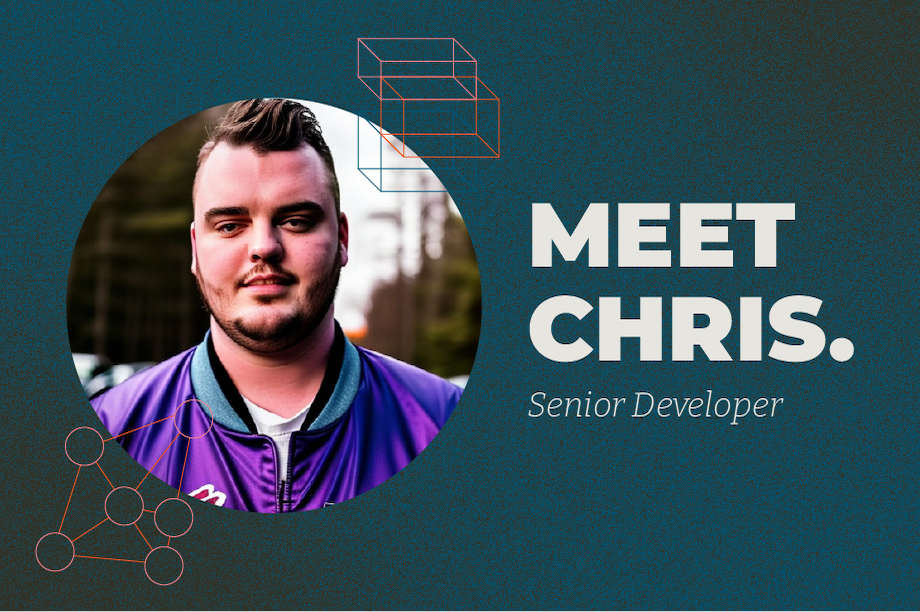
Meet Chris Dawson: Yalo’s Hot Dog Man and Tech Innovator
Welcome to Digital Yalo’s monthly employee spotlight. This space is held to shine a light on the talented thinkers and makers behind the scenes who make Digital Yalo the award-winning agency it is.
Our team boasts a diverse group of talented, smart, and dynamic professionals. And each spotlight will showcase and celebrate their unique contributions and impressive work.
So, without further ado, let’s meet this month’s star and discover the stories, skills, and obsessions that make Digital Yalo the hub of innovative thinking that it is.
Today, we’re excited to introduce Chris Dawson, a Senior Developer who’s been with Yalo for what feels like forever—and for good reason. Chris’s impact on the tribe and our clients is undeniable, and his expertise, leadership, and unique personality are key to his success.
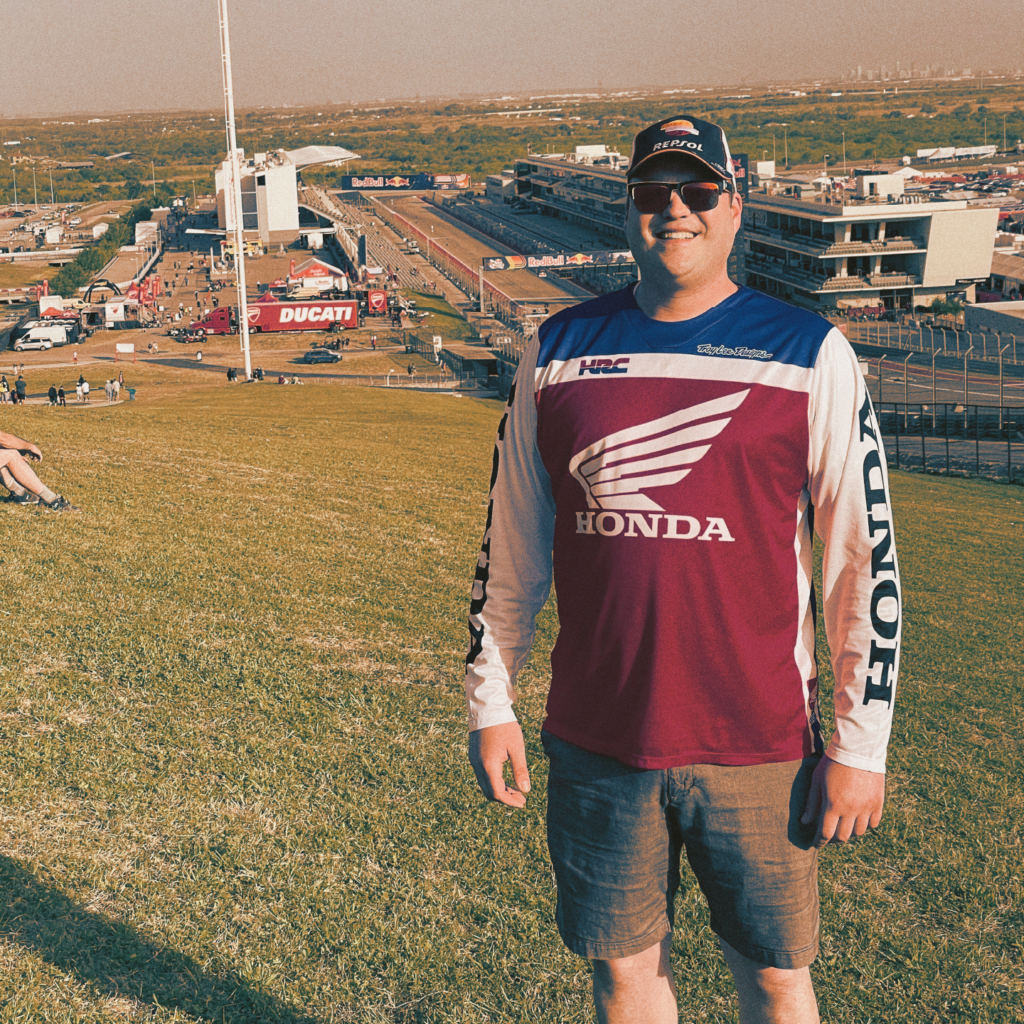
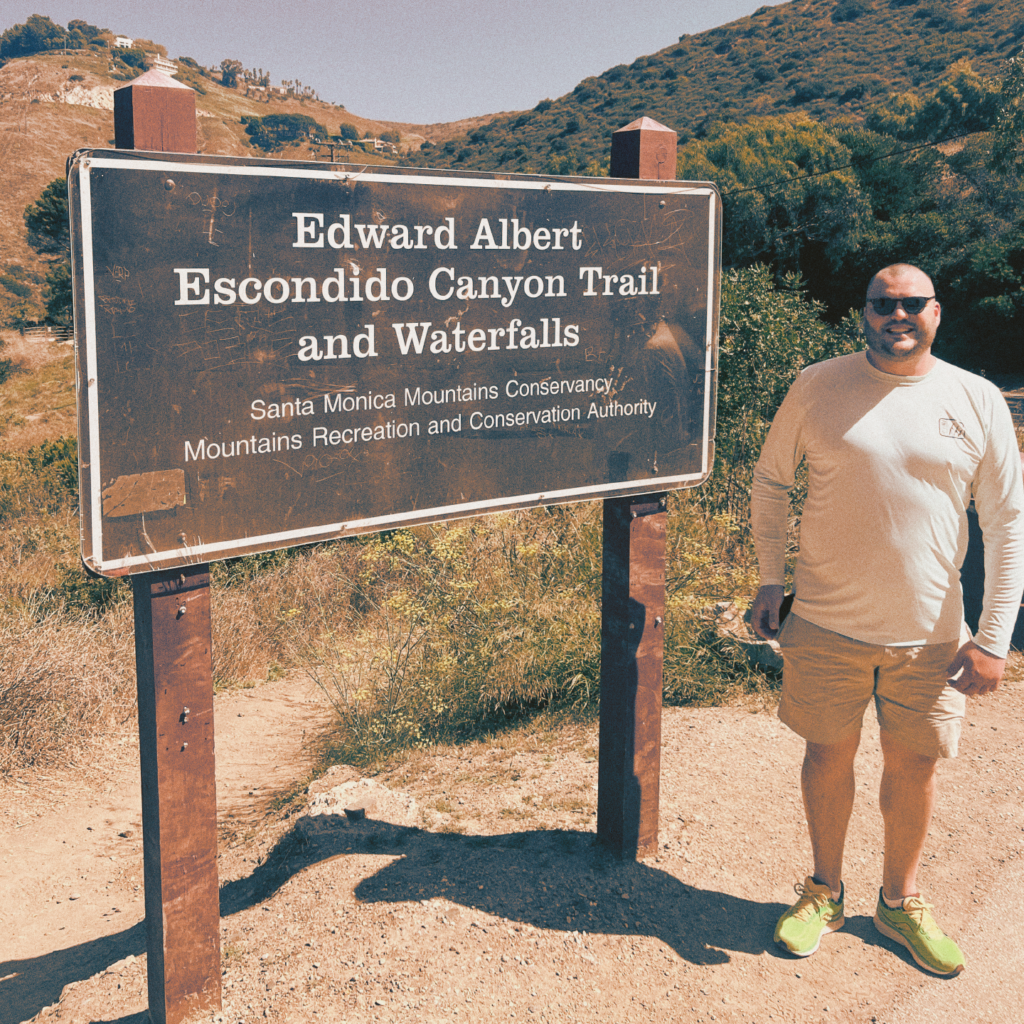
Chris isn’t just a developer—he’s the driving force behind the success of the Primrose project, working closely with a contractor, Andrew, to turn the project around. Together, they optimized site speeds and tackled all other tasks necessary to bring Primrose to a great place. Thanks to their leadership and technical expertise, Primrose has become a strong success, with the client continuing to return for more. Chris’s problem-solving skills and ability to think outside the box have made him a standout figure within Yalo and with clients alike.
Chris’s contributions go beyond code. As a mentor, he’s helped shape the next generation of developers at Yalo. Whether he’s guiding interns or supporting junior developers, Chris has a knack for making complex concepts simple while also pushing his team to grow and improve. His leadership isn’t just about teaching; it’s about empowering those around him to become better versions of themselves.
Outside of work, Chris enjoys a mix of unique and entertaining interests. From baking and cooking to hitting the golf course or spending time at the range, Chris knows how to make the most of his time away from the computer. (He’s also known for asking the age-old question: Is a hot dog a sandwich? Feel free to debate that one with him!)
Living in North Carolina, Chris balances his love for tech with his love for the outdoors, which probably helps keep him sharp for the next big project.
Chris Dawson is more than just a Senior Developer at Yalo—he’s a mentor, a problem solver, and the backbone of many of our most successful projects. His leadership and innovative thinking keep Yalo at the cutting edge, and we’re lucky to have him on the team. Here’s to Chris and the amazing work he continues to do!

Insight | 07.03.23
At the end of last year, I felt I was spending too much time on the iPad attempting to read but not reading because it was too easy to get distracted and not actually reading. So, at the start of this year, I made a personal ‘resolution’ to get back to, what I’ll call, real reading. And not just reading, but to read physical books, not on an iPad. And not just any book, but only books about music; genres, eras, musicians and bands. It has been one of the most rewarding and educating years of my life to delve into these artists lives and learn what made them tick, what made them unique, what made them STAND OUT. What was the reading list you ask? Here you go…in the order in which I read them:
As you can see, it has been quite a diverse list spanning reggae, rap, punk, rock, blues and soul. I have thoroughly enjoyed every page of every book. And there are more sitting on my office shelf to read. Purchasing these physical books will become keepsakes for me as well.
So, what did I learn during my journey so far this year? I have distilled a few key elements from the thousands of pages that all these artists shared that made them STAND OUT.
They all truly wanted to be the absolute best at being a musician. That meant seeking out guidance, learning from the best and continuously incorporating their learnings into their own craft. Take Robert Johnson for example. He would travel from town to town by hoboing on trains to visit other blues guitarists so he could practice with them, learn from them. Then, he would busk on the street corners during the day to master these learnings, while promoting his show at the juke joints later that night, usually playing multiple shows each night. He did this EVERY SINGLE day in order to master his craft. Learn, play, repeat. The result of his dedication made him the leading innovator of blues guitar and the founding father of Rock N’ Roll.
Failure was not an option, and their success was not an accident. Tireless work attitude. Play, play, play. Did you know what a perfectionist Kurt Cobain was? He was obsessive. Playing and playing, over and over until every song could be played to perfection every time. And think about Prince for a moment. The man loved composing music so much that he made his studio his home, making the conscience decision to move INTO his office, INTO his work. He couldn’t bare the thought of being away from the studio. Thus, there is an entire vault of his music that the world will eventually get to enjoy for many years to come.
In the face of adversity and being told that their dreams were just dreams, these artists had unshakeable resolve and belief in themselves. Take Queen for example. They were a few years into their musical career before they all finally gave up on their ‘day jobs’ or going to ‘university’ and went all in on their music career. Bar after bar, show after show. In some cases where less than 10 people would attend. Yet, they believed the music and the persona they were crafting was unique and would stand out. They stuck to writing their brand of music which was some of the most atypical music of its time and still stands as landmark music to this day.
None of them got it right when they first started. They were all in numerous bands and/or played various types of music. They all were willing to continue to learn and evolve until they became who they became. And see point #1, that helps too. Take the Beastie Boys for example. They were 3 white punk rock kids from NYC sneaking out of their parents’ house to listen to Black Flag way back in the day. Did you know that BEASTIE is an acronym that stands for Anarchy? Google it. So, its logical that they started out as a punk band, making scuzzy punk. How does that turn into a hip-hop rap career, in a genre where they stuck out like a sore thumb? Their willingness to evolve and adapt. Now, that also doesn’t mean they abandoned who they were. If you have followed the genre-bending Beastie Boys’ career, you would see they went from punk to hip-hip back to punk and back to hip-hip again. Truly a full lifecycle of success.
Whether it be how they crafted lyrics or how they composed their music, these artists all had bold visions that required true creativity to become who they became. This vision and creativity would also raise the game of everyone around them. Take Bob Marley for example. His insightful lyrics and powerful music captured the tenor of the times, energizing generations, races and continents of people and bringing them together. Bob’s lyrics are some of the best ever for their simplicity but packed with a powerful punch. Or if we look at Jeff Tweedy’s composition approach. He creates melodies first. Then he layers in vocal sounds that he calls ‘mumble tracks’, which are not words at all but just syllables. After he fuses the melodies with the mumbles, he then comes back to compose and lay down lyrics at the end. Truly creative and seriously mind blowing.
Put these thoughts in motion and your brand will take off.
Are you ready to stand out? Our brand-building strategies including content marketing, UX and graphic design can be of assistance. We have a full cadre of creative services to take businesses and brands higher. Let Yalo take you through a Soul Song exercise to have your brand hit the right note.
Please contact us today and let’s have a conversation.